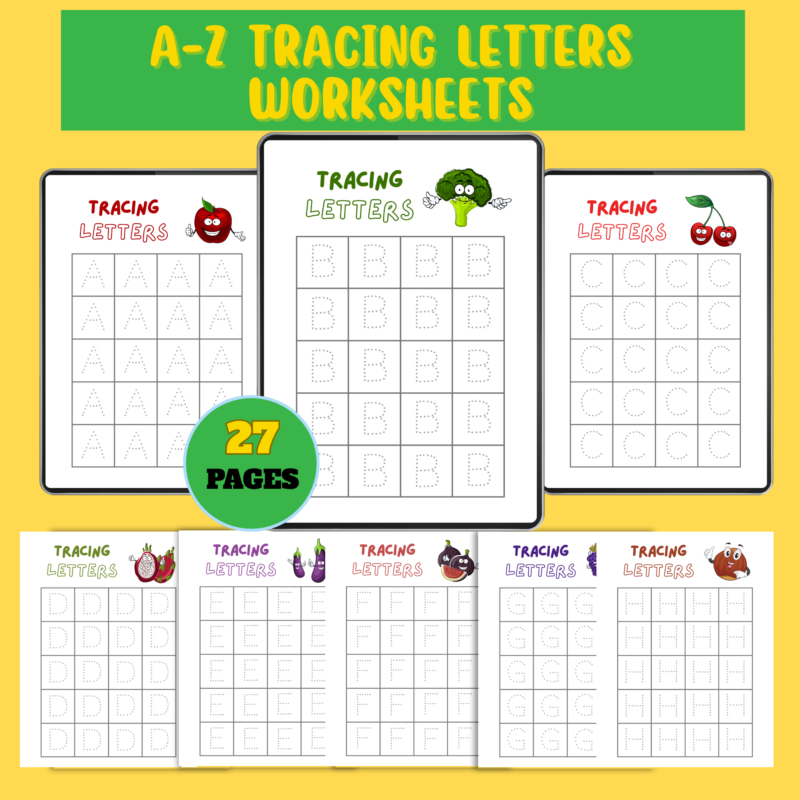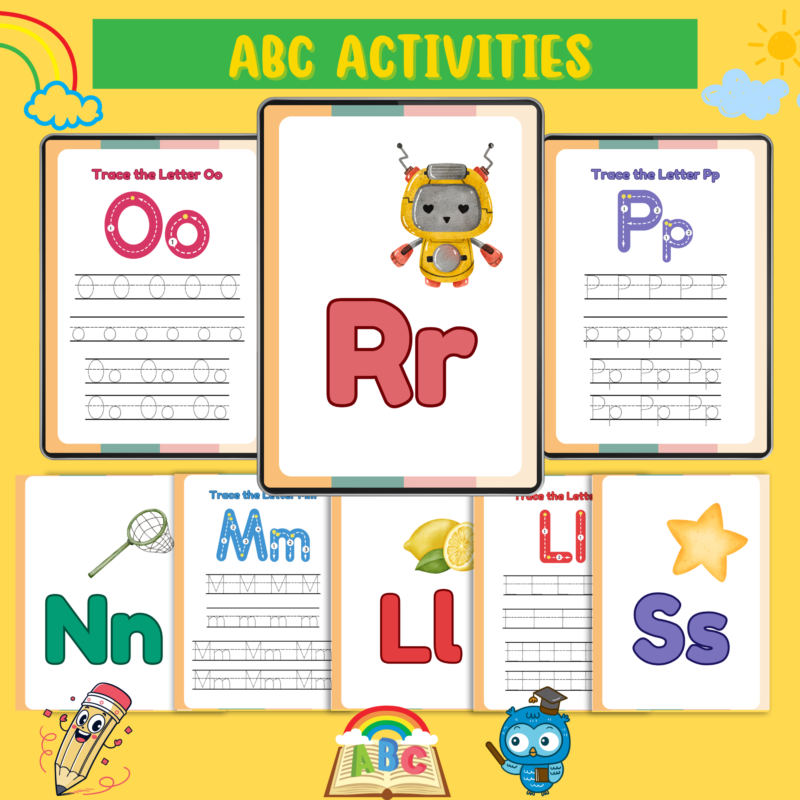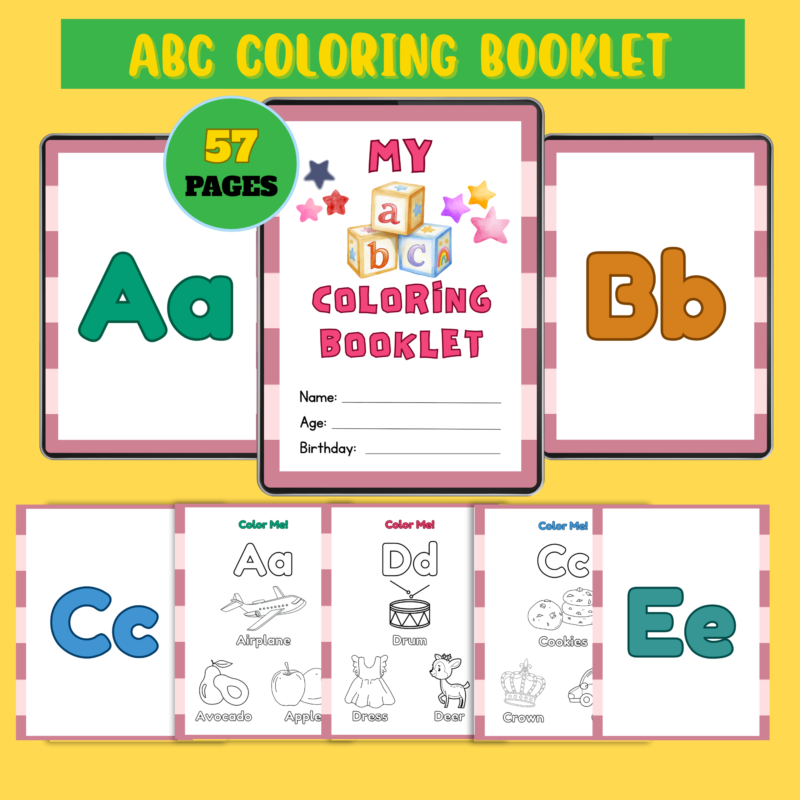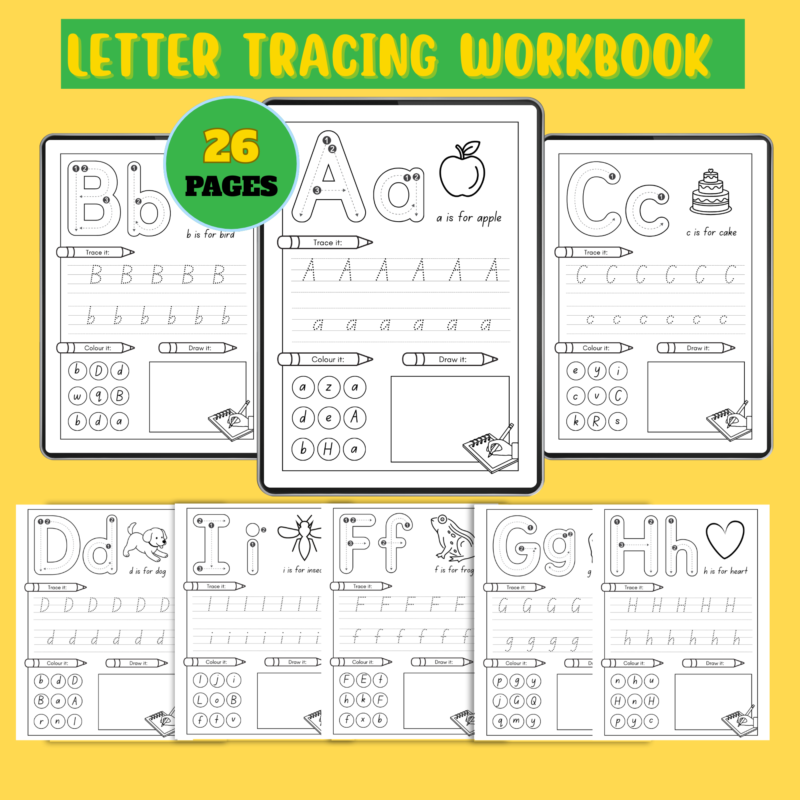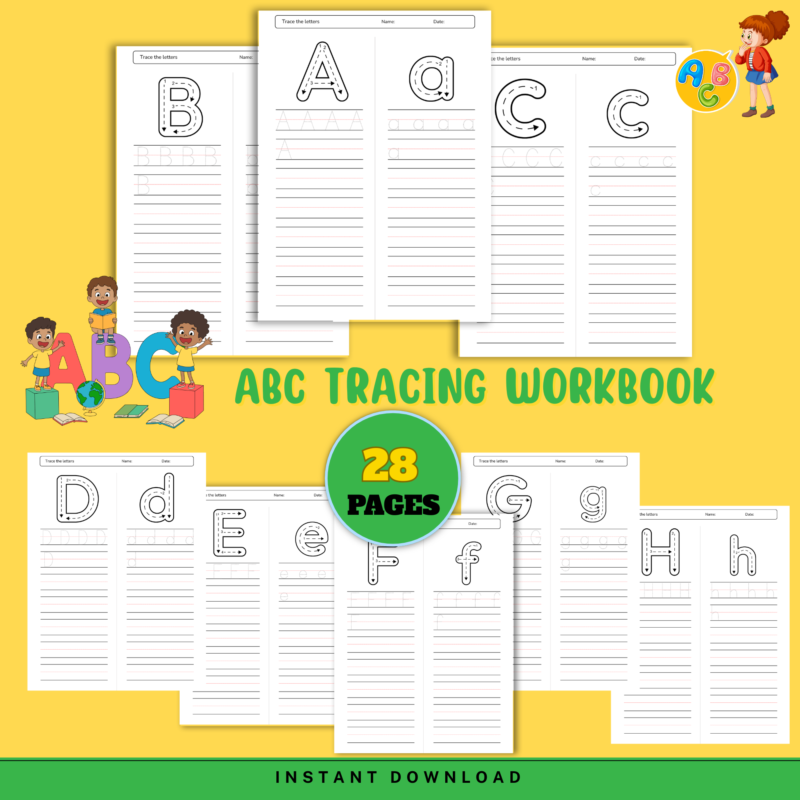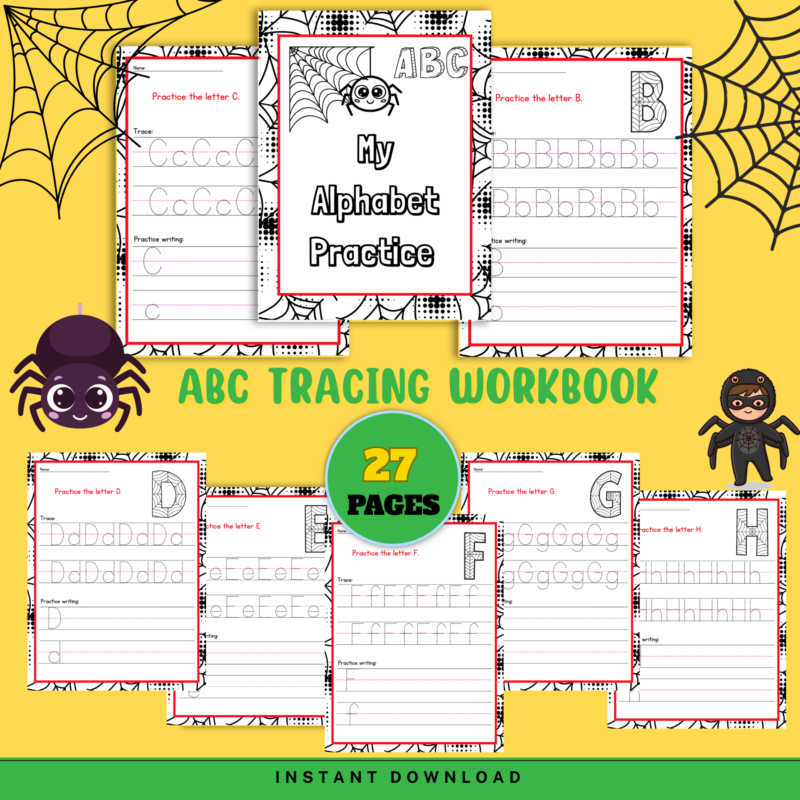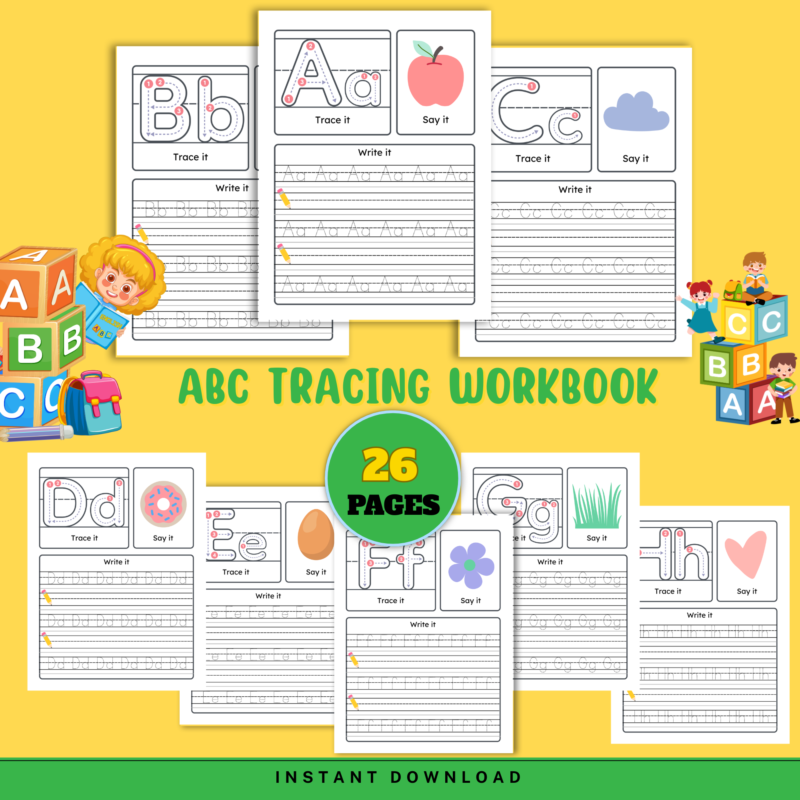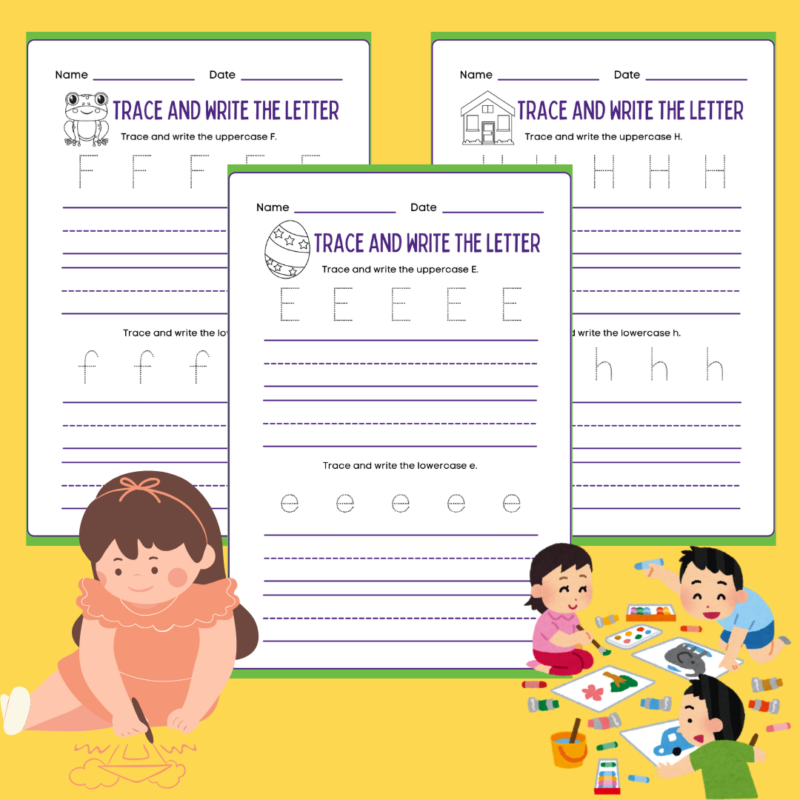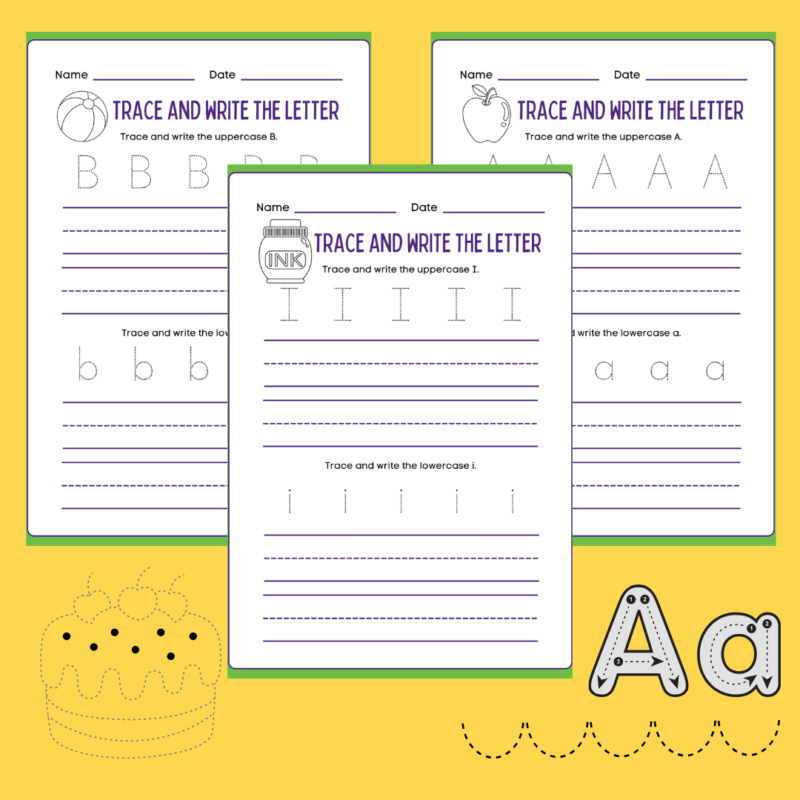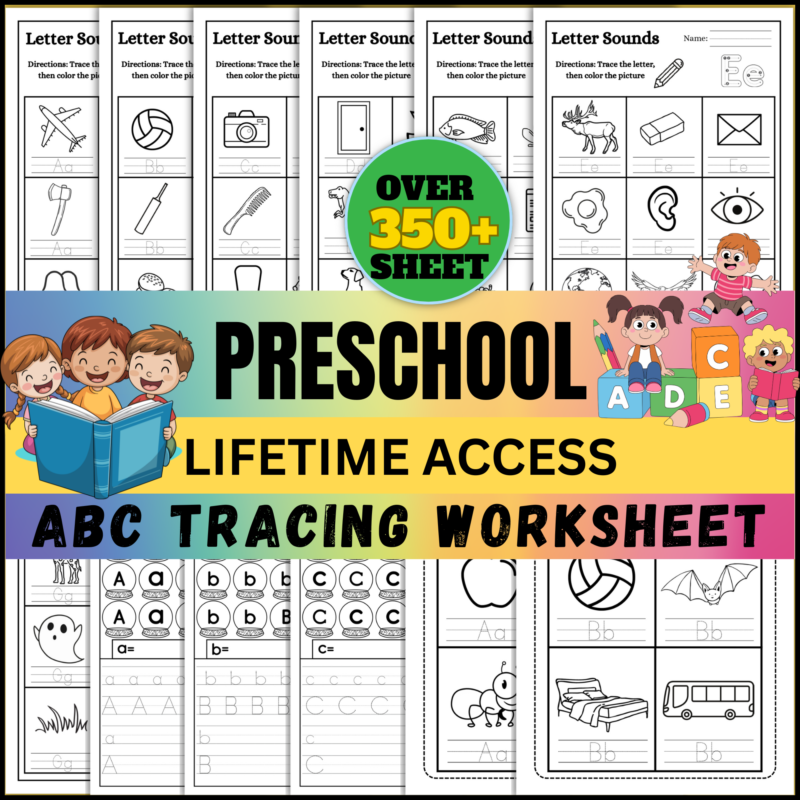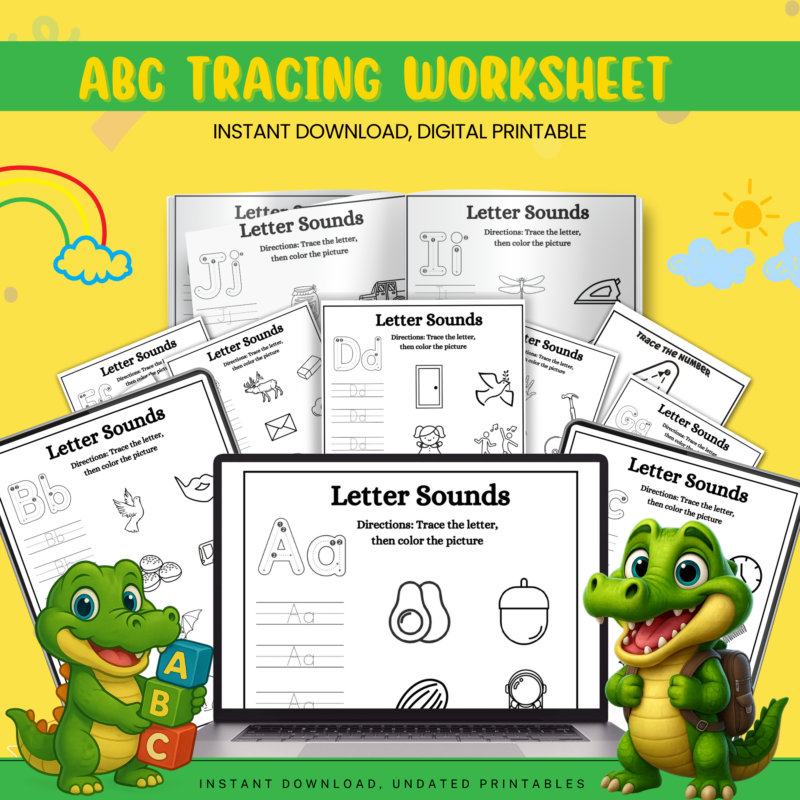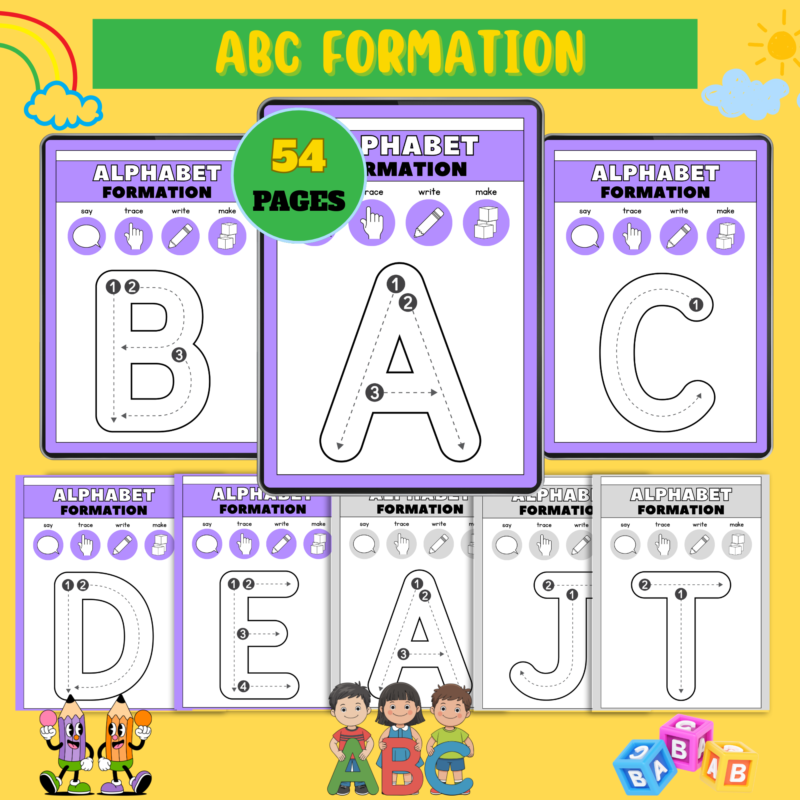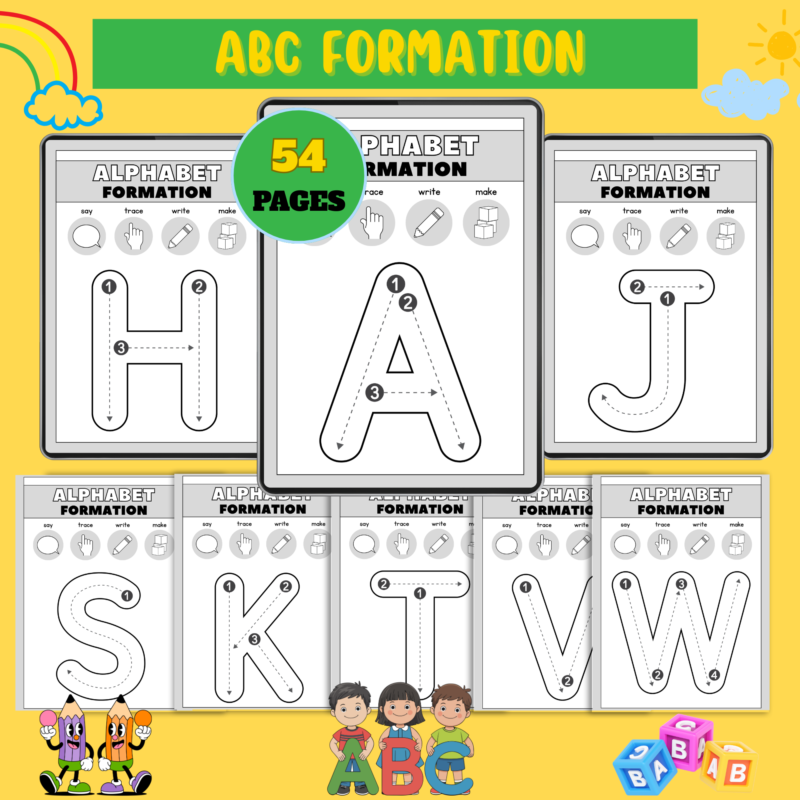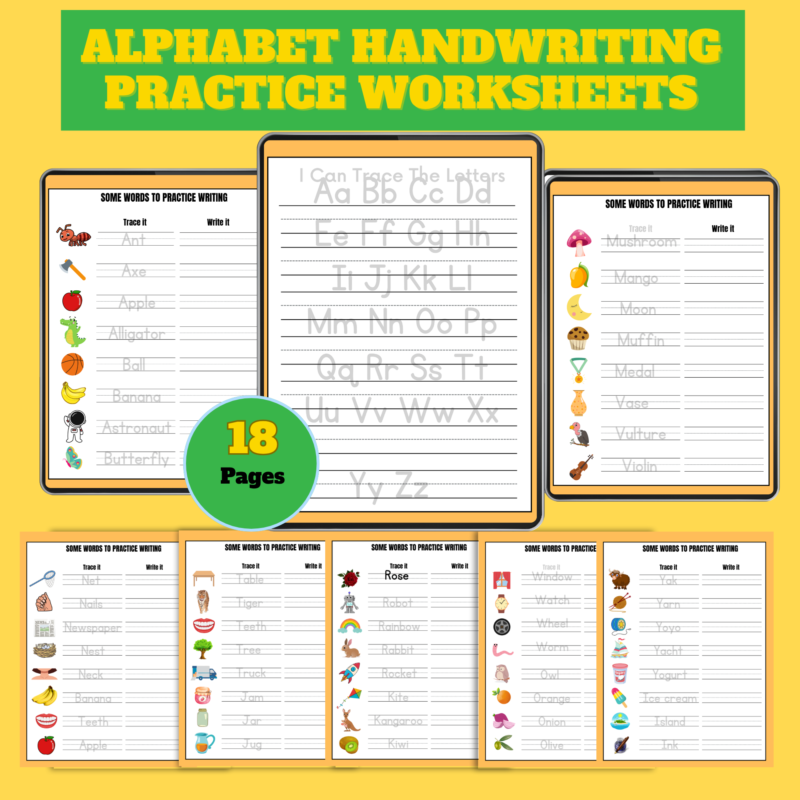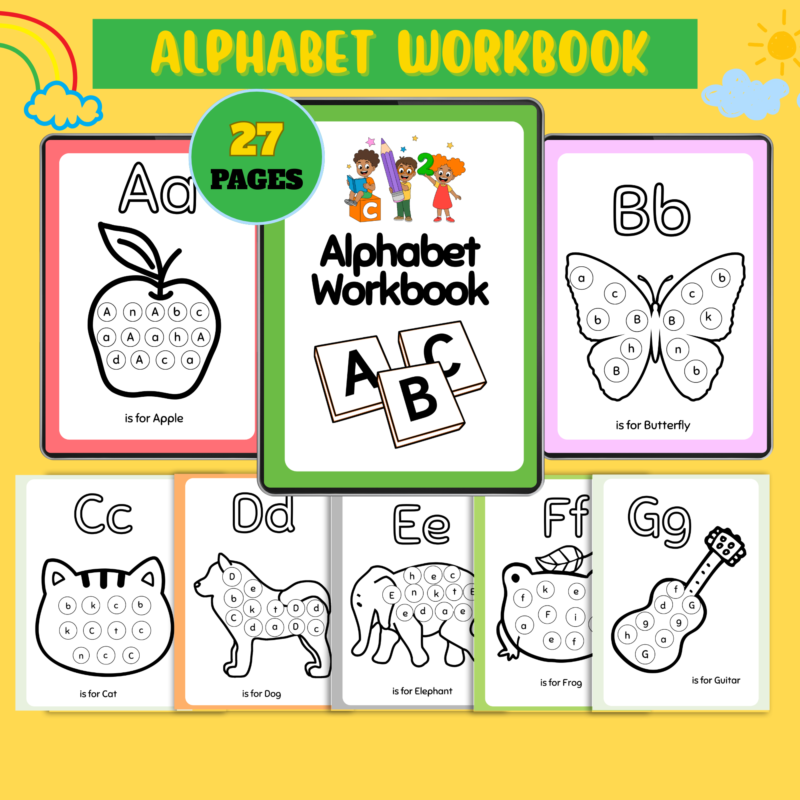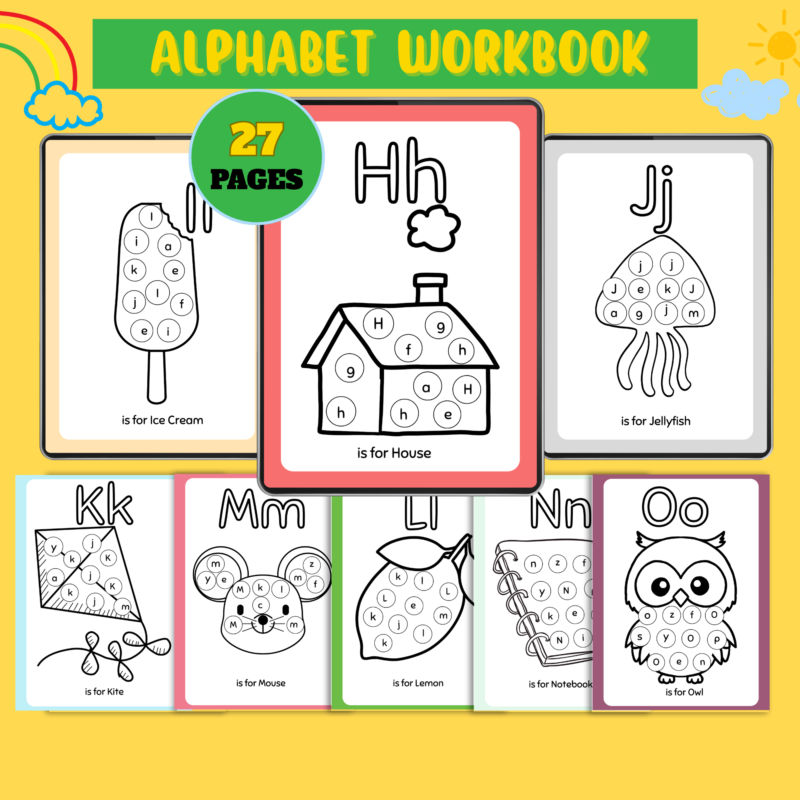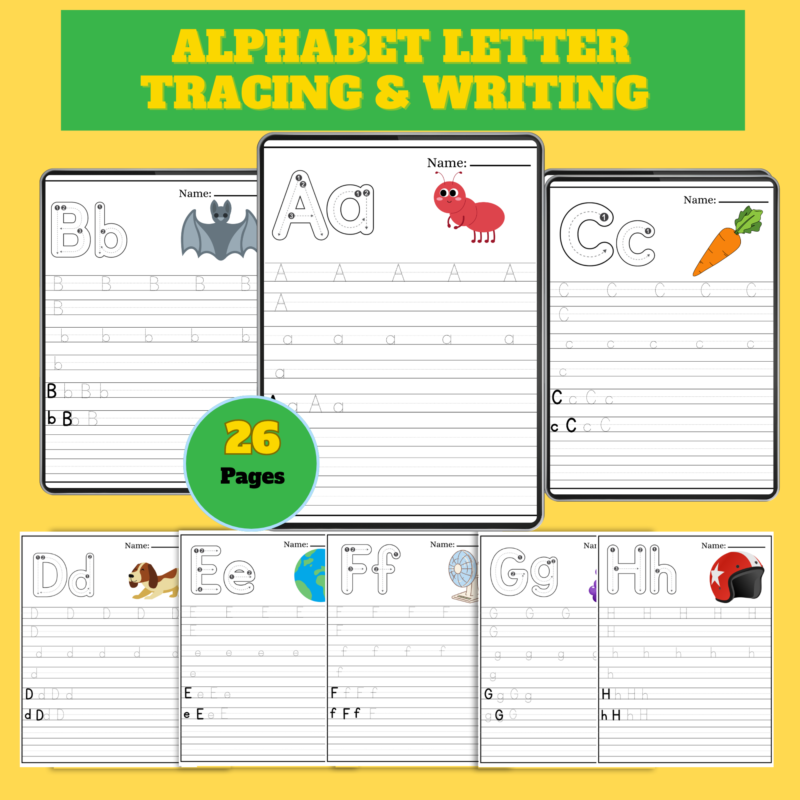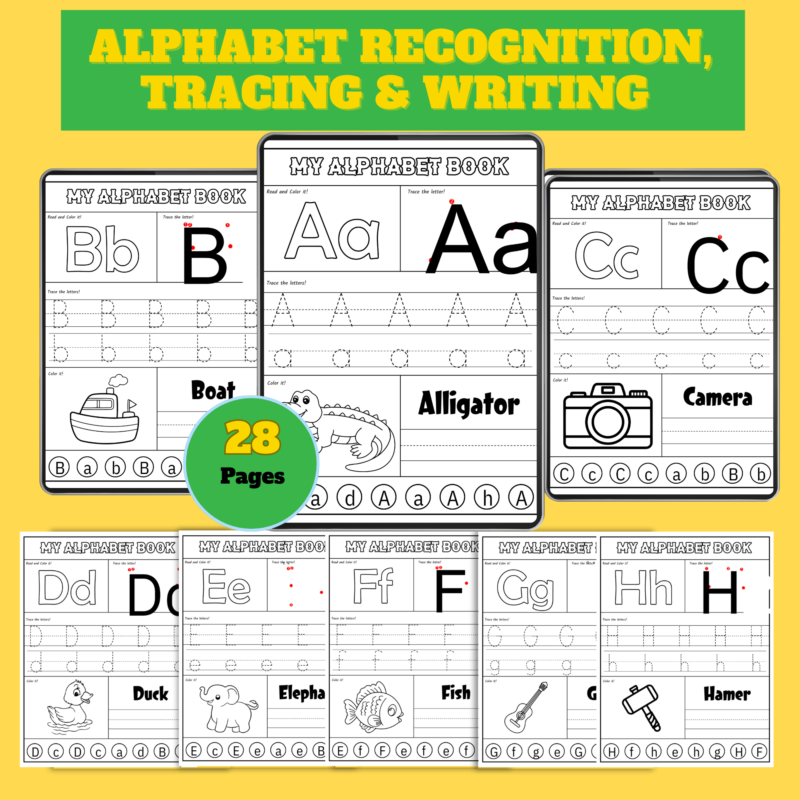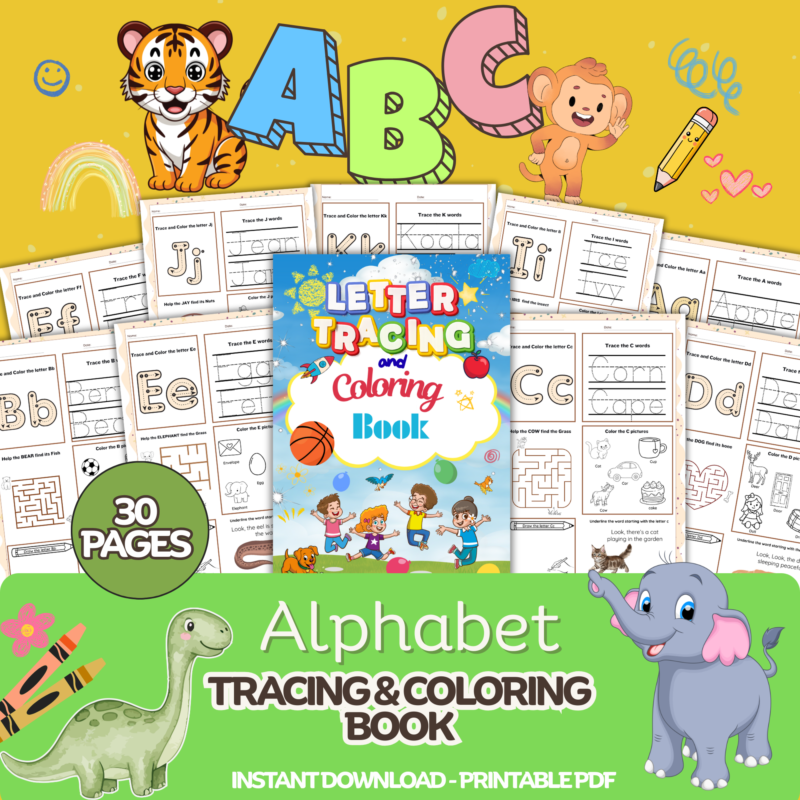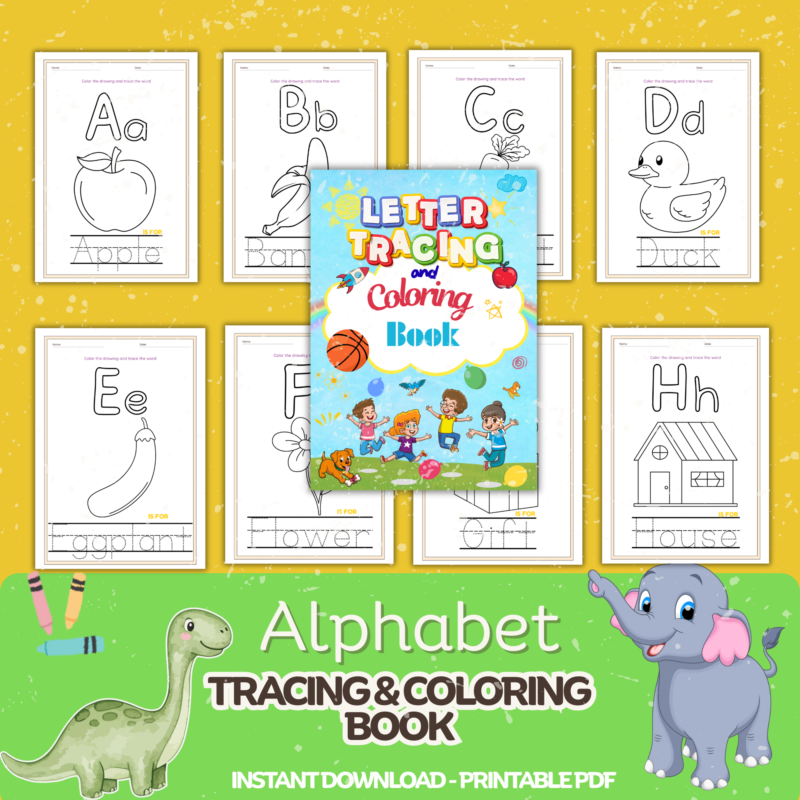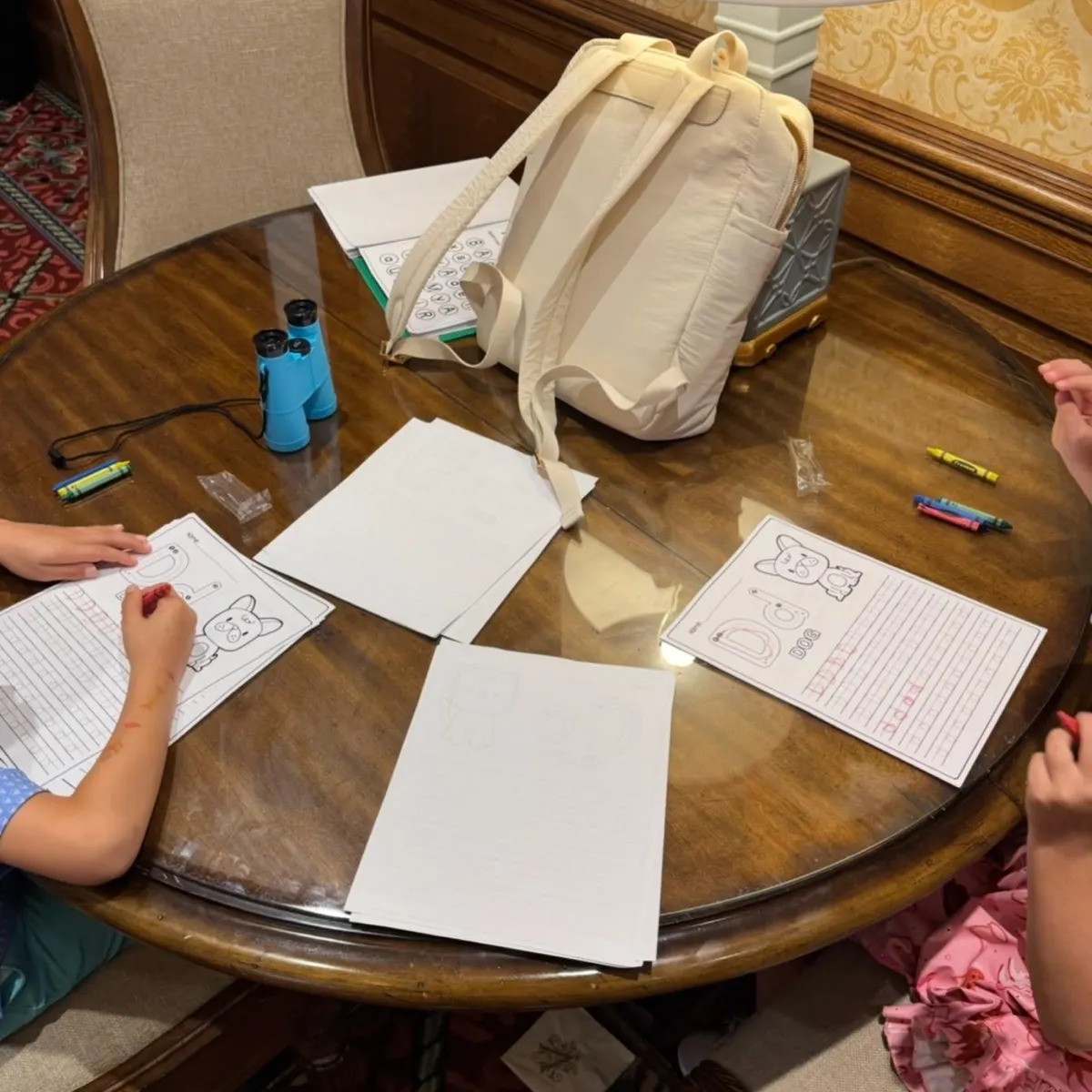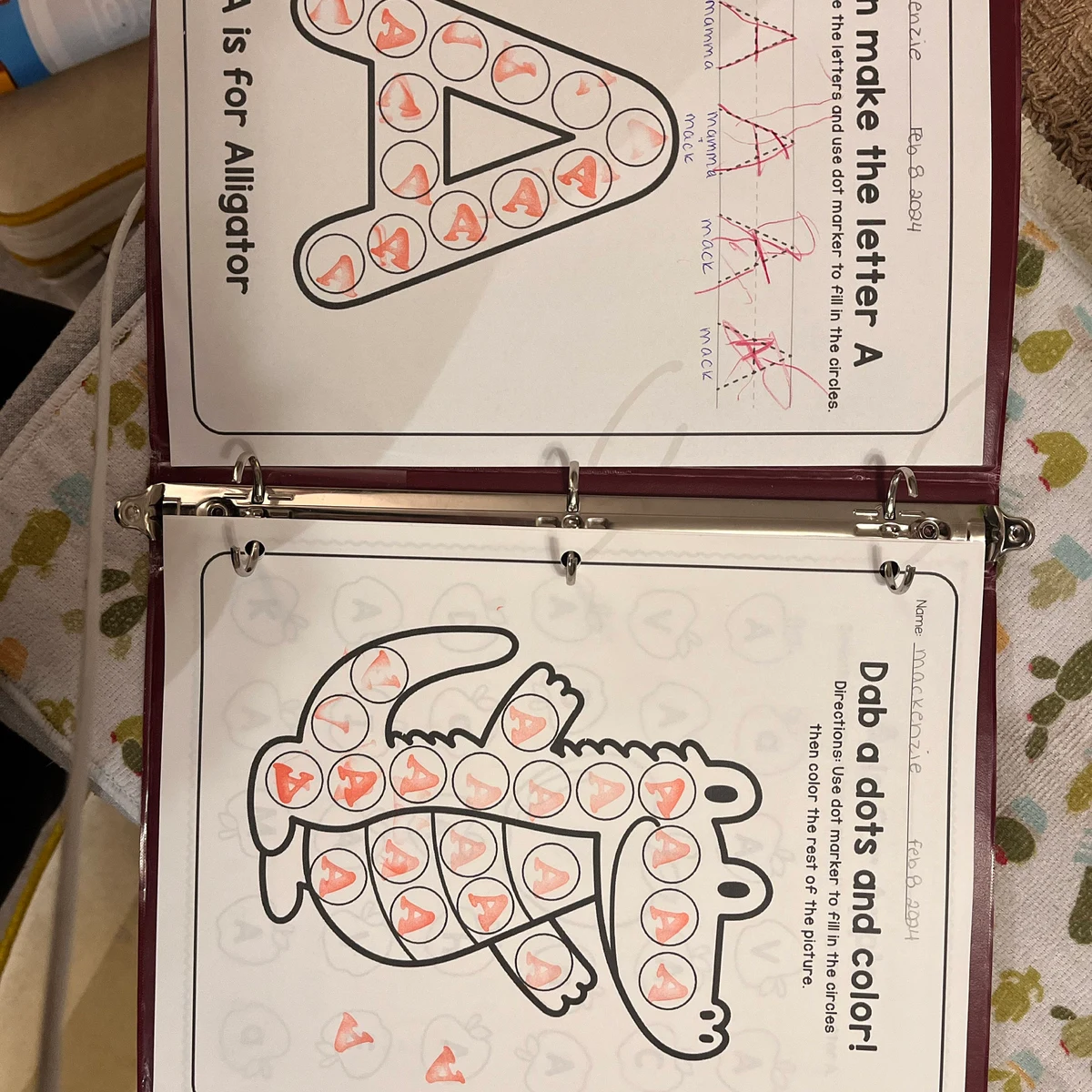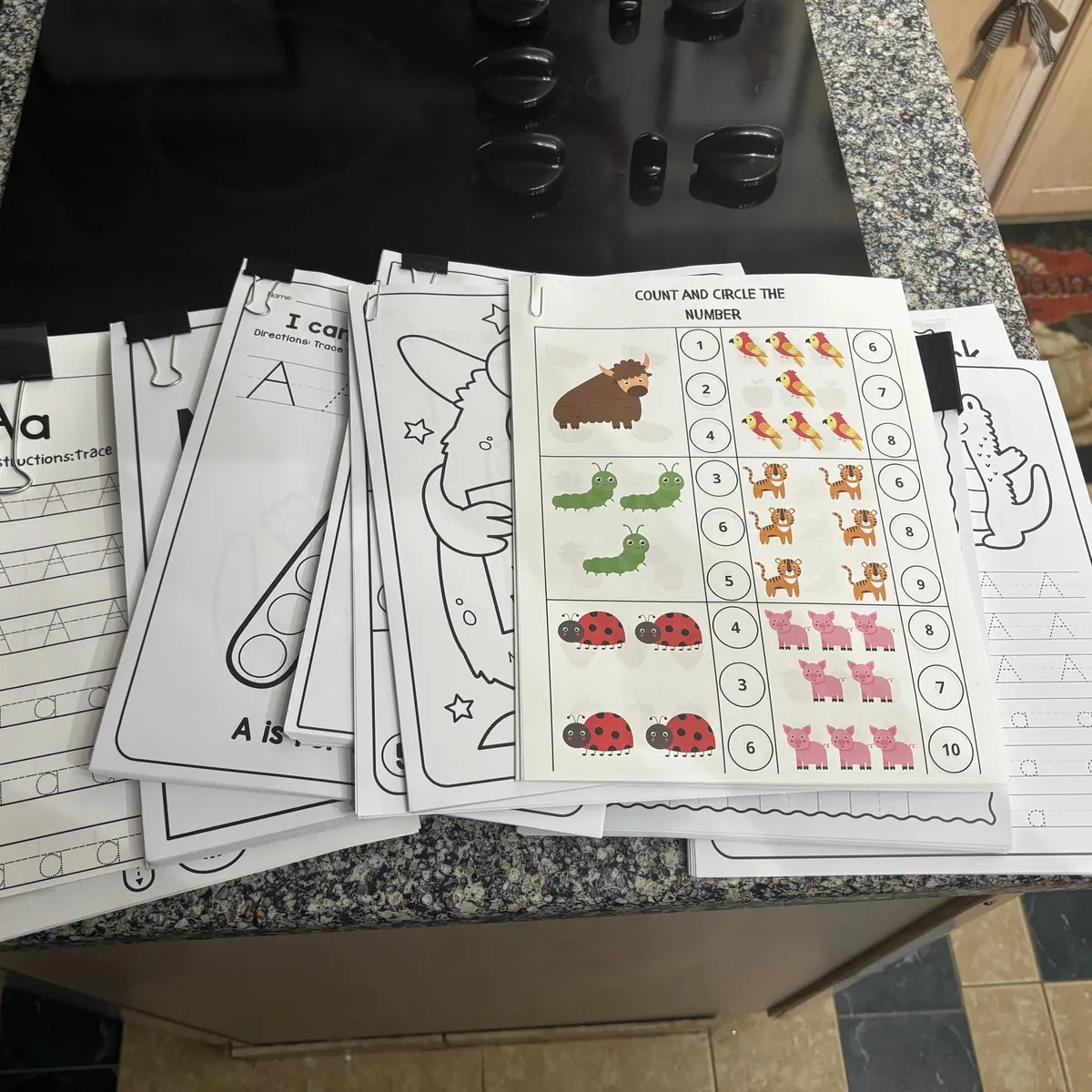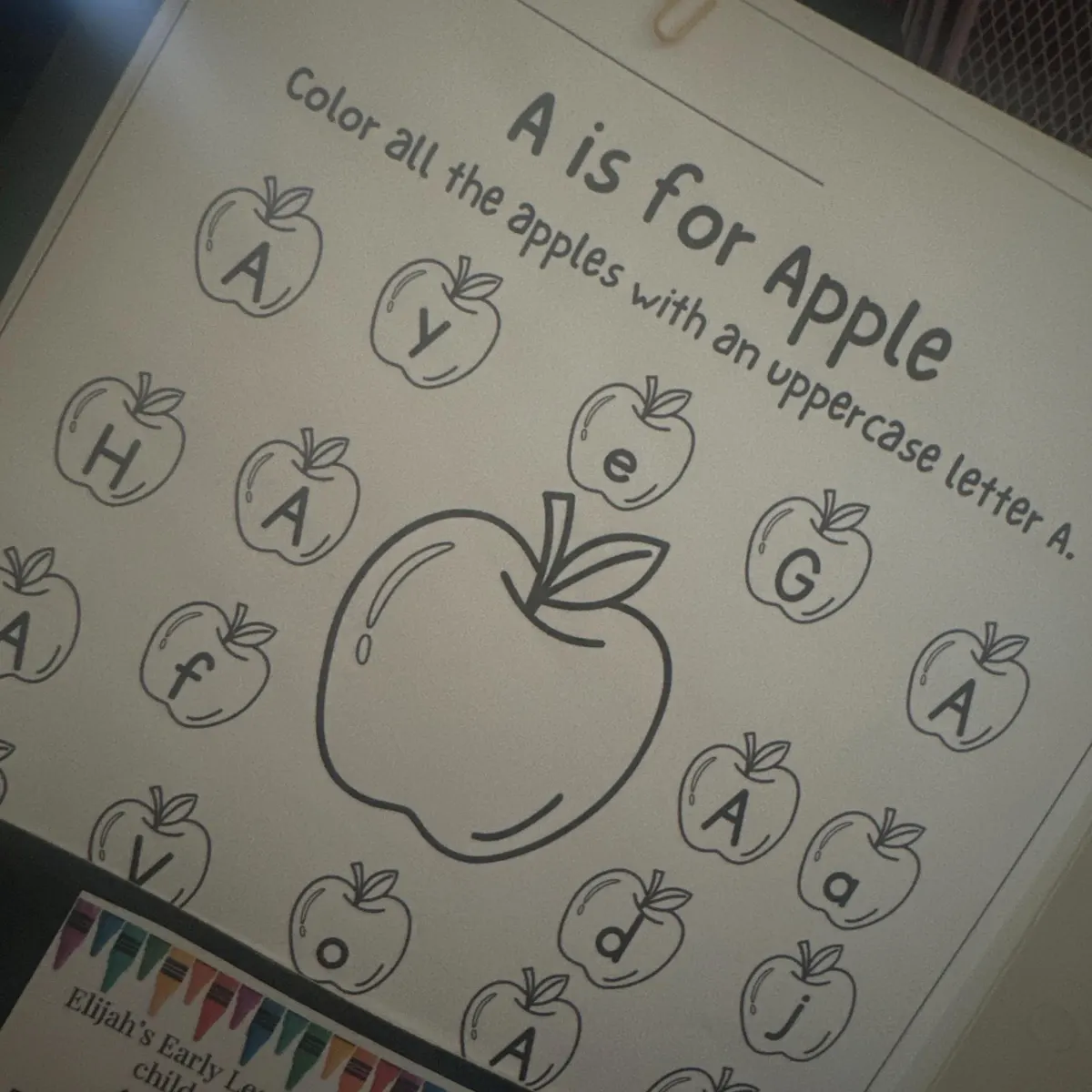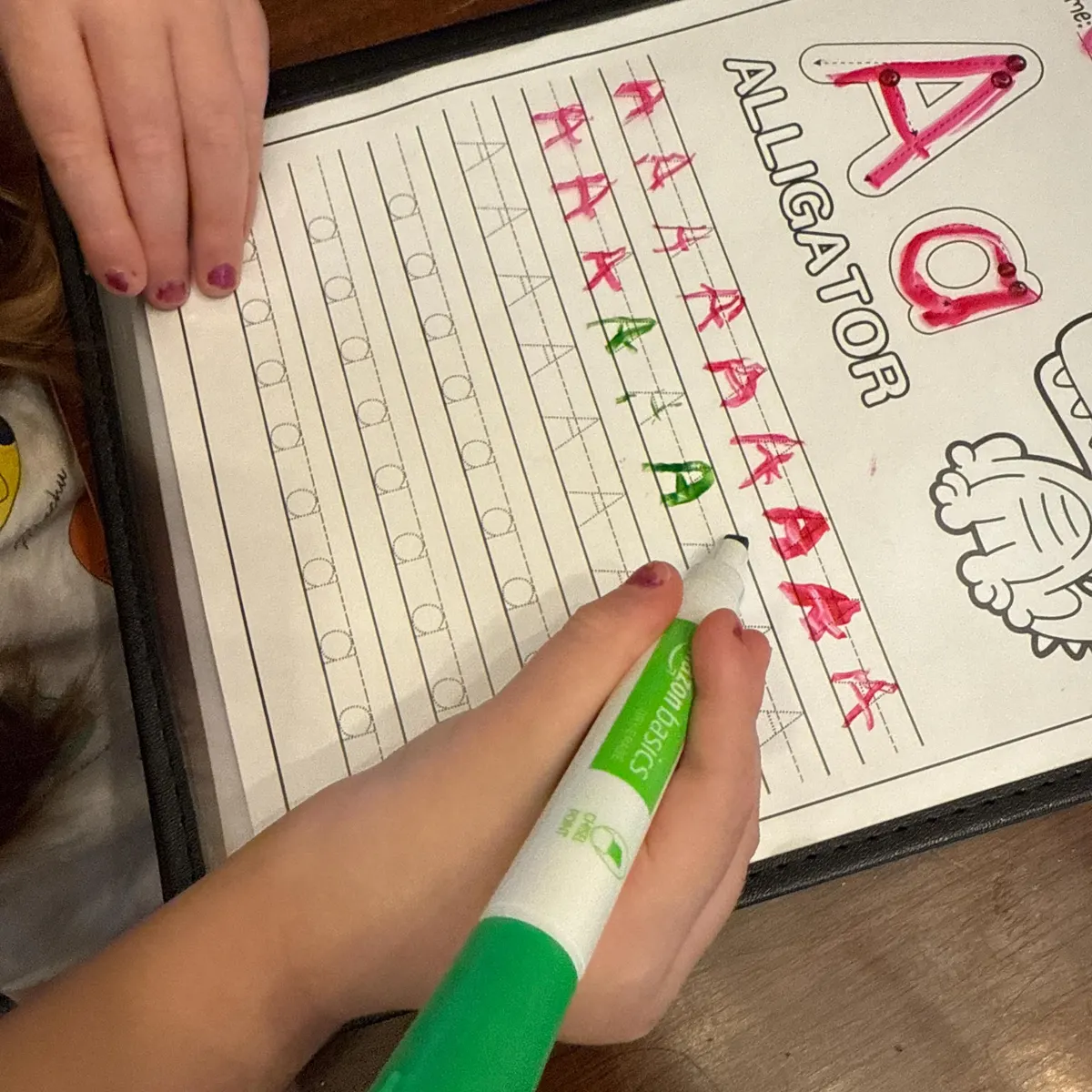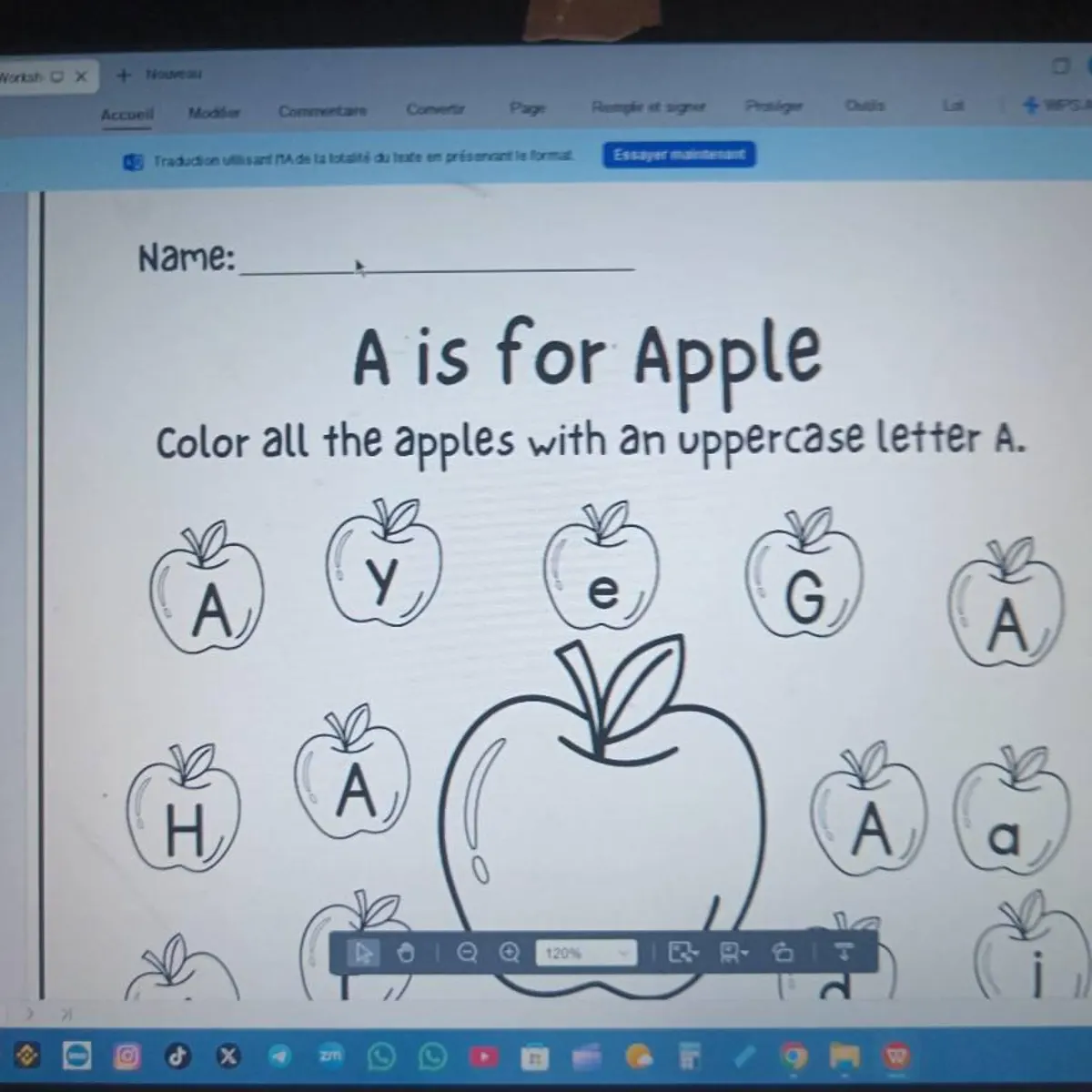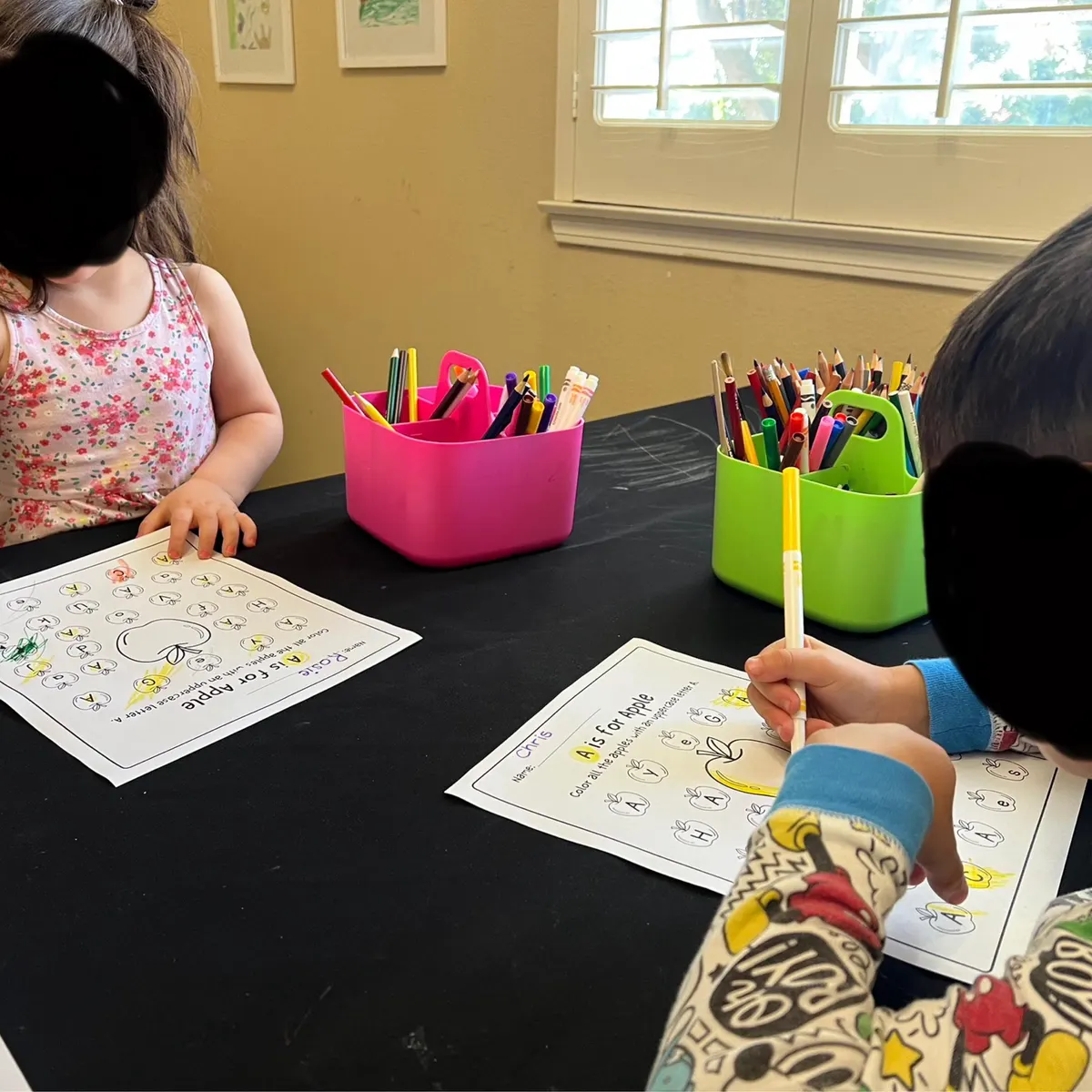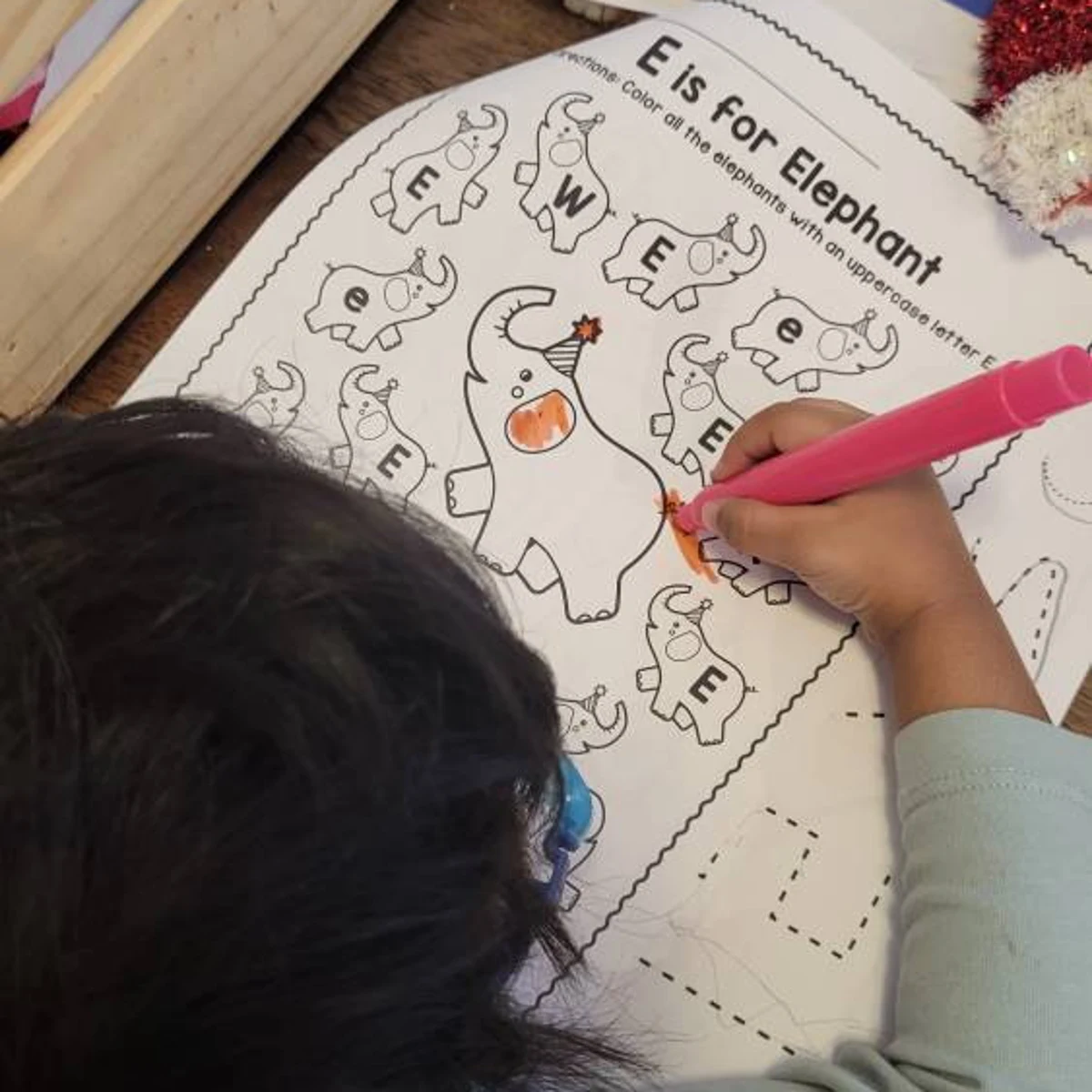

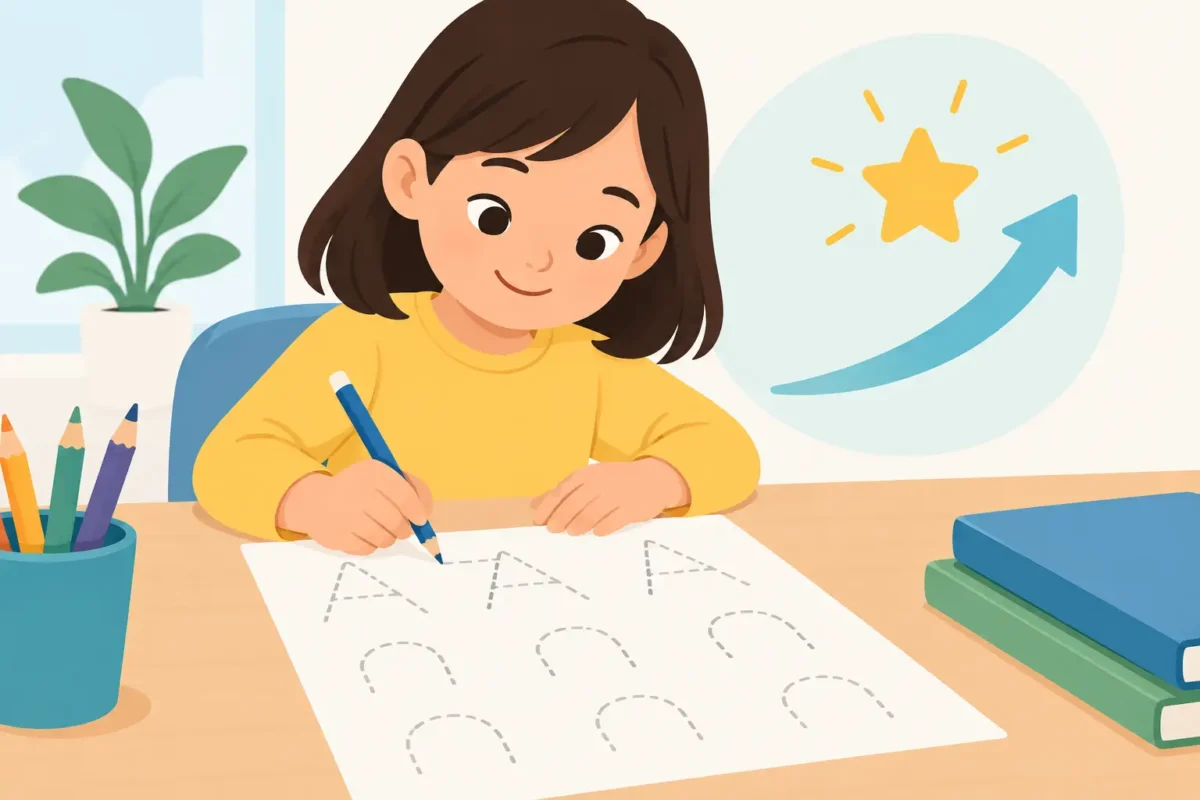
Free A-Z Letter Tracing Worksheets, A-Z Letter Tracing Sheets, and A-Z Letter Tracing Worksheets PDF designed for preschool and kindergarten learners. These fun printable tracing activities help children improve handwriting, alphabet recognition, pencil control, fine motor skills, and writing confidence through engaging uppercase and lowercase tracing practice perfect for classroom, homeschool, and daily learning routines.

Are Digital Downloads Reusable for Learning?

0
Are Digital Downloads Reusable for Learning?

Your child finally traces a row of lowercase a’s with confidence, then asks to do the page again tomorrow. That is one of the best reasons printable learning activities are so useful. But are digital downloads reusable? In most cases, yes: a downloaded worksheet PDF can be saved and printed again for the child or class it was purchased for. The details matter, though, especially when it comes to using files with multiple children, sharing them, and making them last through plenty of eager little hands.

For parents, teachers, and homeschool families, reusable printables can turn one simple resource into many meaningful moments of handwriting, counting, phonics, and fine motor practice. Here is how to use them wisely and get the most learning value from every page.

Are Digital Downloads Reusable After You Print Them?

A digital download is a file, rather than a one-time paper product. Once you download a printable PDF to your device, you can usually keep that file and print it again whenever your family or classroom needs another copy. If a preschooler needs extra practice forming the letter M, for example, you can print that page again next week instead of hunting for a new activity or creating one from scratch.

This is especially helpful because young children learn through repetition. One child may need two tries with number recognition, while another may enjoy completing the same tracing page several times as their pencil control improves. Reprinting lets you match practice to the child instead of rushing ahead just because the first sheet has been used.

Still, reusable does not automatically mean unlimited use in every situation. A purchase is typically intended for personal, household, homeschool, or single-classroom use, depending on the seller’s license. Always review the terms included with the resource before printing for a large group, distributing copies beyond your own classroom, or using materials in a paid program.

Reusable Files Are Not the Same as Shareable Files

It is easy to assume that because a PDF can be printed repeatedly, it can also be emailed, posted, or passed along freely. Those are different things.

A printable worksheet is often designed to be reused by the purchaser with their own children or students. Sharing the original file with friends, coworkers, other parents, or another classroom may violate the creator’s copyright and licensing terms. The same goes for uploading pages to a group folder, school website, social media post, or marketplace.

Think of it this way: printing another counting page for the children you teach is often part of using the resource. Sending the PDF to every family in a parent group is distribution. The first supports your learners. The second gives away a product someone created, illustrated, organized, and made ready to use.

When you need materials for multiple teachers, classrooms, or a daycare program, look for a license that specifically covers that use. This small check protects the creator’s work and helps your school or program use resources confidently.

Why Reprinting Helps Young Learners

For early learners, repeated practice should feel encouraging, not like a test. Printable resources make that easier because you can offer the same skill in a familiar, low-pressure format. A child who felt frustrated by a letter-tracing activity on Monday may return to it happily on Friday after a little rest and encouragement.

Reprinting can support several important early learning goals:

  • Handwriting practice becomes more effective when children have regular chances to trace, copy, and form letters at their own pace.
  • Phonics and beginning reading skills grow when children repeatedly connect letters, sounds, and simple words.
  • Number recognition, counting, addition, and subtraction become more familiar through short, playful practice sessions.
  • Fine motor skills strengthen as little hands color, cut, trace, circle, and follow paths.

The goal is not to make children complete a whole workbook in one sitting. A few minutes of focused, cheerful practice can be plenty for preschool and kindergarten learners. Having the option to print again means you can repeat a favorite page without adding prep work to your day.

Smart Ways to Reuse Printable Worksheets

The simplest option is to print a fresh copy each time. This works beautifully for coloring pages, handwriting sheets, matching activities, and any assignment you want to save in a child’s learning folder. Fresh copies also make progress easy to see. Compare an early attempt at writing a name with one completed a few months later, and both you and your child can celebrate the growth.

For activities that work well with repetition, consider placing printed pages in a dry-erase pocket or laminating them. Children can trace letters, count pictures, follow mazes, and practice writing numbers with a dry-erase marker, then wipe the page clean for another turn. This approach can reduce paper use while making a favorite activity feel special.

Laminated pages are especially handy for morning tubs, quiet-time activities, learning centers, car rides, and homeschool stations. Use them for skills that benefit from frequent review, such as alphabet recognition, shapes, colors, sight words, and simple math facts. Avoid laminating every worksheet, however. Some activities are more meaningful when a child can cut, color, glue, or keep their finished work.

Another helpful approach is to rotate a small set of printable activities. Keep a folder for each child or skill area, then bring back a few familiar pages every couple of weeks. The worksheet may feel new again after a break, while the child gets the comfort of a known routine.

Save Your Downloads So They Stay Easy to Find

A reusable download only saves time if you can locate it when you need it. Before printing, save the PDF in a clear folder on your computer, tablet, or cloud storage account. A simple organization system can make busy mornings much easier.

You might create folders by subject, such as Alphabet, Handwriting, Phonics, Numbers, Math, and Fine Motor. Teachers may prefer folders by month, theme, or classroom center. Rename files with specific, easy-to-search names, such as “Letter B Tracing” or “Counting to 10.”

It also helps to keep a backup of purchased files. Devices fail, emails get buried, and downloads can be difficult to track down months later. Saving your resources in two secure places means your favorite activities are ready when a child suddenly wants to practice dinosaurs, apples, or the letter S.

If a file will not open or print correctly, check that you have fully downloaded it and that your PDF reader is up to date. Printing one test page first can save paper and ink, especially for larger workbooks.

Make Every Reprint Feel Purposeful

Using the same worksheet more than once does not have to feel repetitive to a child. Change the experience slightly. On one day, invite your learner to use crayons. On another, try colored pencils, dot markers, stamps, or a dry-erase marker in a reusable sleeve. For a counting page, use small buttons, toy animals, or blocks to count before writing the answer.

You can also adjust the amount of help you offer. At first, sit beside your child and model how to start each letter or solve each problem. Later, let them complete a few items independently. That gentle shift builds confidence and shows you which skills are becoming secure.

For classroom use, the same printable can work in different ways across the week. Introduce it during small group instruction, place it in a learning center with manipulatives, then send a fresh copy home for optional practice if your license allows parent distribution of printed pages. A familiar format gives children more mental energy for learning the skill itself.

When a New Activity Is Better

Reusing a download is valuable, but children also need variety. If a child is consistently bored, guessing, or avoiding a worksheet, change the activity, shorten the task, or choose a page that better matches their current level. Repetition works best when it is successful and manageable.

A child who has mastered tracing straight lines may be ready for curves, shapes, or letter formation. A learner who counts objects accurately to five may be ready to count to 10 or compare groups. Printable resources are most helpful when they grow with the child rather than keeping them on the same task for too long.

Fun Clever Fox worksheets are made for the kind of flexible practice that fits real family and classroom routines: print a page when you need it, return to it when a child needs more support, and celebrate every small step forward. A well-loved printable is not just a page you use twice. It is another calm, playful chance for a young learner to say, “I can do it.”

Leave a Reply

Your email address will not be published. Required fields are marked *

Original price was: €3.50.Current price is: €2.50.

Free A-Z Letter Tracing Worksheets, A-Z Letter Tracing Sheets, and A-Z Letter Tracing Worksheets PDF designed for preschool and kindergarten learners. These fun printable tracing activities help children improve handwriting, alphabet recognition, pencil control, fine motor skills, and writing confidence through engaging uppercase and lowercase tracing practice perfect for classroom, homeschool, and daily learning routines.

Are Digital Downloads Reusable for Learning?

0
Are Digital Downloads Reusable for Learning?

Your child finally traces a row of lowercase a’s with confidence, then asks to do the page again tomorrow. That is one of the best reasons printable learning activities are so useful. But are digital downloads reusable? In most cases, yes: a downloaded worksheet PDF can be saved and printed again for the child or class it was purchased for. The details matter, though, especially when it comes to using files with multiple children, sharing them, and making them last through plenty of eager little hands.

For parents, teachers, and homeschool families, reusable printables can turn one simple resource into many meaningful moments of handwriting, counting, phonics, and fine motor practice. Here is how to use them wisely and get the most learning value from every page.

Are Digital Downloads Reusable After You Print Them?

A digital download is a file, rather than a one-time paper product. Once you download a printable PDF to your device, you can usually keep that file and print it again whenever your family or classroom needs another copy. If a preschooler needs extra practice forming the letter M, for example, you can print that page again next week instead of hunting for a new activity or creating one from scratch.

This is especially helpful because young children learn through repetition. One child may need two tries with number recognition, while another may enjoy completing the same tracing page several times as their pencil control improves. Reprinting lets you match practice to the child instead of rushing ahead just because the first sheet has been used.

Still, reusable does not automatically mean unlimited use in every situation. A purchase is typically intended for personal, household, homeschool, or single-classroom use, depending on the seller’s license. Always review the terms included with the resource before printing for a large group, distributing copies beyond your own classroom, or using materials in a paid program.

Reusable Files Are Not the Same as Shareable Files

It is easy to assume that because a PDF can be printed repeatedly, it can also be emailed, posted, or passed along freely. Those are different things.

A printable worksheet is often designed to be reused by the purchaser with their own children or students. Sharing the original file with friends, coworkers, other parents, or another classroom may violate the creator’s copyright and licensing terms. The same goes for uploading pages to a group folder, school website, social media post, or marketplace.

Think of it this way: printing another counting page for the children you teach is often part of using the resource. Sending the PDF to every family in a parent group is distribution. The first supports your learners. The second gives away a product someone created, illustrated, organized, and made ready to use.

When you need materials for multiple teachers, classrooms, or a daycare program, look for a license that specifically covers that use. This small check protects the creator’s work and helps your school or program use resources confidently.

Why Reprinting Helps Young Learners

For early learners, repeated practice should feel encouraging, not like a test. Printable resources make that easier because you can offer the same skill in a familiar, low-pressure format. A child who felt frustrated by a letter-tracing activity on Monday may return to it happily on Friday after a little rest and encouragement.

Reprinting can support several important early learning goals:

  • Handwriting practice becomes more effective when children have regular chances to trace, copy, and form letters at their own pace.
  • Phonics and beginning reading skills grow when children repeatedly connect letters, sounds, and simple words.
  • Number recognition, counting, addition, and subtraction become more familiar through short, playful practice sessions.
  • Fine motor skills strengthen as little hands color, cut, trace, circle, and follow paths.

The goal is not to make children complete a whole workbook in one sitting. A few minutes of focused, cheerful practice can be plenty for preschool and kindergarten learners. Having the option to print again means you can repeat a favorite page without adding prep work to your day.

Smart Ways to Reuse Printable Worksheets

The simplest option is to print a fresh copy each time. This works beautifully for coloring pages, handwriting sheets, matching activities, and any assignment you want to save in a child’s learning folder. Fresh copies also make progress easy to see. Compare an early attempt at writing a name with one completed a few months later, and both you and your child can celebrate the growth.

For activities that work well with repetition, consider placing printed pages in a dry-erase pocket or laminating them. Children can trace letters, count pictures, follow mazes, and practice writing numbers with a dry-erase marker, then wipe the page clean for another turn. This approach can reduce paper use while making a favorite activity feel special.

Laminated pages are especially handy for morning tubs, quiet-time activities, learning centers, car rides, and homeschool stations. Use them for skills that benefit from frequent review, such as alphabet recognition, shapes, colors, sight words, and simple math facts. Avoid laminating every worksheet, however. Some activities are more meaningful when a child can cut, color, glue, or keep their finished work.

Another helpful approach is to rotate a small set of printable activities. Keep a folder for each child or skill area, then bring back a few familiar pages every couple of weeks. The worksheet may feel new again after a break, while the child gets the comfort of a known routine.

Save Your Downloads So They Stay Easy to Find

A reusable download only saves time if you can locate it when you need it. Before printing, save the PDF in a clear folder on your computer, tablet, or cloud storage account. A simple organization system can make busy mornings much easier.

You might create folders by subject, such as Alphabet, Handwriting, Phonics, Numbers, Math, and Fine Motor. Teachers may prefer folders by month, theme, or classroom center. Rename files with specific, easy-to-search names, such as “Letter B Tracing” or “Counting to 10.”

It also helps to keep a backup of purchased files. Devices fail, emails get buried, and downloads can be difficult to track down months later. Saving your resources in two secure places means your favorite activities are ready when a child suddenly wants to practice dinosaurs, apples, or the letter S.

If a file will not open or print correctly, check that you have fully downloaded it and that your PDF reader is up to date. Printing one test page first can save paper and ink, especially for larger workbooks.

Make Every Reprint Feel Purposeful

Using the same worksheet more than once does not have to feel repetitive to a child. Change the experience slightly. On one day, invite your learner to use crayons. On another, try colored pencils, dot markers, stamps, or a dry-erase marker in a reusable sleeve. For a counting page, use small buttons, toy animals, or blocks to count before writing the answer.

You can also adjust the amount of help you offer. At first, sit beside your child and model how to start each letter or solve each problem. Later, let them complete a few items independently. That gentle shift builds confidence and shows you which skills are becoming secure.

For classroom use, the same printable can work in different ways across the week. Introduce it during small group instruction, place it in a learning center with manipulatives, then send a fresh copy home for optional practice if your license allows parent distribution of printed pages. A familiar format gives children more mental energy for learning the skill itself.

When a New Activity Is Better

Reusing a download is valuable, but children also need variety. If a child is consistently bored, guessing, or avoiding a worksheet, change the activity, shorten the task, or choose a page that better matches their current level. Repetition works best when it is successful and manageable.

A child who has mastered tracing straight lines may be ready for curves, shapes, or letter formation. A learner who counts objects accurately to five may be ready to count to 10 or compare groups. Printable resources are most helpful when they grow with the child rather than keeping them on the same task for too long.

Fun Clever Fox worksheets are made for the kind of flexible practice that fits real family and classroom routines: print a page when you need it, return to it when a child needs more support, and celebrate every small step forward. A well-loved printable is not just a page you use twice. It is another calm, playful chance for a young learner to say, “I can do it.”

Leave a Reply

Your email address will not be published. Required fields are marked *

Original price was: €3.50.Current price is: €2.50.