A child who can name letters may still look at a row of words and wonder, “Where do I start?” That is the small but meaningful gap sentence practice helps fill. This sentence building worksheets guide shows parents and educators how to use simple printable activities to help preschoolers and kindergarteners turn familiar words into clear, complete thoughts.
Sentence building is not about asking young children to write a long story before they are ready. It is about helping them notice that words have an order, that a sentence shares an idea, and that print has helpful rules. With short, playful practice, children begin to see themselves as readers and writers.
What Are Sentence Building Worksheets?
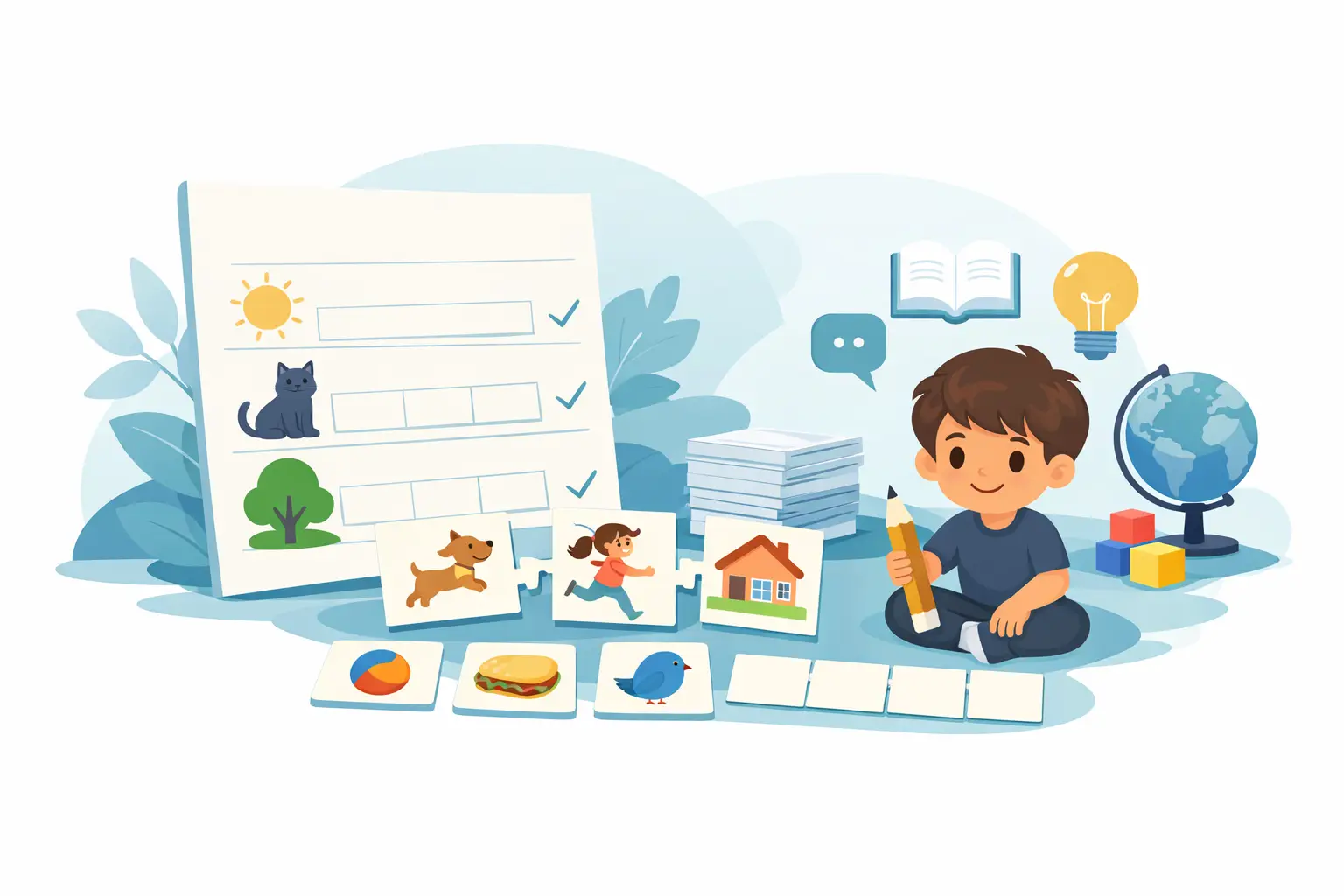
Sentence building worksheets give children a hands-on way to arrange, read, copy, or write a simple sentence. A page may include picture clues, word cards to cut and paste, mixed-up words to put in order, tracing lines, or a space to draw what the sentence says.
For early learners, the best activities use short sentences with familiar vocabulary. “I see a cat.” and “The sun is hot.” are much more useful starting points than sentences packed with new words. When the child already understands the words, they can focus on the new skill: putting those words together in the right order.
These worksheets support several early literacy skills at once. Children practice left-to-right tracking, high-frequency words, phonics, spacing, capital letters, punctuation, handwriting, and comprehension. They also learn a powerful lesson: written words can capture what they see, think, and say.
Why Sentence Practice Matters in Preschool and Kindergarten
Young children learn language by talking long before they learn to write. Sentence building connects that natural spoken language to the marks they see on a page. When a child says, “The dog can run,” then builds the sentence with word cards, print starts to feel meaningful rather than mysterious.
The confidence boost matters just as much as the academic skill. A child who successfully reads a sentence they built often wants to do it again. That repeated success can make phonics practice, sight words, and handwriting feel less like separate tasks and more like parts of real reading and writing.
For teachers, sentence activities can also reveal where support is needed. A child may recognize every word card but place them in a random order. Another may build the sentence correctly but skip the period. Those small observations make it easier to choose the next lesson without guessing.
Choosing Sentence Building Worksheets by Skill Level
Not every child needs the same kind of sentence page. The right worksheet should offer a small challenge while still giving enough support for a successful finish. If a child is frustrated, simplify the sentence length or reduce the number of choices. If they finish in seconds, add a writing or drawing extension.
For preschool learners
Preschool sentence work should be very visual and very short. Begin with oral sentences about pictures: “I see a fish.” “A bug is red.” Then invite children to match a finished sentence to its picture or arrange two to four word cards.
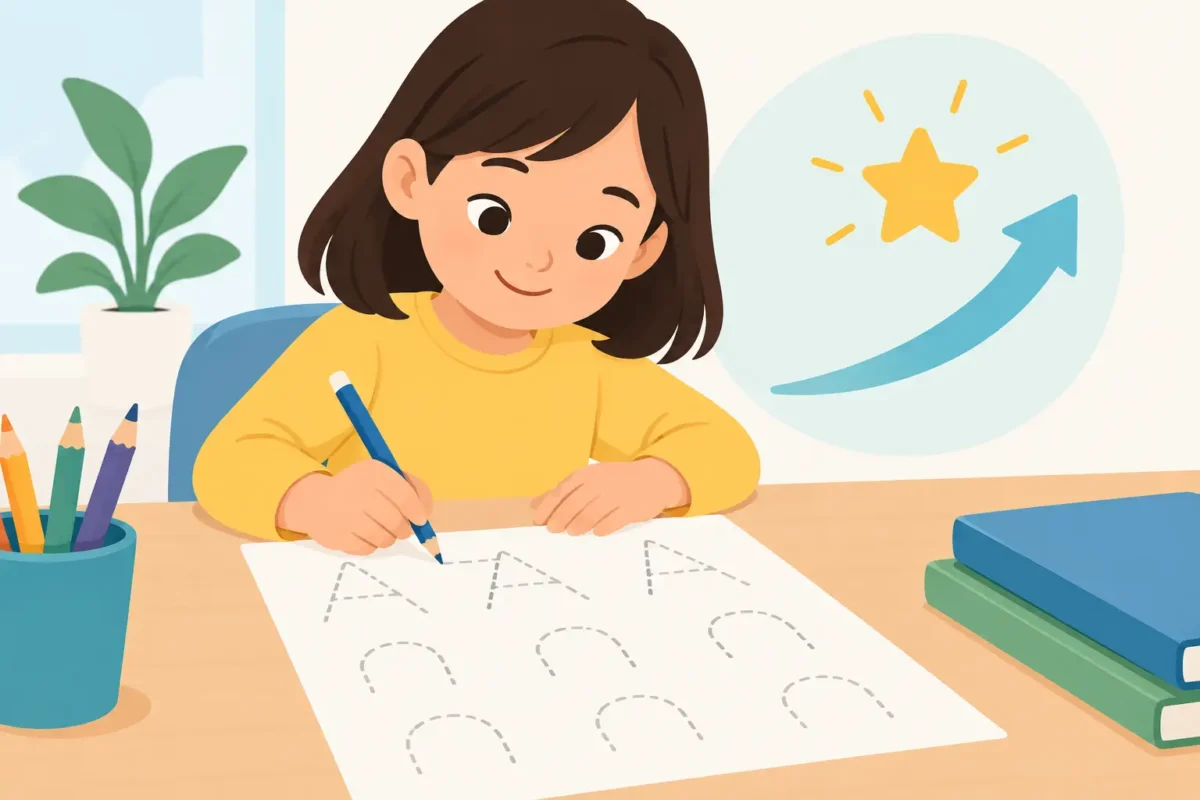
At this stage, cutting, gluing, pointing, and saying the words aloud may be more valuable than independent writing. Fine motor control is still developing, and many preschoolers are only beginning to recognize letters and sounds. A worksheet with large print, clear pictures, and predictable sentence patterns keeps the task friendly and achievable.
For kindergarten learners
Kindergarteners are often ready to sequence four to six words, read simple decodable sentences, and copy or write a sentence with support. They can begin noticing conventions such as starting with a capital letter, leaving spaces between words, and adding an ending mark.
Picture-supported sentences are still helpful, especially for emerging readers. A worksheet might ask a child to put “The,” “pig,” “can,” and “run” in order, read the sentence aloud, and write it on a line. That one page reinforces reading, writing, and comprehension without becoming overwhelming.
For children ready for an extra challenge
Once a child can reliably build simple sentences, vary one part of the activity. Ask them to choose the correct verb, add an adjective, finish a sentence from a picture, or write a second sentence about the same scene. For example, after building “The frog can jump,” they might write, “It is green.”
The goal is not to rush into complicated grammar. It is to help children expand ideas gradually while keeping their confidence high.
What to Look for in a Good Printable
A useful sentence worksheet does more than fill a few quiet minutes. It should make the learning goal obvious to the adult and manageable for the child. Look for uncluttered pages with large, easy-to-read text and pictures that truly match the sentence. If the picture is confusing, the child may spend more energy guessing than practicing language.
Word choice matters, too. Early readers benefit from familiar nouns and decodable words, along with a small number of common sight words such as I, see, the, is, and can. Repeated sentence frames help children feel secure. Changing only one word, as in “I see a dog,” “I see a pig,” and “I see a hen,” lets them practice without starting from zero each time.
The best printable sets also offer variety. Cut-and-paste pages are wonderful for hands-on practice, but they use more time and supplies. Write-the-sentence pages are quick and helpful for handwriting, but they may be too demanding for a child who is still learning letter formation. Having both options allows you to match the activity to the day, the child, and the setting.
How to Use Sentence Worksheets Without Overwhelming Children
Start small. One sentence completed with care is more valuable than a stack of rushed pages. Sit beside a new learner for the first few attempts, read each word together, and gently guide them to look for clues. The capital letter often belongs at the beginning. The period usually belongs at the end. A picture can help confirm whether the finished sentence makes sense.
As confidence grows, step back a little. Ask, “What word do you think comes first?” or “Does that sound right when we read it?” These questions encourage children to think rather than wait for the answer. If they make an error, read the sentence aloud exactly as arranged. Hearing “Can the dog run” may help them recognize that the words need a different order.
Keep practice brief and cheerful. Five to ten minutes after breakfast, during a literacy center, or before quiet time can be enough. Some children enjoy cutting and gluing on one day, then tracing or writing on the next. Others need movement first, so try placing word cards across the table or floor for them to collect and arrange.
A Simple Sentence-Building Routine
A predictable routine helps children know what to do and makes preparation easier for adults. Begin by looking at the picture together and talking about what is happening. Next, read the words aloud, touching each one as you say it. Then let the child arrange the words, read the completed sentence, and check it against the picture.
Finish with a small extension when it fits. The child can copy the sentence, trace it, circle the capital letter, tap the spaces, add the period, or draw another detail. You do not need every extension every time. Choosing one keeps the activity focused and prevents a young learner from feeling like the page has no end.
For a class or homeschool group, place the same sentence frame in a center with several picture and noun cards. Children can create different sentences using one pattern. This adds a playful element while giving adults a simple way to differentiate: some children build and read, while others build, read, and write.
Common Mistakes to Avoid
One common mistake is treating sentence building like a test. Early learners need time to talk through a sentence, move cards around, and try again. Correcting every hesitation can make the activity feel high-pressure. Instead, celebrate the part they got right and offer one clear next step.
Another mistake is choosing sentences that are too long or filled with unfamiliar vocabulary. A worksheet may look more advanced, but it will not necessarily teach more. Short, meaningful sentences create the repetition children need to recognize patterns and build independence.
It also helps to avoid using worksheets as the only form of sentence practice. Read simple books together, point out periods in favorite stories, and build silly oral sentences during play. Printable pages work best when they are part of a language-rich routine, not a replacement for conversation and shared reading.
Making Printable Practice Feel Like Play
A few small touches can turn a worksheet into an activity children look forward to. Use crayons to color the picture after reading the sentence. Let children use a glue stick, child-safe scissors, or letter tiles before they write. Read the finished sentence in a robot voice, a whisper, or a cheerful character voice.
You can also make the sentence personal. If the worksheet says, “I like cake,” ask what the child likes and help them build a new sentence with their own idea. Personal writing gives children a reason to care about word order because the words are carrying their message.
Fun Clever Fox printable resources are designed for this kind of low-prep, screen-free practice, giving families and classrooms clear activities that can be printed when learning time appears.
A well-chosen sentence page is a small invitation: put these words together, read what you made, and see that your ideas belong on paper. Give children plenty of chances to accept that invitation, one happy sentence at a time.