A child proudly holding up a strip of paper they cut all by themselves is doing more than finishing a craft. They are building hand strength, coordination, focus, and confidence with every careful snip. The best scissor skills printables turn that practice into a playful, low-prep activity that works at home, in preschool, or during a kindergarten center.
Cutting can look simple to adults, but it asks young children to use several new skills at once. They need to hold scissors safely, open and close the blades, guide the paper with their helping hand, and follow a path without rushing. The right printable gives children a clear goal while keeping the challenge just right for their current stage.
Why Scissor Practice Matters for Early Learners
Scissor activities are a valuable part of fine motor development. The small muscles in a child’s hands and fingers get stronger as they squeeze, release, turn, and control the scissors. Those same muscles support later skills such as pencil grip, handwriting, coloring, buttoning clothes, and using classroom tools.
Cutting also builds bilateral coordination. One hand operates the scissors while the other holds and rotates the paper. This may take plenty of practice, especially for preschoolers who are still learning which hand feels most comfortable for cutting. There is no need to expect perfectly neat lines right away. Consistent practice is what helps children become more controlled over time.
For teachers and homeschool families, printable cutting activities offer an easy way to add purposeful fine motor work to the day. Print a page, gather child-safe scissors, and you have a screen-free task that feels fun while supporting school readiness.
What Makes the Best Scissor Skills Printables?
The best scissor skills printables are not simply pages filled with lines. They provide a gradual path from easy cuts to more detailed shapes, so children can experience success before facing a harder challenge. A three-year-old just learning to snip needs a very different page than a kindergartener preparing to cut out small picture pieces.
Look for bold, easy-to-see cutting lines and plenty of white space around each activity. Thick lines help children understand where to cut, while open layouts make it easier to turn the paper. Busy pages with tiny details can be frustrating for beginners, even if the pictures are cute.
Playful themes matter, too. Children are more likely to keep practicing when they are cutting fringe onto a lion’s mane, following roads to help a vehicle move, or cutting out simple seasonal pictures. A worksheet should feel like an activity, not a test.
Finally, choose printables that offer repeated practice without feeling repetitive. A mix of lines, paths, shapes, and simple cut-and-paste tasks gives children a reason to use the same developing skill in new ways.
Start With the Right Cutting Level
Level 1: Snipping Paper Strips
Before children can follow a line, they need to understand the basic open-and-close motion of scissors. Short paper strips are ideal for this stage. Invite your child to make one snip across each strip, then celebrate the little pieces they create.
At this level, accuracy is not the goal. The goal is learning how the scissors feel and building enough hand strength to make a clean snip. Some children may need an adult to help position the paper at first, and that is completely normal.
Level 2: Straight Lines
Once a child can snip independently, straight-line cutting is the next natural step. Long, thick lines give young learners room to practice moving forward with the scissors. Start with short lines, then offer longer ones as control improves.
A helpful reminder is to encourage children to keep their thumb facing up. This simple cue can make scissor positioning easier without turning practice into a correction-filled lesson.
Level 3: Zigzags and Gentle Curves
Zigzags introduce stopping and turning, while gentle curves help children learn to rotate the paper with their helping hand. These paths are more challenging because children must slow down and make small adjustments.
This is often the stage where children want to go fast. Encourage them to take “tiny snips” around turns. A page does not need to be cut perfectly to be successful. Finishing a trickier path with patience is a real accomplishment.
Level 4: Shapes and Simple Pictures
Cutting out circles, squares, triangles, and familiar pictures requires more precise paper turning. These activities are especially useful for pre-K and kindergarten learners because they combine fine motor practice with shape recognition, vocabulary, or themed learning.
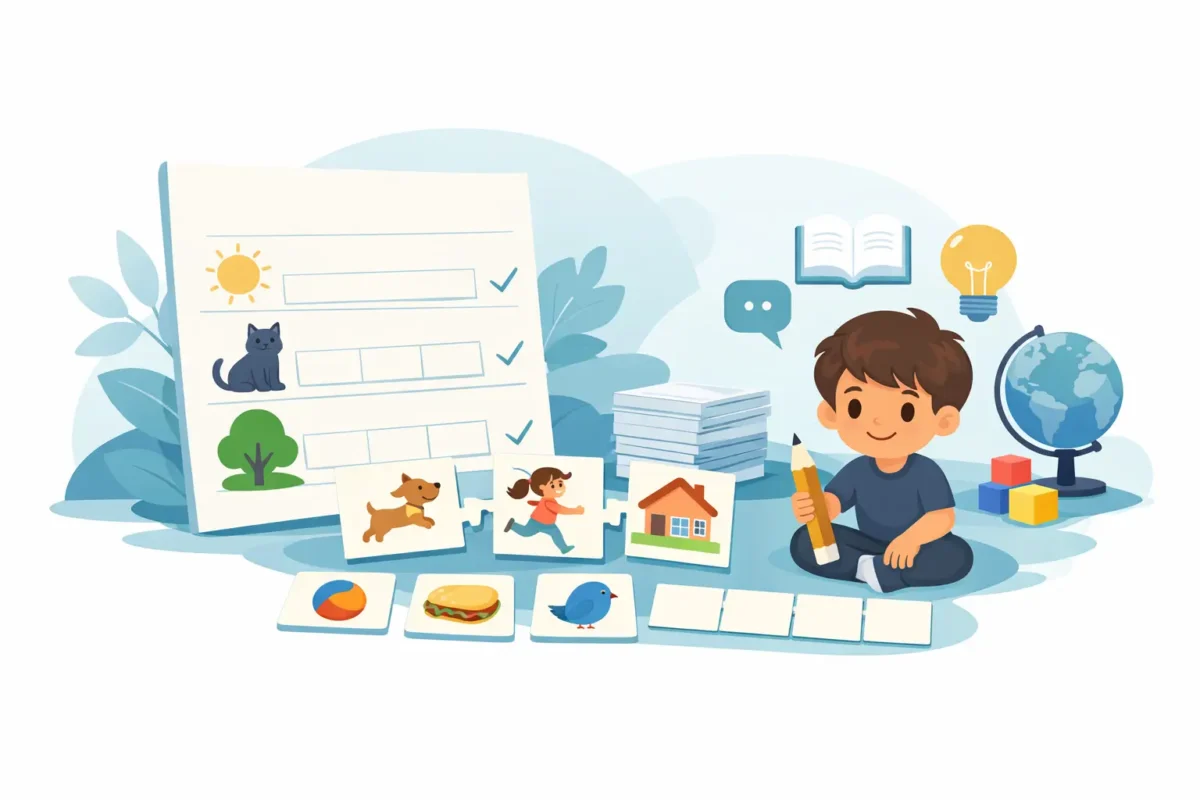
For example, a child might cut out colored shapes and sort them, create a simple collage, or match picture pieces to a worksheet. This gives cutting a meaningful purpose beyond following a line.
How to Set Up a Stress-Free Cutting Activity
A successful scissor activity does not require a complicated lesson plan. Choose one printable that matches your child’s ability, set out child-safe scissors, and give them a clear place to work. A table is usually easier than the floor because it provides a stable surface for holding and turning paper.
For beginners, it can help to cut the printable into smaller sections before handing it over. A full sheet may be awkward for little hands to manage. Smaller strips and individual cards make the task feel more manageable and help children focus on one path at a time.
Show the motion once, then let your child try. Too much hand-over-hand help can make a child feel like the work belongs to the adult. Instead, offer short prompts such as, “Open, close, move forward,” or, “Turn the paper a little.”
Keep practice brief. Five to ten focused minutes is often more useful than asking a young child to complete several pages at once. If they are still excited, let them continue. If they are tired or frustrated, save the next page for another day.
Safety Habits to Teach From the Start
Scissor safety should be calm, clear, and consistent. Young children should use age-appropriate safety scissors and sit while cutting. Teach them to keep scissors pointed down when walking and to hand scissors to an adult handle-first.
It is also helpful to explain that scissors are for paper, not hair, clothes, books, or furniture. Rather than making safety feel scary, present it as part of being a capable helper. Children often respond well when they know safe habits are what “careful cutters” do.
Adult supervision is still needed, particularly for toddlers and children who are brand new to scissors. Readiness varies widely, so choose the level of support based on the individual child rather than age alone.
Make Printable Cutting Practice More Fun
A printable becomes even more engaging when it leads into a small project. After cutting out pictures, children can glue them onto construction paper, sort them by color, make a scene, or use them in a pretend-play activity. That extra step helps children see their cutting as useful and creative.
Try changing the routine from time to time. One day, use a cutting page as a quiet morning activity. Another day, place it in a fine motor center with glue sticks and crayons. At home, it can be a helpful independent activity while you prepare dinner or work nearby.
For a little extra motivation, notice the effort instead of only the result. Say, “You kept turning the paper around the curve,” or, “Your hand stayed strong while you made those snips.” Specific encouragement helps children understand what they are learning and makes them more willing to try again.
Choosing Printables for Preschool and Kindergarten
Preschool cutting pages should usually begin with snipping, straight lines, and simple paths. Large images, thick borders, and cheerful themes make practice feel approachable. Preschoolers may need pages with fewer tasks and more room for their hands.
Kindergarten learners are often ready for more detailed cutting, including shapes, patterned lines, and cut-and-paste activities connected to letters, numbers, or seasonal topics. Still, ability matters more than grade level. A kindergartener who finds curves frustrating may benefit from returning to straight lines for a few sessions.
Printable PDFs are especially helpful because they allow for repetition. If a child enjoys a page or needs another try, simply print it again. Fun Clever Fox offers printable learning activities designed to make that kind of useful, child-friendly practice easy to bring into a home or classroom routine.
The goal is not to produce perfect cutouts for the refrigerator. It is to give little hands a chance to grow stronger, steadier, and more confident one snip at a time.