Early Math Skills: 9 Powerful Ways to Build Confidence
Early math begins with small discoveries. A preschooler lines up three toy cars, adds another, and announces, “Now I have four!” Another child notices that a block tower is taller than a teddy bear. These ordinary moments help children understand numbers, quantities, shapes, and how things relate to one another.
For parents, teachers, and homeschool families, teaching early math does not require complicated lessons or expensive materials. Everyday play offers plenty of opportunities to count, compare, sort, and solve little problems together.
The goal is to help children understand what numbers mean before expecting them to complete written calculations. Hands-on activities, friendly conversations, and carefully chosen printable worksheets can work together to make learning feel manageable.
Below, you will find nine practical ways to build early math skills, along with a simple weekly routine and answers to common questions.
What Are Early Math Skills?
Early math skills are the foundations children use to understand numbers, patterns, shapes, measurement, and simple mathematical problems. They include counting objects accurately, recognizing numerals, comparing groups, sorting by shared features, and exploring what happens when objects are added or removed.
Reciting numbers is one part of learning, but it does not always show an understanding of quantity. A child might say the numbers from one to ten while skipping objects when counting a collection.
Understanding develops when children connect each number word to one object and recognize that the final number tells them how many objects they have altogether.
Early math also includes spatial language, such as “under,” “between,” and “beside.” Children use these ideas when completing puzzles, following directions, building structures, and arranging toys.
These skills connect naturally. A child building a pretend garage might count cars, compare parking spaces, and work out which blocks fit across the entrance—all within the same game.
1. Build Early Math Understanding With Real Objects
Start with objects children can touch, move, and rearrange. Large blocks, toy animals, and sturdy counting pieces give numbers a visible meaning.
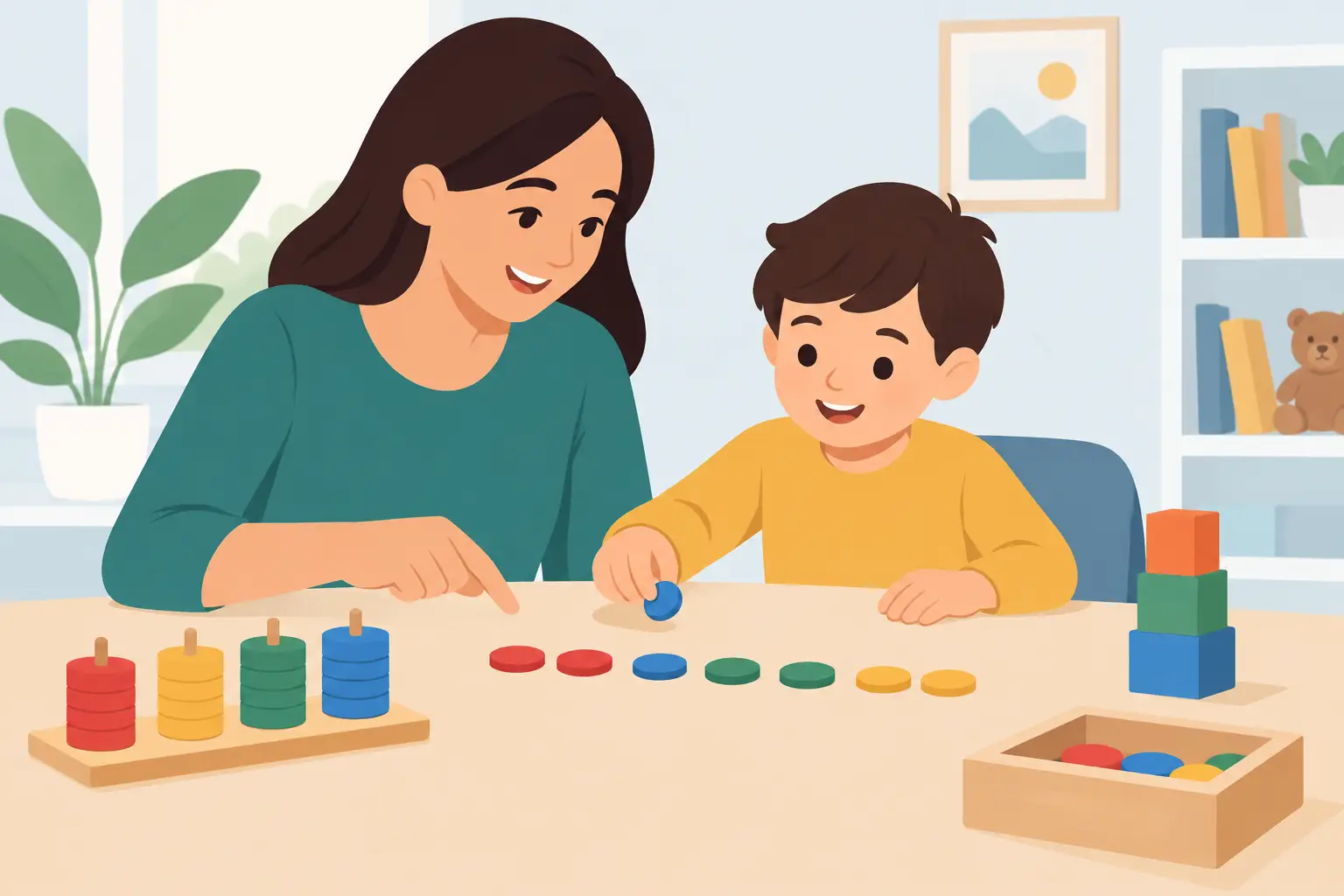
Place three objects on a table and invite your child to count them. Encourage them to move each object into a separate area as they say its number. This makes it easier to keep track of what has already been counted.
Afterward, ask, “How many are there altogether?” If your child counts again, let them. They are still building the connection between the counting process and the total.
Once a small group feels comfortable, add one more object. Ask what changed, then count together to check. Keep the activity conversational rather than turning every answer into a test.
Try a Toy Parking Game
Draw several large parking spaces on paper. Invite your child to park one car in each space, then count the parked cars.
You can extend this early math activity by asking for three cars in one row or comparing two parking areas. If one area has four cars and another has two, ask which has more.
Begin with a quantity your child can manage successfully. There is no need to start with ten objects if three or four still require careful attention.
Choose materials that are suitable for your child’s age. For children who still put objects in their mouths, use large play items instead of buttons, beads, or other small counters.
2. Connect Counting to Written Numbers
Counting objects and recognizing written numerals are related but different early math skills. A child may count five blocks correctly without recognizing the numeral 5.
Help connect the two by placing a number card beside a matching group of objects. Say, “This is five. We have five blocks.”
Begin with a small selection of cards. For example, place the numerals 1, 2, and 3 on the table and ask your child to put the correct number of objects beside each one.
Change the arrangement occasionally. Three blocks in a row and three blocks in a triangle still represent the same quantity. Moving the objects gives children a chance to explore this idea.
Move From Objects to Pictures
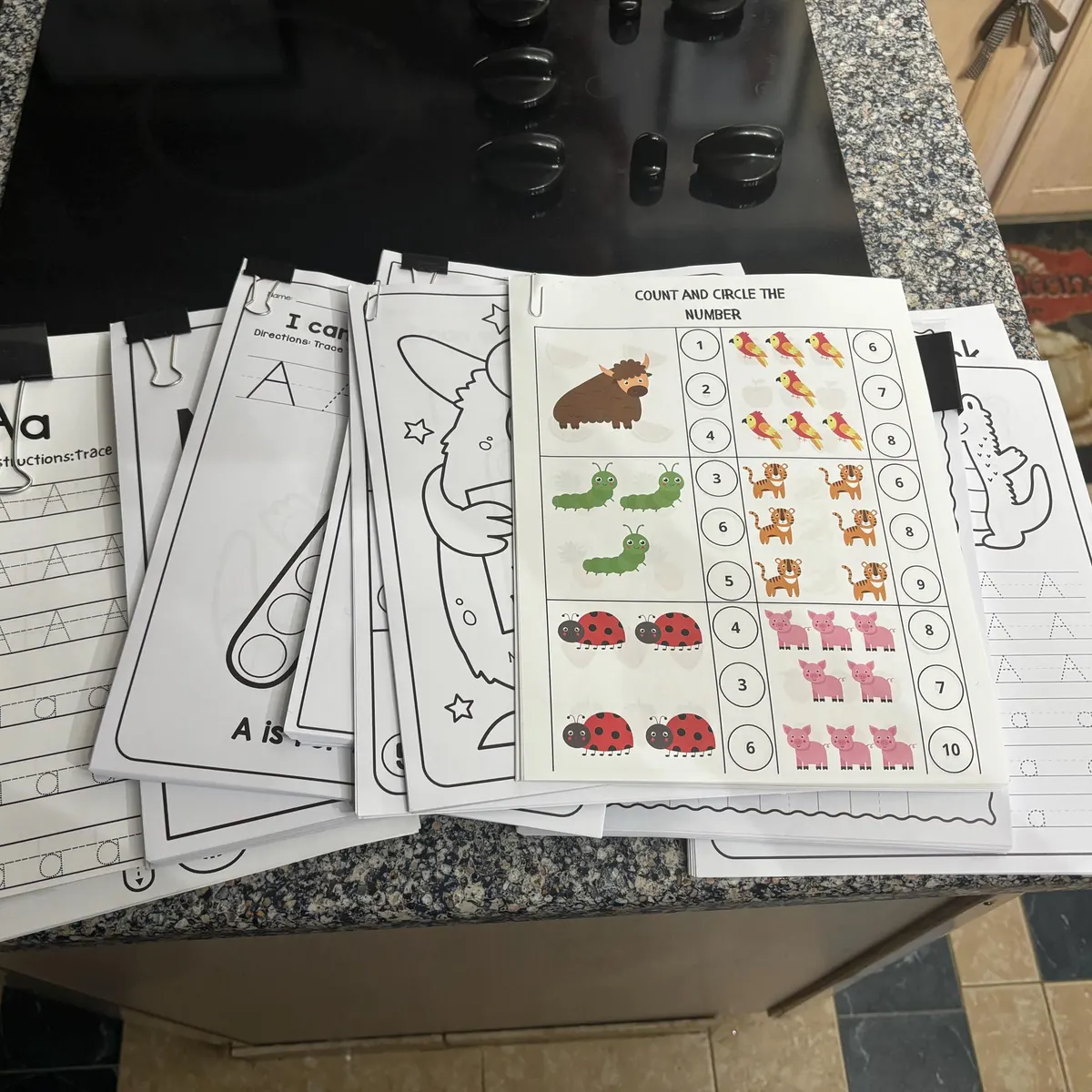
When children are comfortable matching objects to numerals, try pictures. A page with four apples and several number choices lets them practice the same connection in a different format.
Our counting worksheets provide another way to practice counting pictured objects and connecting quantities with numbers.
Choose a page that matches what your child has already explored through play. If you have been counting groups up to five, a worksheet covering numbers up to twenty may introduce too much at once.
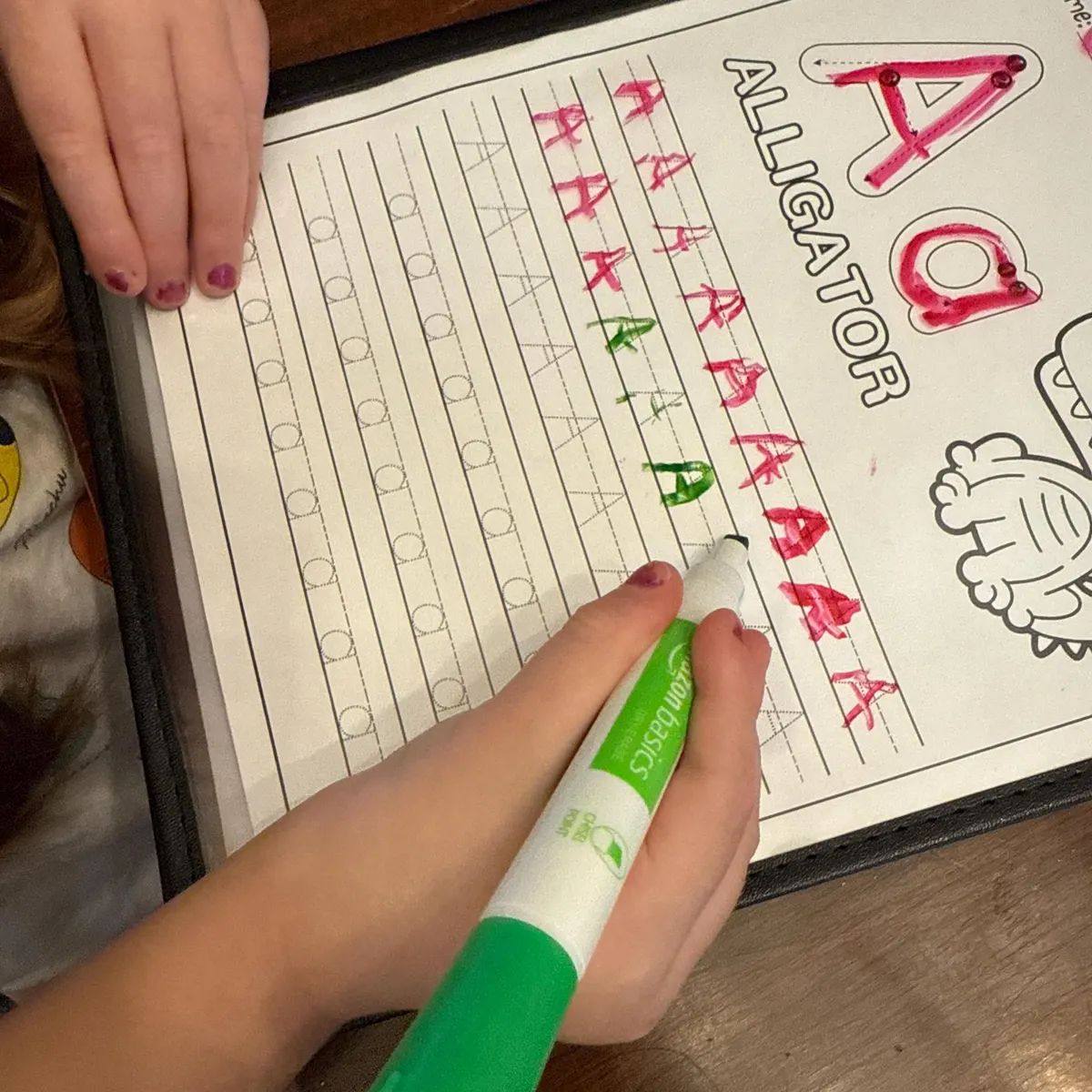
Number tracing can be part of early math practice, but tracing alone does not demonstrate number understanding. Pair it with a meaningful action: trace 4, count four objects, and draw four dots.
3. Compare Groups Using More, Fewer, and the Same
Comparing quantities helps children look beyond individual number names. They begin to notice relationships between groups.
Place two small groups of toys side by side. Ask, “Which group has more?” Then invite your child to check by pairing one object from each group.
For example, line up four toy animals opposite three toy bowls. Give each animal a bowl. One animal will be left without a bowl, making the difference easy to see.
This early math activity gives meaning to words such as “more,” “fewer,” “equal,” and “the same number.”
Avoid relying only on how much space a group occupies. Three objects spread far apart can look like more than four objects placed close together. Counting or matching helps children check their first impression.
Make Comparisons Part of Daily Life
At snack time, compare two groups of crackers. While tidying, compare the number of books on two shelves. During block play, compare how many blocks each person used.
Try asking, “How could we make these groups equal?” Your child might add an object to the smaller group or remove one from the larger group.
Both approaches create useful opportunities to talk about what changed. You can explore these early math relationships without introducing written equations.
4. Sort Objects in Different Ways
Sorting encourages children to notice what objects have in common and how they differ. These observations support early math thinking because children must choose a rule and apply it.
Start with a mixed collection of large blocks or toy animals. Ask your child to group the objects in a way that makes sense to them.
They may choose color, size, type, or another visible feature. Instead of correcting their choice immediately, ask, “Tell me about your groups.”
A collection you expected to be sorted by color might be grouped into animals that fly and animals that walk. Understanding the child’s rule matters more than matching your original plan.
Change the Sorting Rule
Once the first sort is complete, mix the objects again and ask, “Can we sort them another way?”
Blocks sorted by color could be sorted by shape. Toy vehicles grouped by size could be separated into cars, trucks, and buses.
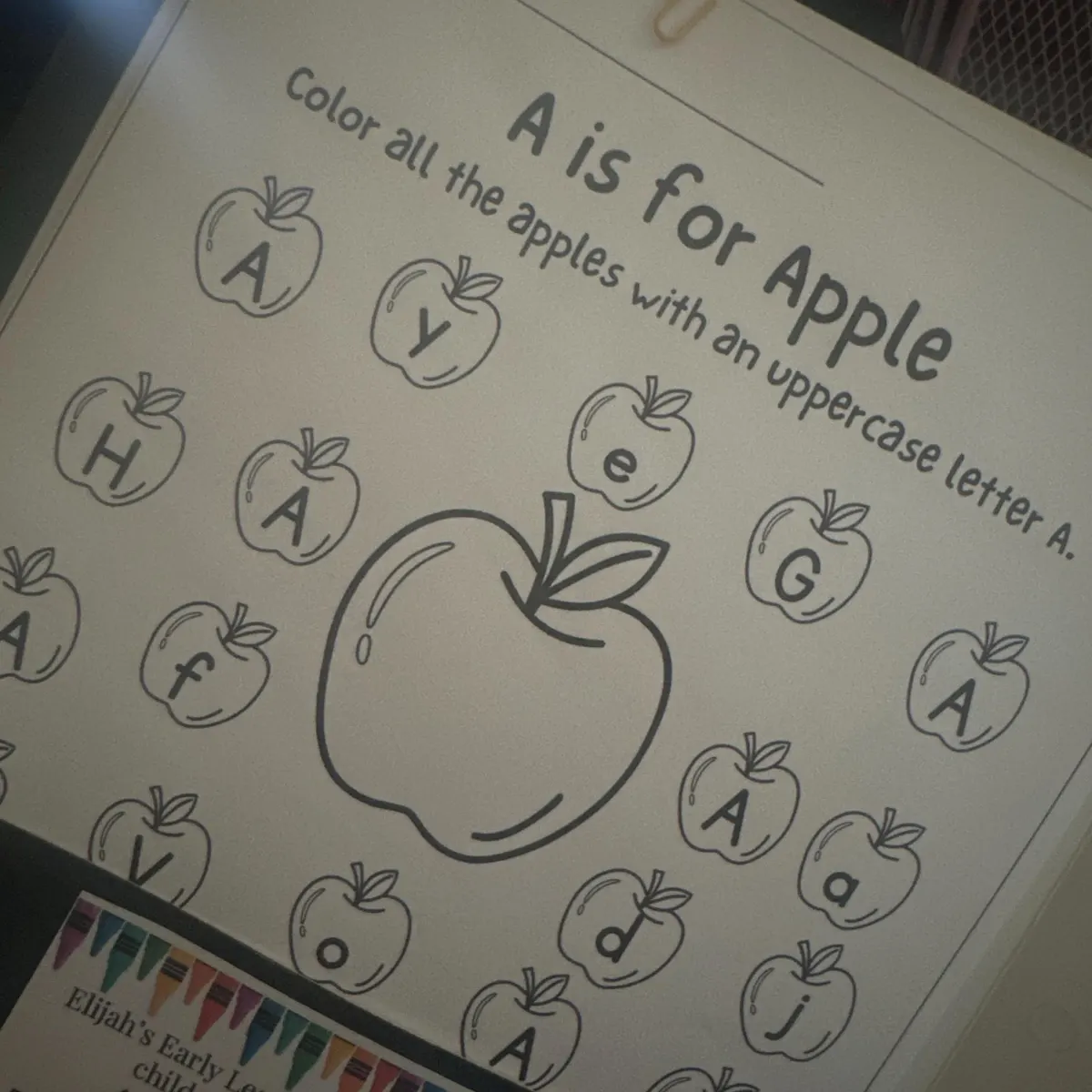
For printable practice, choose a page with clear pictures and one simple sorting instruction. Children might color matching objects or place cut-out pictures into labeled groups.
If cutting is difficult, prepare the pieces yourself so the child can focus on sorting. You can practice cutting separately with scissor skills printables when that is the learning goal.
5. Explore Early Math Patterns Through Play
Patterns help children recognize a repeating structure and predict what should come next. Start with something simple, such as red, blue, red, blue.
Build a short pattern with blocks, then say the sequence aloud together. Pause and invite your child to choose the next block.
If they are unsure, point back to the repeating section. Saying “red, blue” as a pair may help them hear and see the structure.
Movement patterns offer another approach to early math. Try clap, stomp, clap, stomp, or tap your knees, raise your hands, and repeat.
Encourage Children to Create Patterns
Copying a pattern is useful, but creating one gives children another way to show understanding. Invite your child to make a pattern for you to continue.
Ask, “Which part repeats?” Their explanation may be simple, but it helps reveal whether they understand the rule.
When an alternating pattern becomes comfortable, introduce a different sequence, such as red, red, blue or circle, square, triangle. Increase the challenge gradually.
Printable pattern activities can reinforce these experiences. Choose pages with a clear repeating unit and enough examples for children to work out the rule.
If a child guesses incorrectly, rebuild the sequence with real objects and explore it together. Early math practice should leave room for checking and changing an answer.
6. Discover Shapes and Spatial Relationships
Shape learning involves more than naming a circle, square, or triangle. Children also benefit from noticing sides, corners, curves, and how shapes fit together.
Look for familiar shapes around your home or classroom. A window may have a rectangular outline, while a plate may have a circular outline.
Ask descriptive questions: “Which shape has three straight sides?” or “What do you notice about this circle?”
Show shapes in different sizes and positions. A triangle is still a triangle when its point faces sideways. This helps children focus on its features rather than memorizing one picture.
Use Building and Puzzle Play
Building activities create natural opportunities for early math language. Ask your child to place a block beside another block, put a toy under a bridge, or position an animal between two towers.
You can take turns giving directions. Let your child tell you where to place something, then check whether your arrangement matches their idea.
Puzzles also invite children to rotate pieces, compare outlines, and decide what might fit. Give them time to experiment before offering help.
For more play-based ideas, the National Association for the Education of Young Children shares suggestions in Preschoolers Are Natural Mathematicians, including opportunities to explore collections and construction.
Follow a practical activity with a simple shape-matching page if your child wants more practice.
7. Introduce Measurement With Everyday Materials
Measurement gives children a reason to compare length, height, weight, and capacity. Early math exploration can begin with direct comparisons before using rulers or standard units.
Place two toy snakes beside each other with their ends aligned. Ask which is longer. Build two towers on the same surface and compare their heights.
Explain what you are doing as you line things up: “We are starting both snakes here so we can compare their lengths.”
This small detail helps children understand that the way objects are positioned can affect a comparison.
Measure With Equal-Sized Blocks
Choose identical blocks and place them end to end along the side of a book. Count how many blocks long the book is.
Keep the blocks touching without gaps or overlaps. Then measure a second book with the same blocks and compare the results.
Using equal-sized units matters. If one book is measured with large blocks and another with tiny blocks, comparing the counts alone can be misleading.
Water play can introduce capacity. With supervision, let children fill different containers using the same small cup. Talk about which container holds more and how they could check.
These early math activities work best when children predict, experiment, and describe what they notice. An estimate does not need to be correct to start a useful conversation.
8. Teach Addition and Subtraction Through Stories
Early addition and subtraction are easier to explore when children can act out what happens.
Say, “Two bears are sitting on the bus. One more bear gets on. How many bears are on the bus now?”
Let your child move the figures and count the total. Then change the story: “There are three bears on the bus. One gets off. How many are left?”
This approach connects early math language with visible actions. Children can see a group growing or becoming smaller.
Start with manageable quantities and one action at a time. A long story with several changes can be difficult to follow even when the individual numbers are small.
Connect Stories to Pictures and Symbols
After acting out a story, draw a quick picture together. Two circles and one additional circle can represent the bears without requiring detailed artwork.
When your child is ready, show how the picture connects to a number sentence, such as 2 + 1 = 3. Explain what each part represents.
There is no need to remove objects as soon as written symbols appear. Children can continue using fingers, counters, or pictures to support their thinking.
For a different kind of practice, explore number puzzle printables and choose an activity suited to your child’s current understanding.
If written work causes frustration, return to the story. Understanding the action is a useful early math goal in its own right.
9. Create a Short, Flexible Early Math Routine
A predictable routine makes practice easier to fit into daily life. Keep it brief enough that your child can stay interested and participate comfortably.
Try beginning with a familiar game, introducing one small challenge, and ending with an optional printable activity.
For example, count five toy animals, match them to a number card, and finish by coloring a group of five pictures. The materials change, but the learning goal remains clear.
A ten-minute session is one possible starting point, not a requirement. Some children enjoy a longer activity, while others benefit from a few playful minutes.
Choose One Main Goal
Before starting, decide what you want to explore. Is the focus counting each object once, recognizing a numeral, or identifying a repeating pattern?
A clear goal makes it easier to choose suitable materials and notice progress.
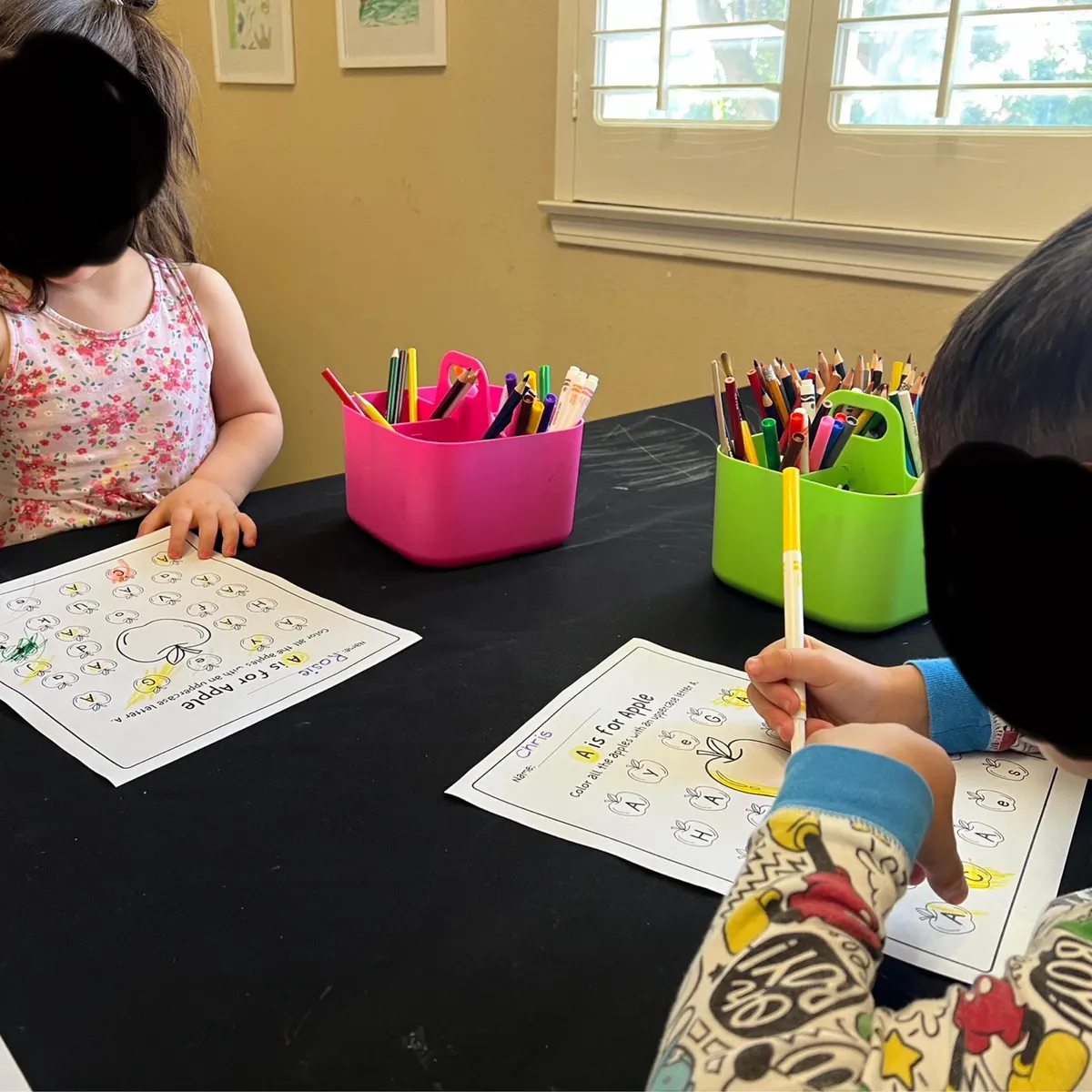
In a classroom, a familiar printable can become a preschool morning activity, a small-group task, or an option for independent practice after teaching.
At home, keep a small selection of pencils, crayons, large counters, and printed pages within reach. Preparing a few suitable materials can make early math practice easier to begin.
Finish while the experience still feels positive. You do not need to complete every question on a page for the activity to be worthwhile.
A Simple Weekly Early Math Plan
Use this sample plan as a flexible starting point. Repeat an activity when your child enjoys it, and simplify anything that feels too difficult.
| Day | Focus | Hands-on activity | Optional follow-up |
|---|
| Monday | Counting | Move and count a small group of toys | Count and circle matching numerals |
| Tuesday | Comparing | Pair objects from two groups | Identify groups with more or fewer |
| Wednesday | Sorting | Sort blocks using a chosen rule | Match pictures by a shared feature |
| Thursday | Patterns and shapes | Build a repeating shape pattern | Choose the next shape |
| Friday | Number stories | Act out adding or removing toys | Draw pictures to show what happened |
You can use the same materials throughout the week. A basket of blocks can support counting, sorting, comparing, patterning, and measuring.
The plan does not need to become a checklist. If your child becomes interested in building bridges on Wednesday, explore height, length, and position within that play.
The purpose of an early math routine is to create regular opportunities to think, talk, and experiment.
How to Choose Useful Early Math Worksheets
Choose worksheets that practice a clear skill and match what your child currently understands. A busy page with several unfamiliar instructions can make an otherwise manageable activity feel difficult.
Look for readable numerals, clear pictures, enough writing space, and directions that are easy to explain. Check that objects are separated well enough to count accurately.
Before handing over a page, complete one example together. Ask your child to explain what they will do next so you can check that the instruction makes sense.
You can adapt how children respond. They might point, place a counter over an answer, say the number aloud, or write it. This helps separate mathematical understanding from handwriting ability.
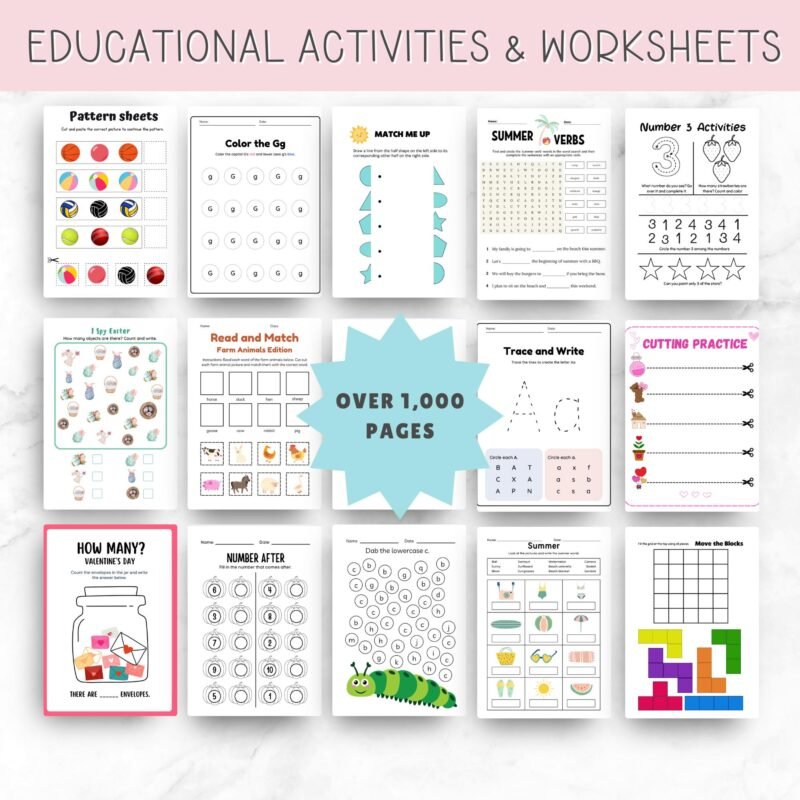
Fun Clever Fox printables can provide follow-up practice after hands-on exploration. Select individual pages according to the skill you are teaching rather than completing an entire collection at once.
If you are considering a larger resource collection, our guide to worksheet subscriptions for kids offers another topic to explore.
Notice Progress Without Expecting Perfection
Early math progress may look different from one day to the next. A child might count carefully during a quiet activity and rush through the same task when tired or excited.
Look for patterns over several experiences rather than drawing conclusions from one worksheet.
Useful signs of progress include touching each object while counting, checking an answer independently, explaining a sorting rule, or noticing that two groups are equal.
Offer specific feedback. Instead of only saying “Good job,” try, “You moved each block after counting it. That helped you keep track.”
When an answer is incorrect, invite another look: “Let’s match the cars to the spaces and check.” This gives your child a practical strategy without making the mistake the center of the lesson.
Avoid comparing siblings or classmates. Choose the next activity based on what this child can do and which connection they are still working to understand.
Frequently Asked Questions About Early Math
What Should I Teach First in Early Math?
Start with familiar objects and everyday language. Count small groups, match one item to another, compare quantities, and describe shapes or positions during play.
You do not need to teach every skill in a fixed order. Follow your child’s interests while offering a range of experiences. A child who loves building may enjoy comparing towers, while another may prefer counting toy animals.
How Can I Tell Whether My Child Understands Counting?
Watch how your child counts objects rather than only listening to the number sequence. Do they give each object one number word? Can they tell you how many there are after counting?
Try rearranging a small group and discussing whether the amount changed. These observations can help you choose useful practice without making early math feel like a formal assessment.
Are Worksheets Necessary for Learning Early Math?
Worksheets are one possible tool. Children can explore many mathematical ideas through conversation, building, pretend play, household routines, and games.
A suitable worksheet can provide another way to practice or show understanding. Use it alongside practical experiences, especially when a concept is new. If your child struggles on paper, try presenting the same idea with objects.
What If My Child Dislikes Math Activities?
Begin with something they already enjoy. Count dinosaurs, compare car ramps, arrange pretend food, or make a movement pattern together.
Offer a small choice, such as whether to use blocks or animal figures. Keep the challenge manageable and stop before frustration builds. Early math can happen within play without announcing a separate lesson.
When Should I Introduce Addition and Subtraction?
You can introduce simple joining and taking-away stories when your child can engage with small groups of objects. Let them move the items and count what remains or how many there are altogether.
Written equations can follow as the connection becomes clearer. Keep the quantity small enough that your child can focus on understanding the story rather than struggling to track the objects.
Help Early Math Feel Useful and Fun
Children encounter mathematics whenever they share materials, build structures, arrange toys, or notice a repeating pattern. Your role is to make those opportunities easier to explore.
Start with one activity from this guide. Ask a thoughtful question, allow time for an answer, and help your child check their thinking with objects or pictures.
For a simple next step, choose a page from our printable counting worksheets and pair it with a small collection of toys.
Early math grows through these repeated connections between play, conversation, pictures, and numbers. Keep the experiences welcoming, and give your child room to discover how much they can work out.
You May Also Read
Contact Fun Clever Fox
Have a question about our printable resources? Email info@funcleverfox.com.
Find more ideas on Facebook and Pinterest.











4 thoughts on “Early Math Skills: Simple Ways to Build Them”