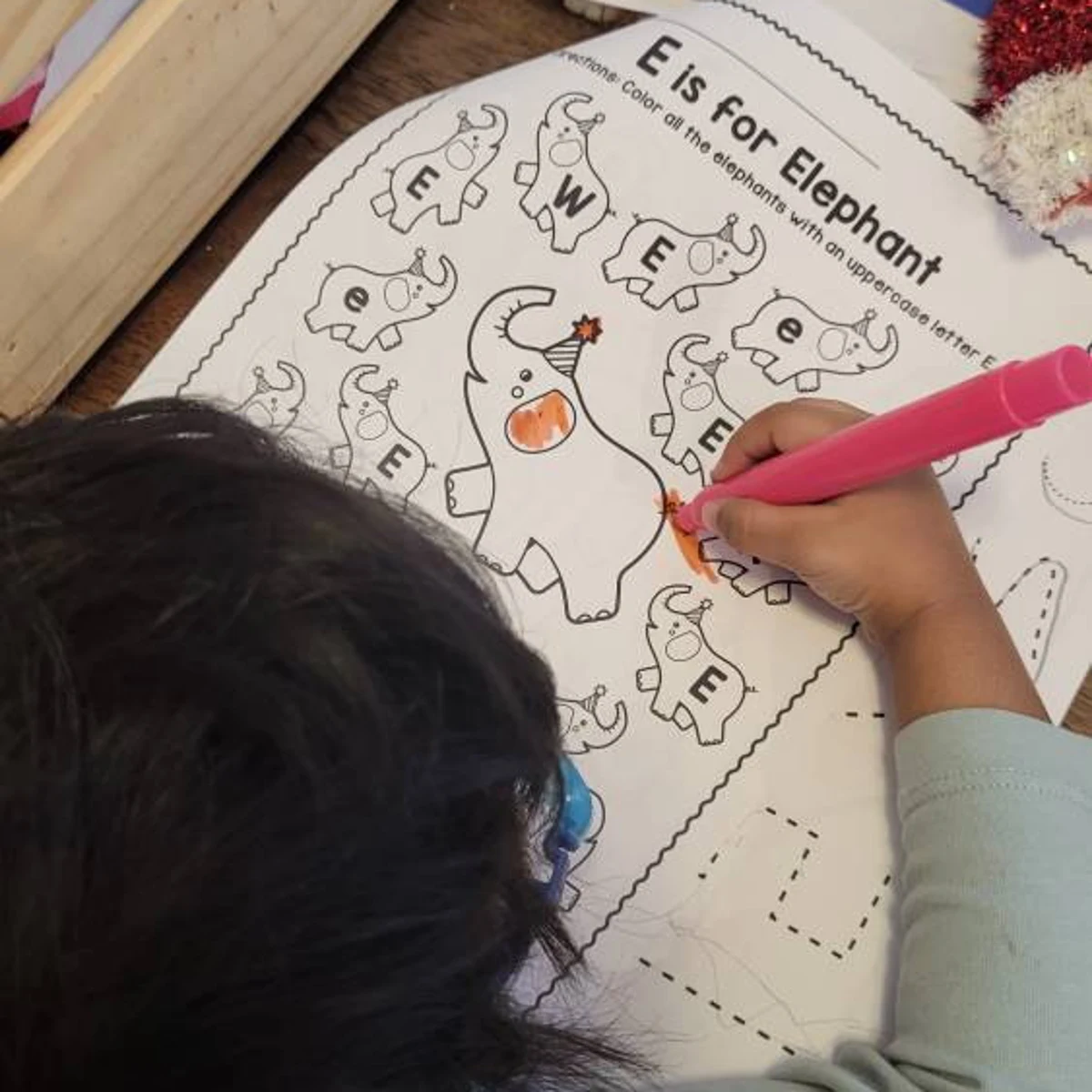
Some days your kindergartener is ready to learn the minute breakfast is over. Other days, even picking up a pencil feels like a big ask. That is exactly why kindergarten learning activities at home work best when they feel simple, playful, and easy to repeat. A good activity does not need a complicated setup. It just needs to match your child’s stage, hold their attention for a few minutes, and give them a small win.
At this age, progress comes from short bursts of practice. Kindergarteners are building early reading, handwriting, number sense, and fine motor strength all at once, and that can be a lot. The easiest way to support them at home is to rotate familiar activities that reinforce one skill at a time without making learning feel heavy.
Why kindergarten learning activities at home matter
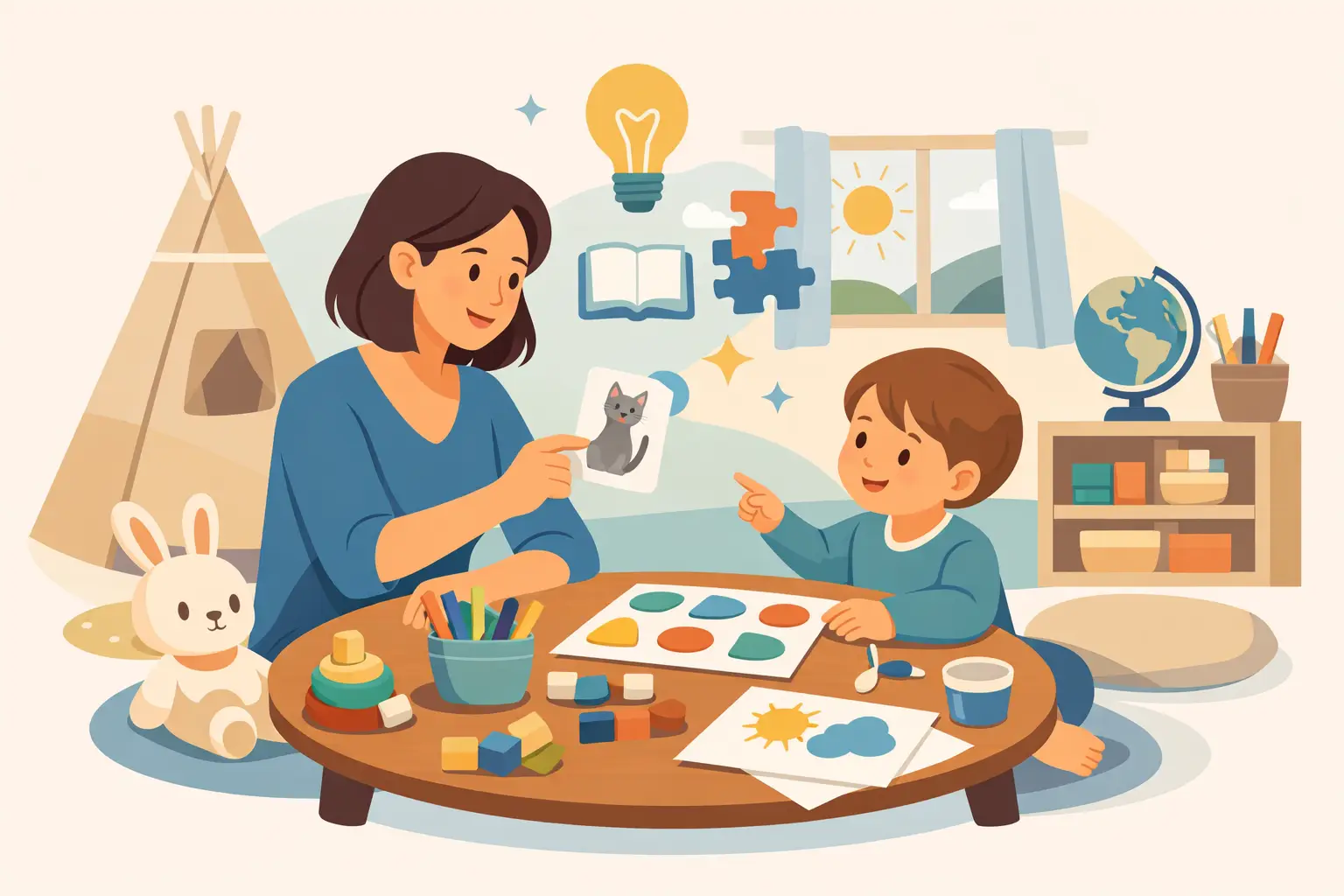
Kindergarten is full of firsts. Children are learning to hear sounds in words, recognize letters quickly, count with confidence, form numbers correctly, and follow simple directions independently. In a classroom, these skills are introduced in sequence. At home, the goal is usually different. You are not trying to recreate school for six hours a day. You are giving your child extra practice in a calm, comfortable space.
That practice matters because young children often need repetition before a skill really sticks. A child may know the letter M one day and forget it the next. They may count to 20 out loud but still struggle to match numbers to objects. That is normal. Home learning gives them another chance to revisit the same idea in a lower-pressure way.
There is a trade-off, though. Too much formal work can backfire. If every activity feels like a test, children lose interest quickly. The sweet spot is structured but friendly practice – enough guidance to build skills, with enough fun to keep them engaged.
Start with a simple home learning rhythm
A routine helps more than a perfect lesson plan. Most kindergarteners do well with 10 to 20 minutes of focused learning at a time, especially if the activity is clear and age-appropriate. Morning often works well, but it depends on your child. Some are freshest early in the day. Others settle better after outdoor play or lunch.
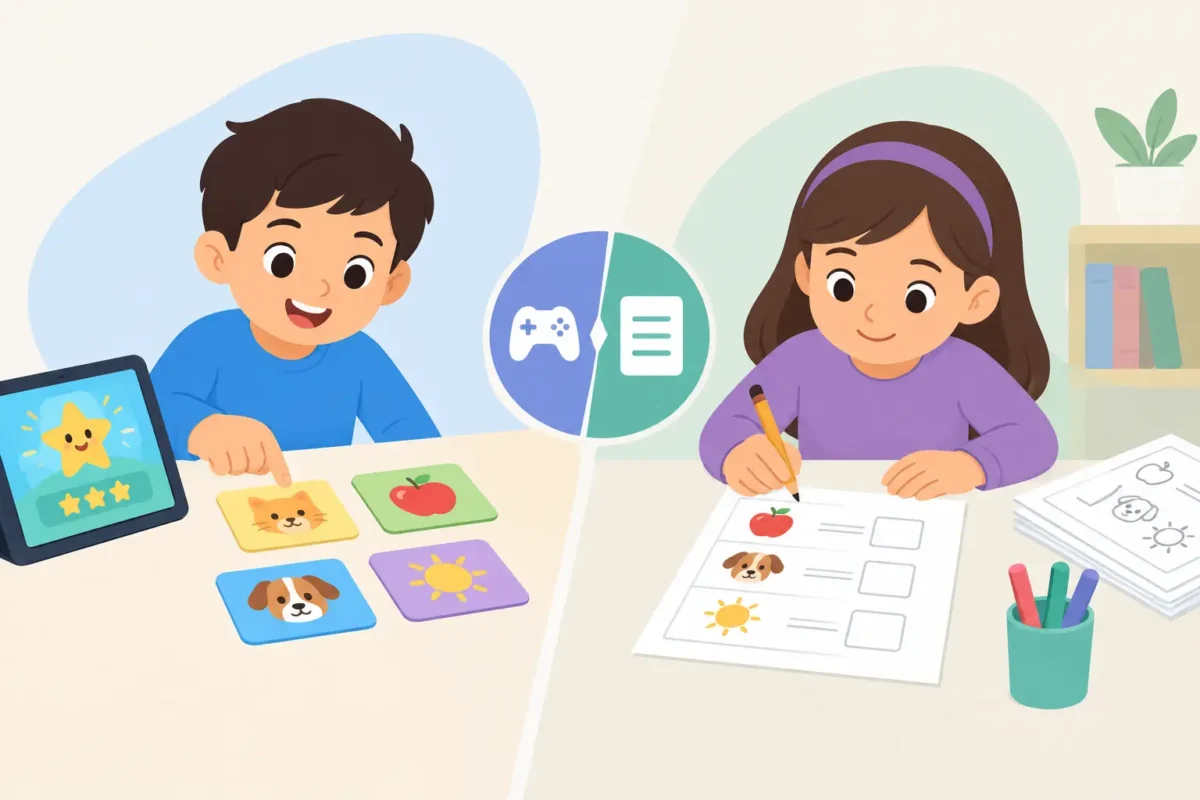
Try choosing one literacy activity, one math activity, and one hands-on option each day. You do not need to do all three every time. Even one focused activity can be enough if it is consistent. Printable worksheets are especially helpful here because they remove the prep work. You can sit down, practice a single skill, and move on before attention starts to fade.
Literacy activities that build reading readiness
Early literacy at the kindergarten level is all about connecting sounds, letters, and simple words. Children need to see letters often, hear their sounds clearly, and get repeated chances to practice.
Letter recognition and alphabet practice
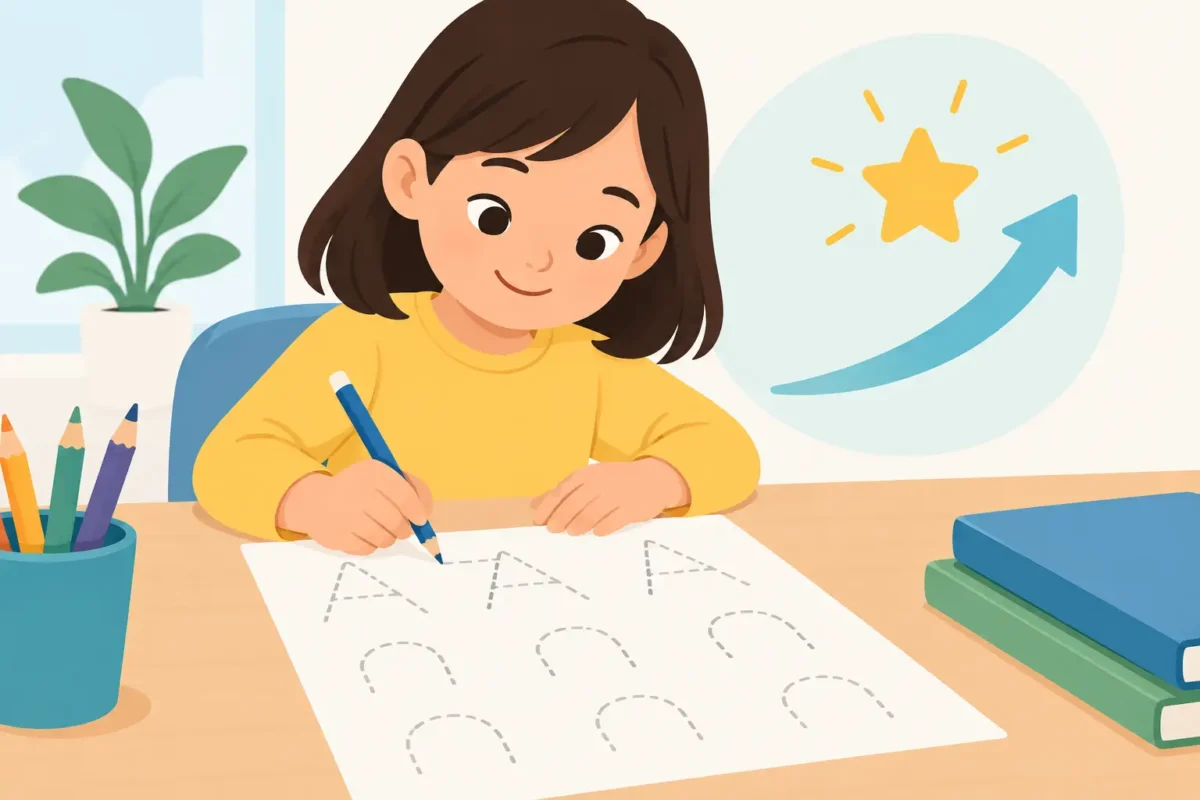
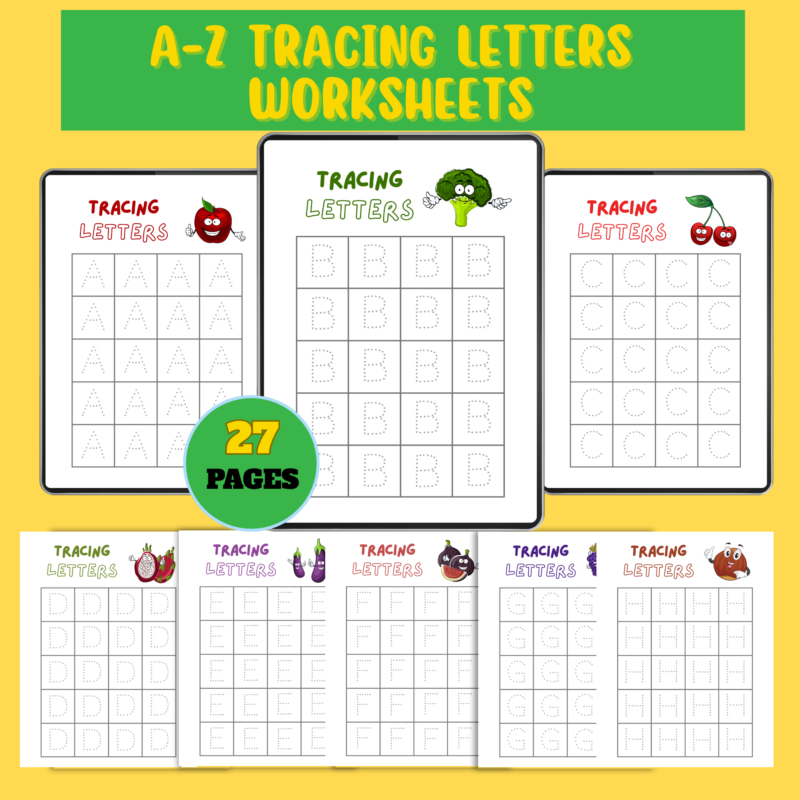
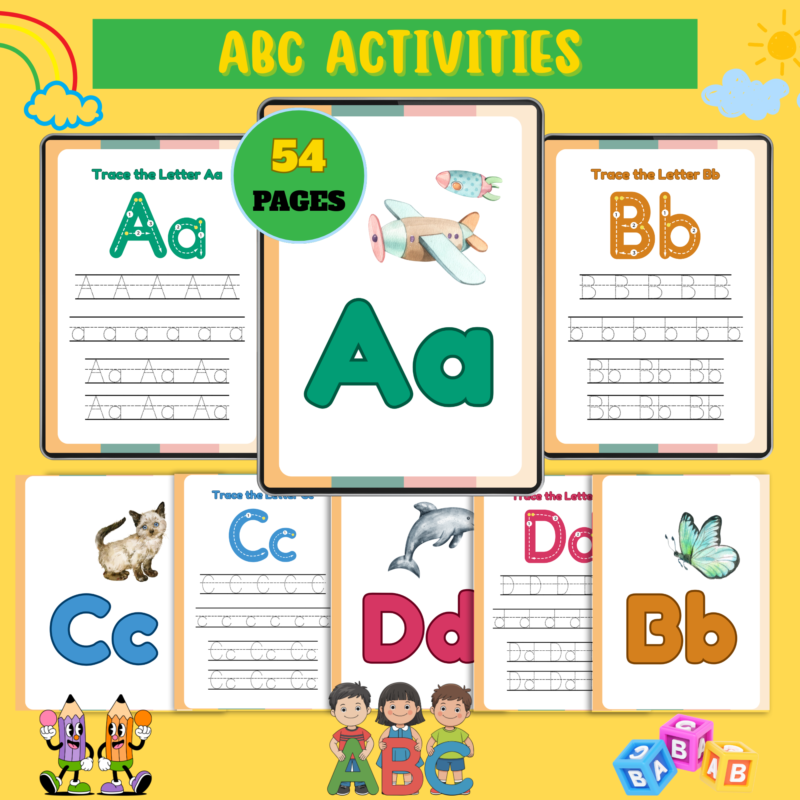
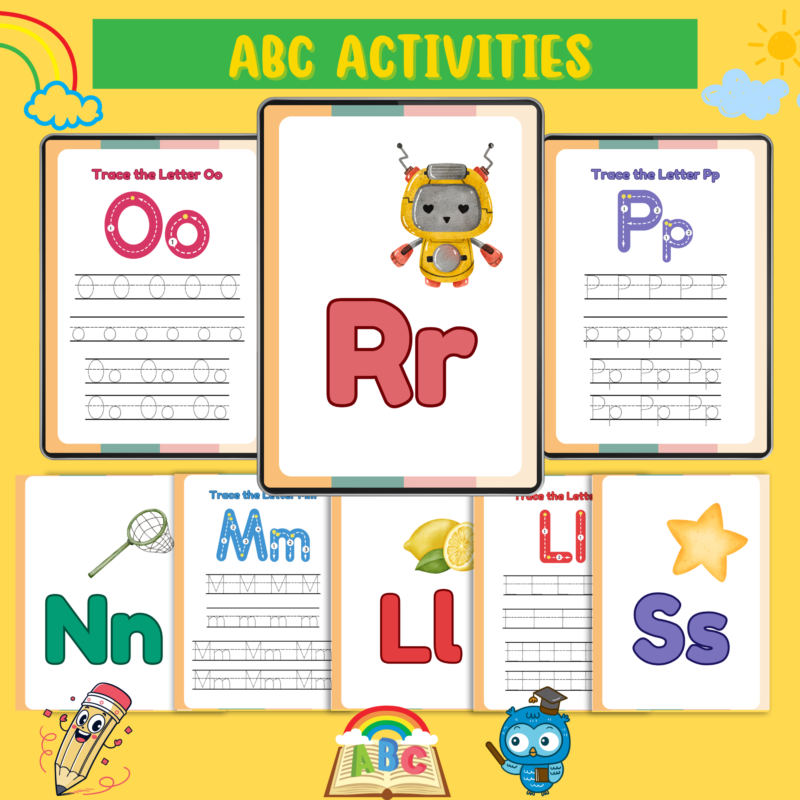
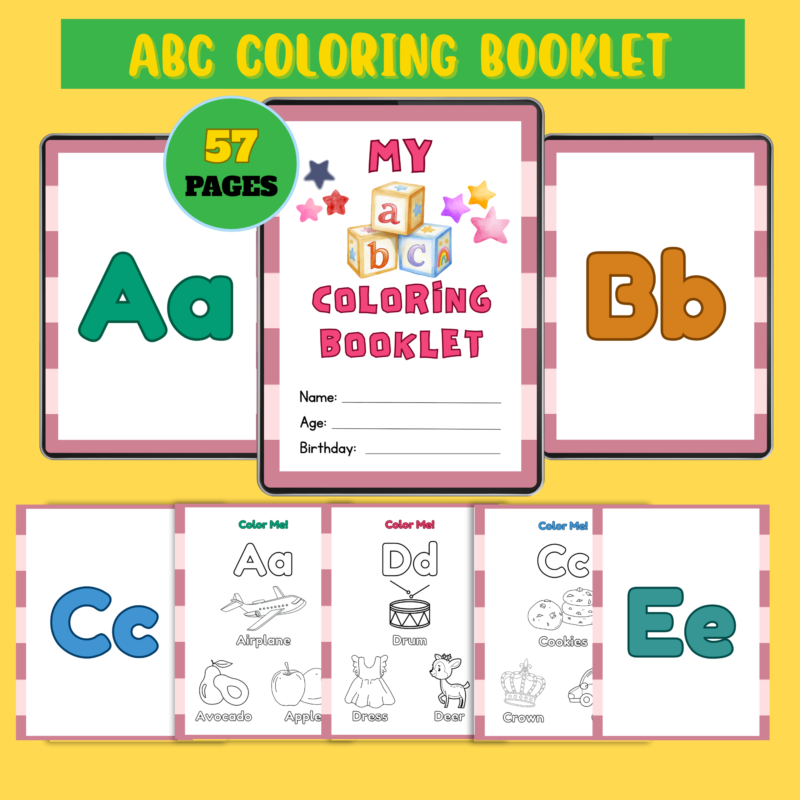
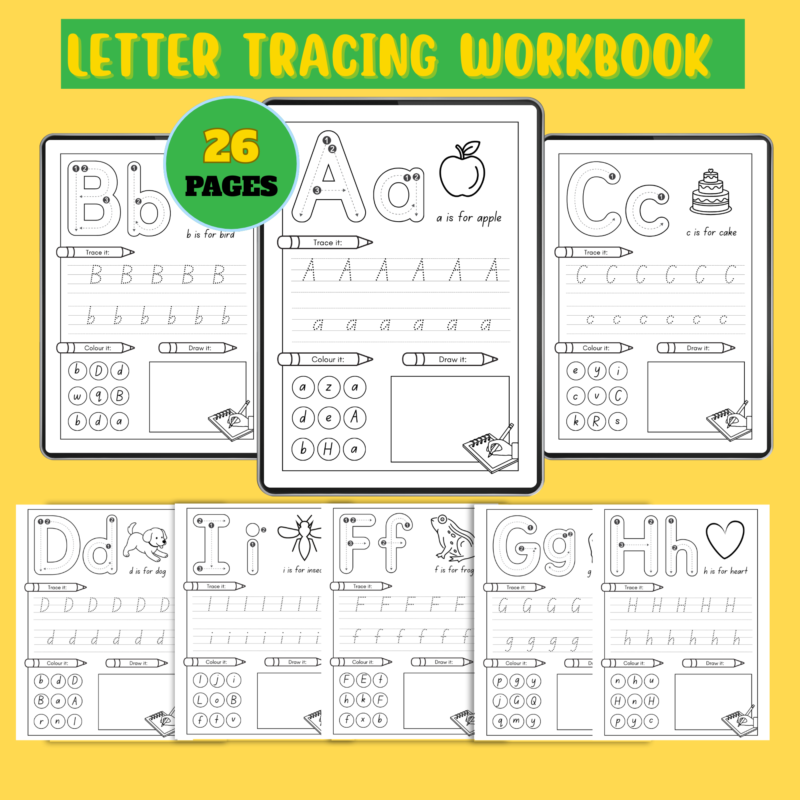
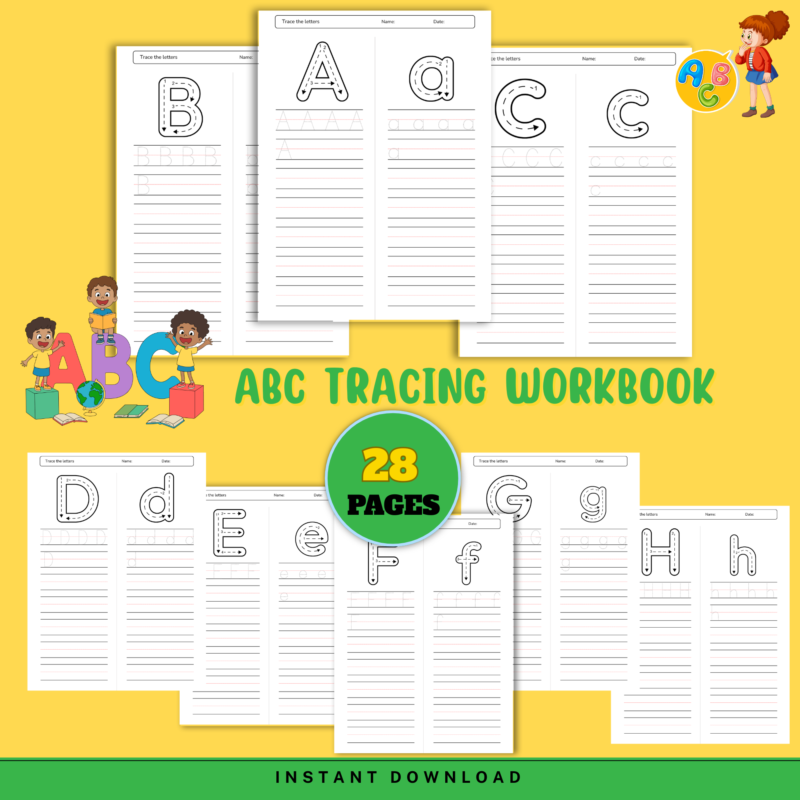
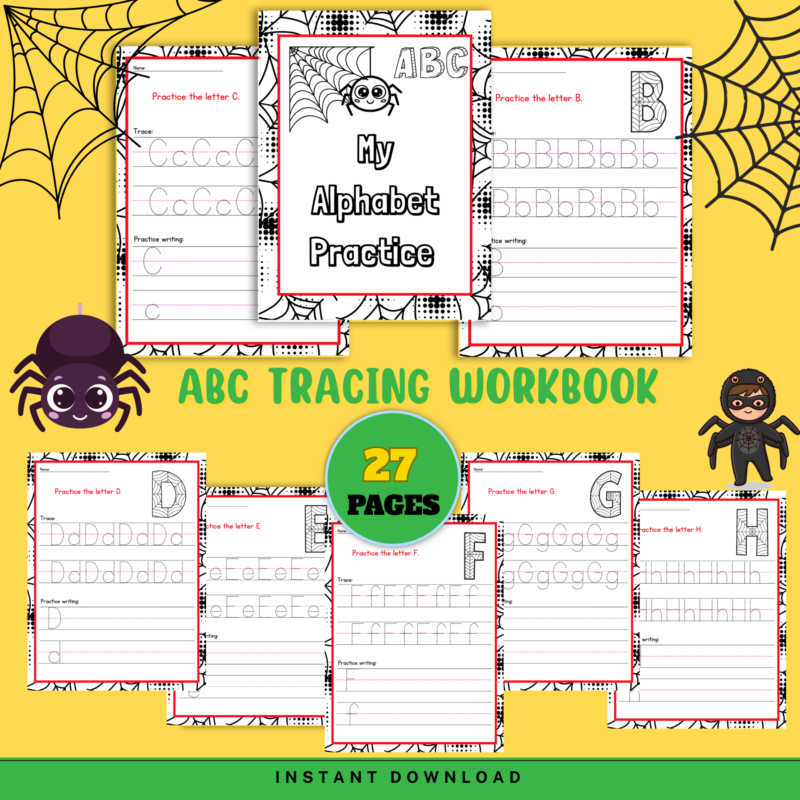
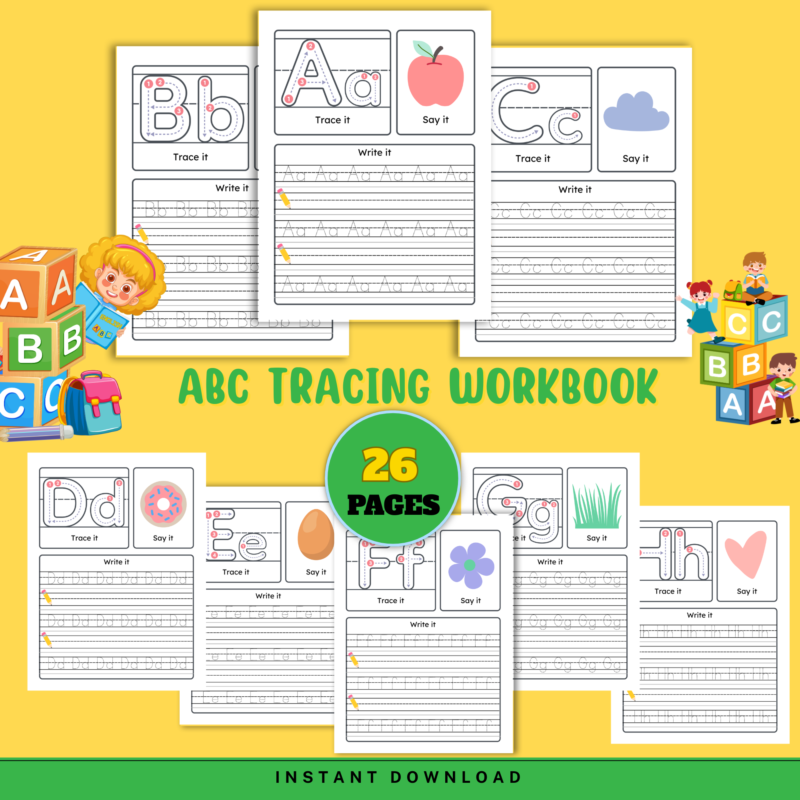
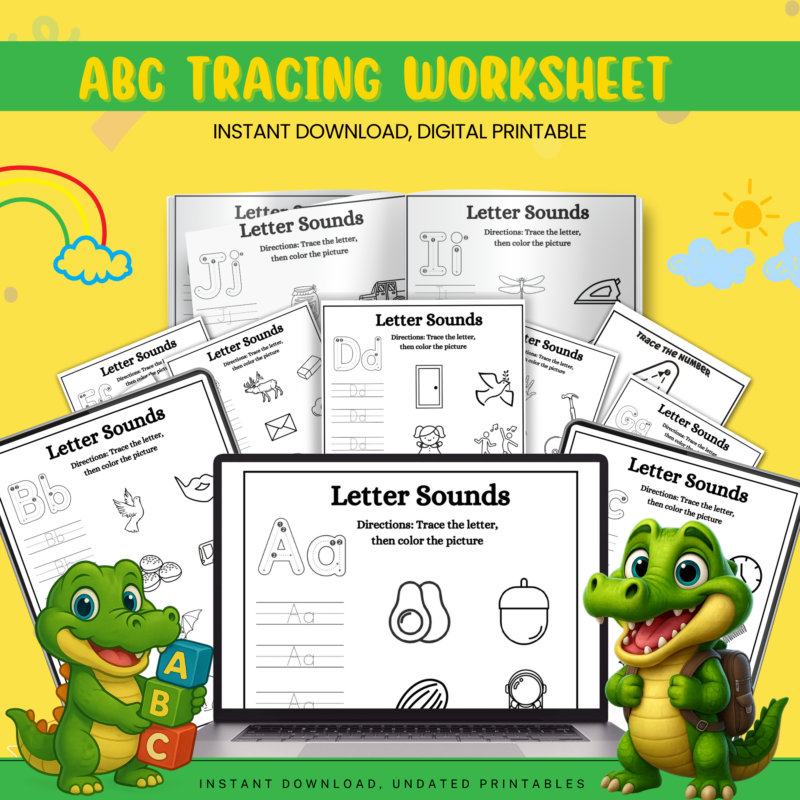
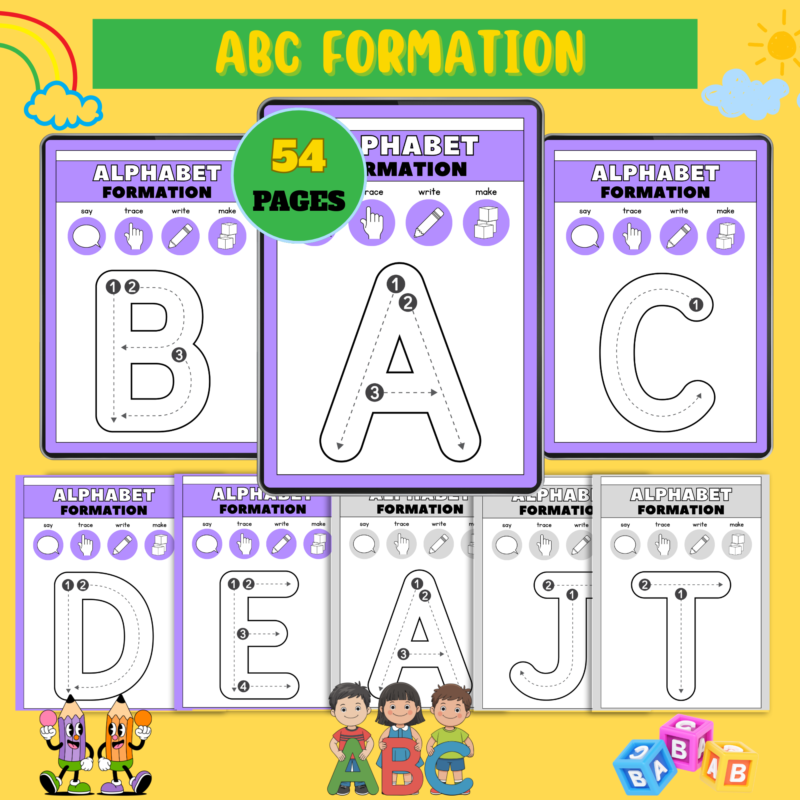
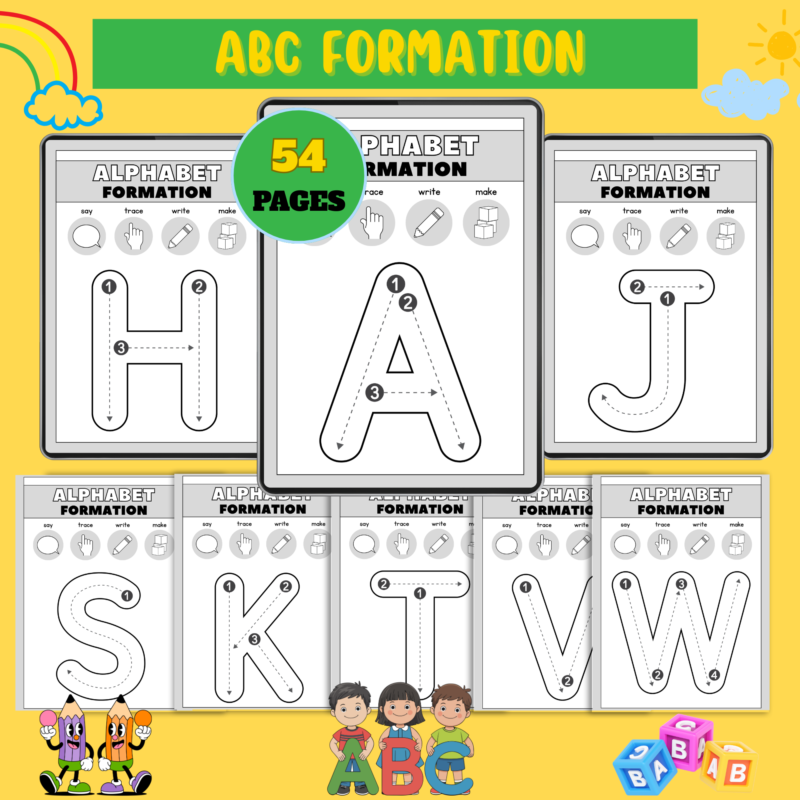
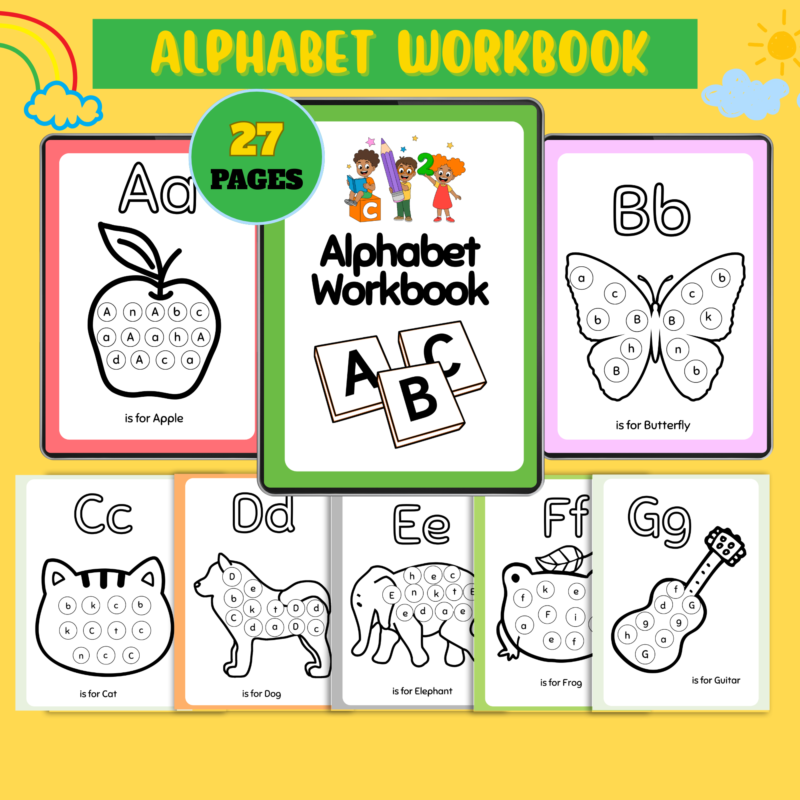
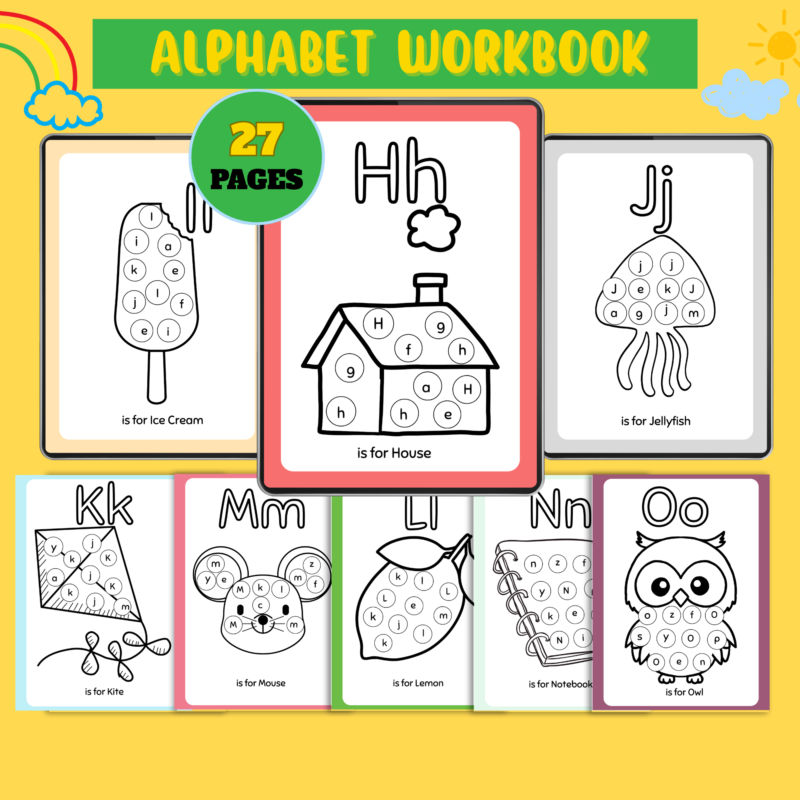
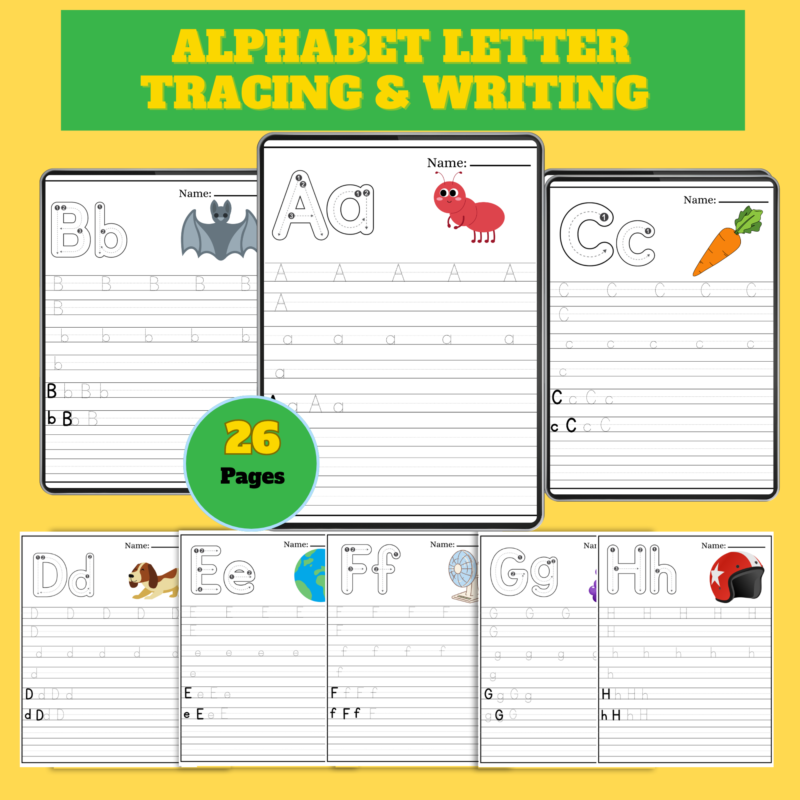
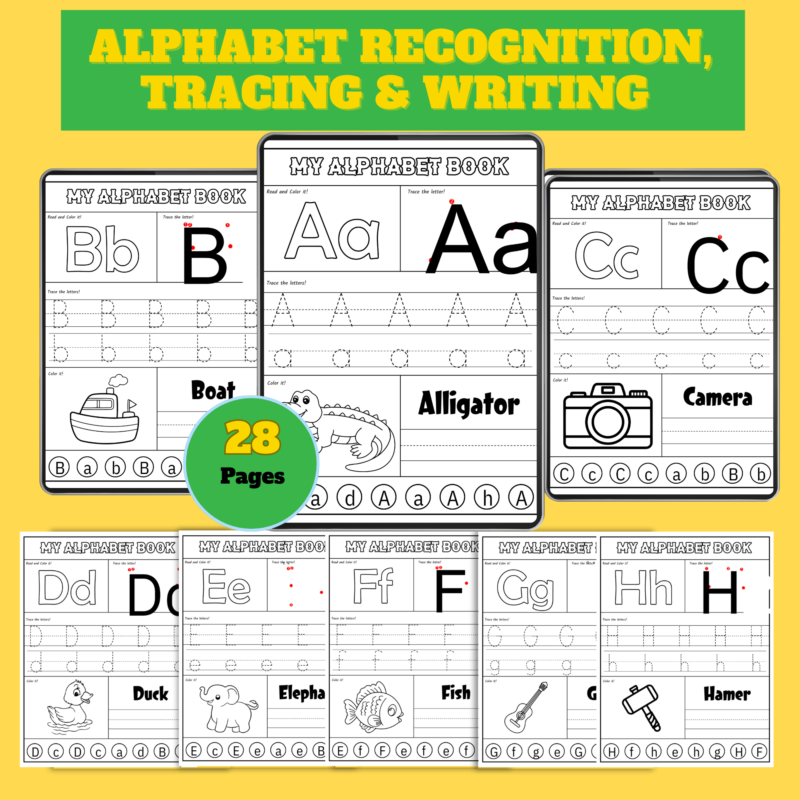
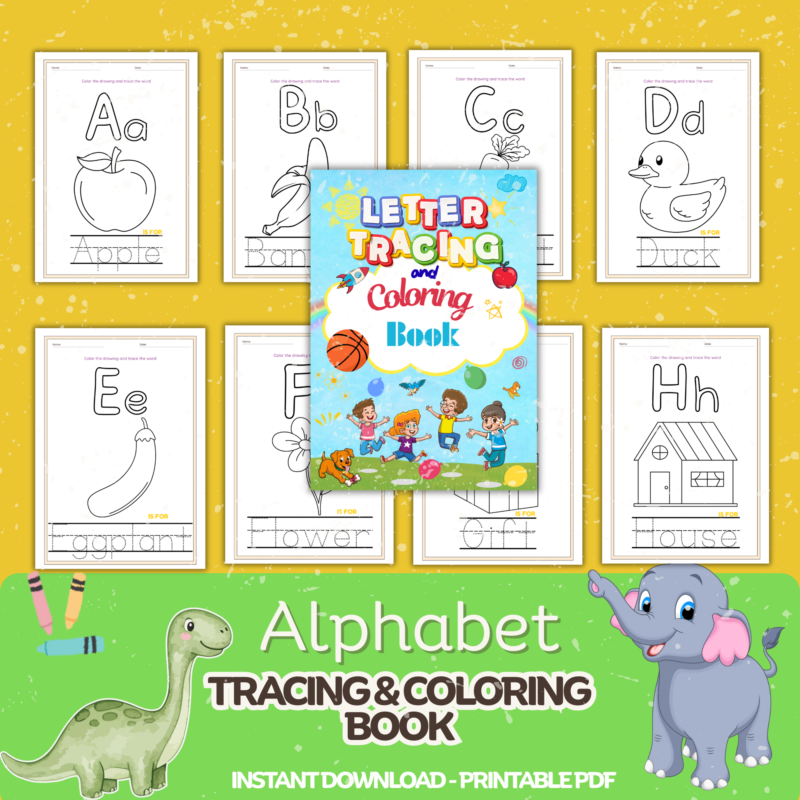
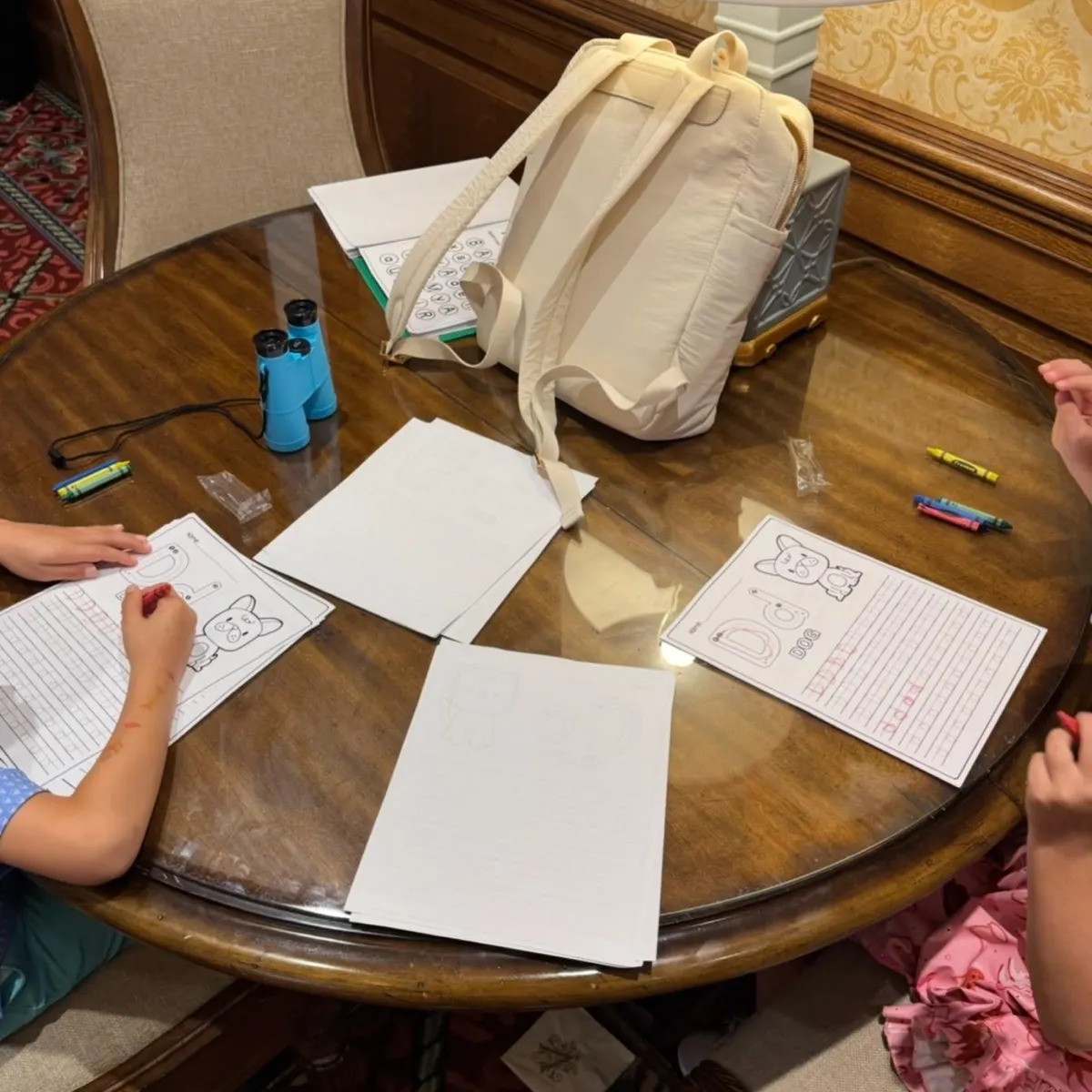
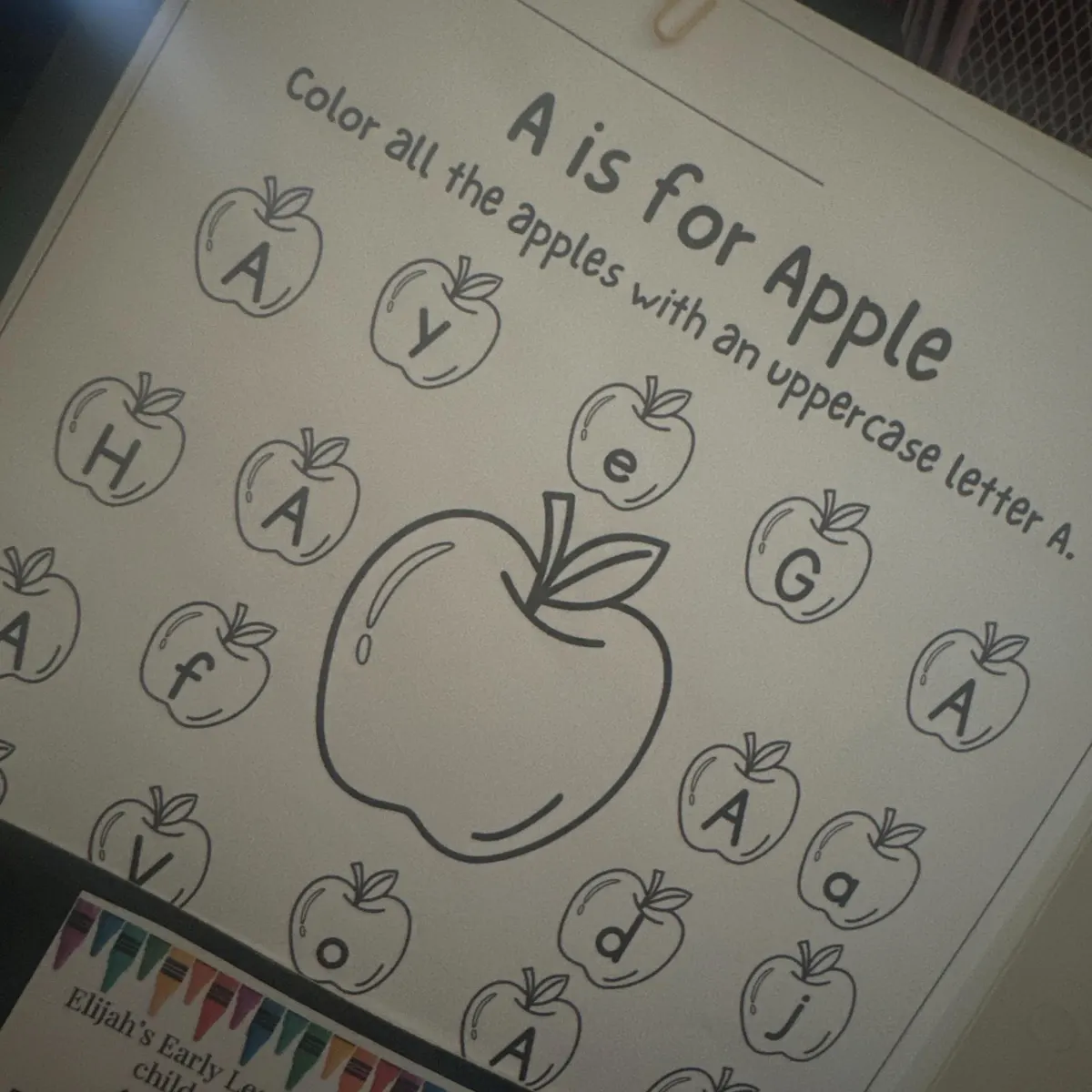
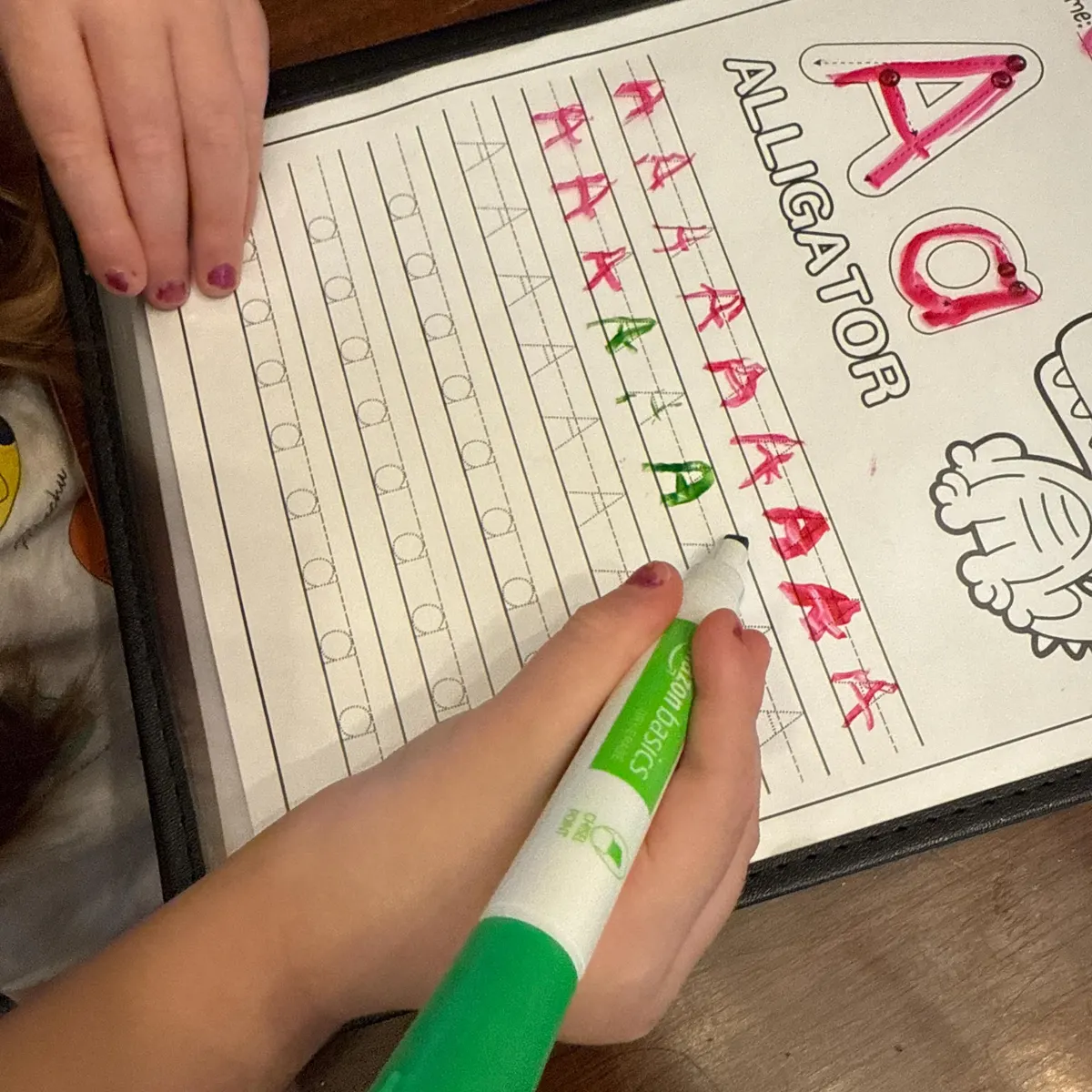
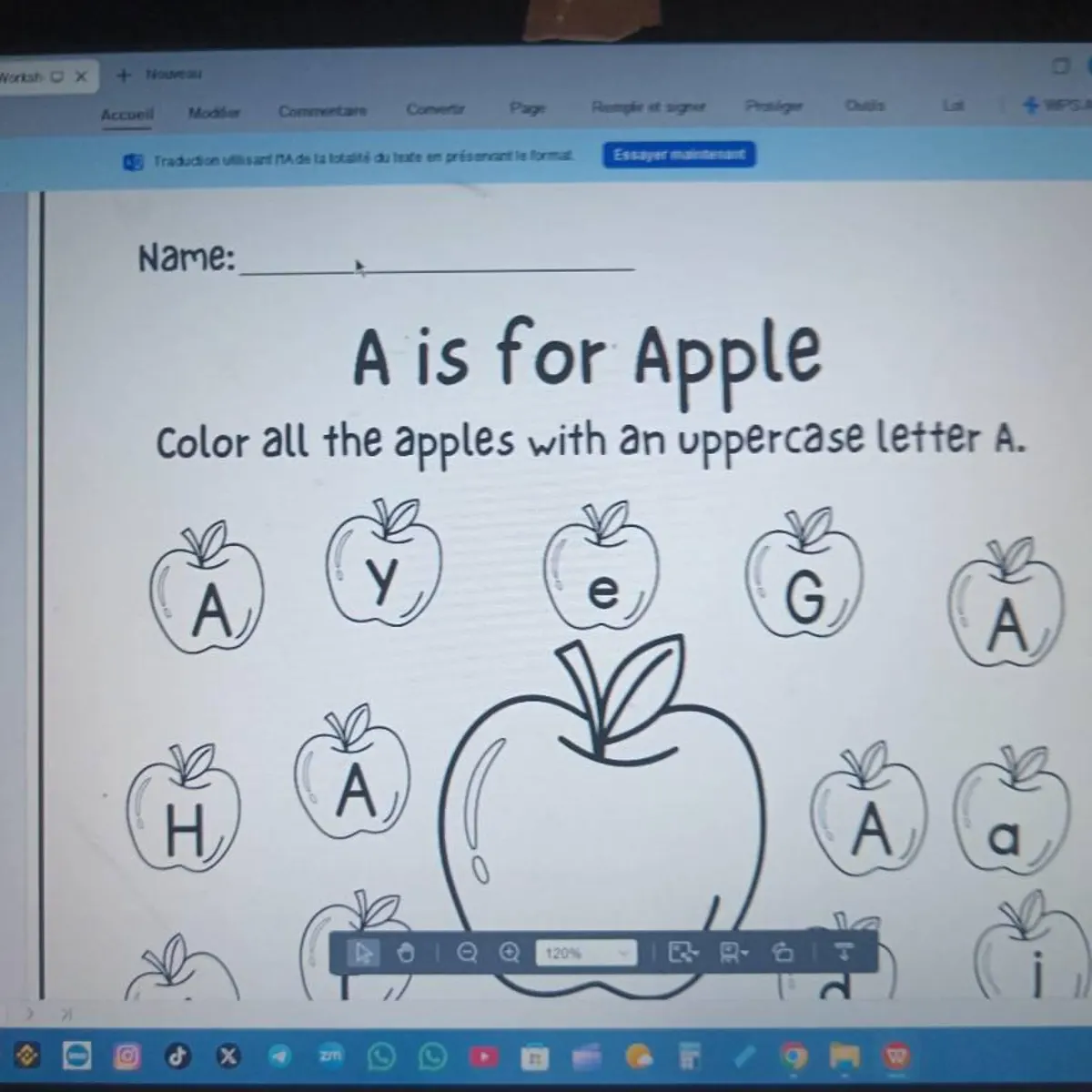
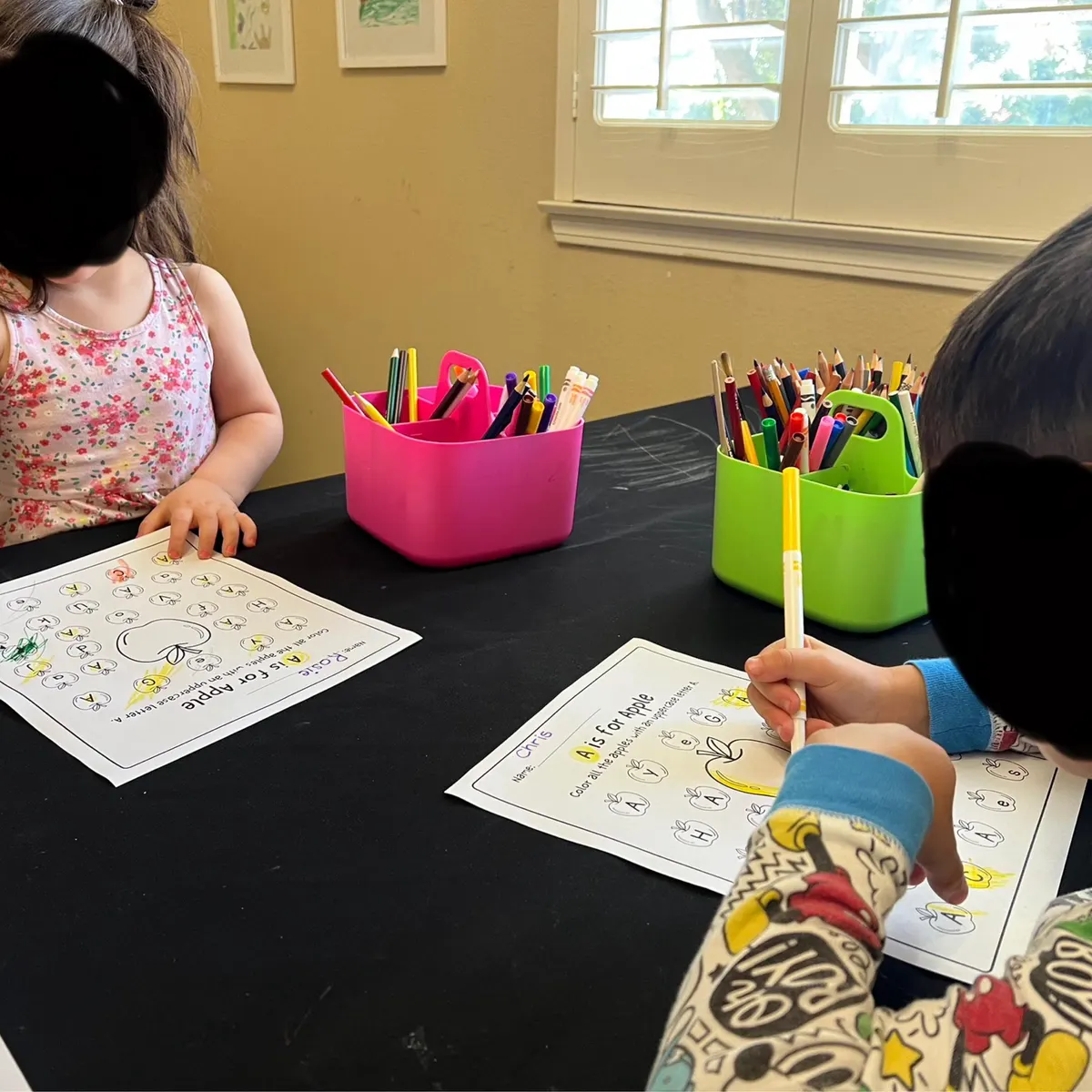
Alphabet tracing pages, letter matching, and find-the-letter worksheets are a strong starting point. These activities help children recognize both uppercase and lowercase letters while also building pencil control. If your child already knows many letters, focus on the ones that still cause hesitation. A little targeted practice is often more effective than reviewing the full alphabet every day.
You can also make this more interactive by asking your child to name a word that starts with the letter they traced. That keeps the activity from becoming mechanical and helps connect handwriting with phonics.
Phonics and beginning sounds
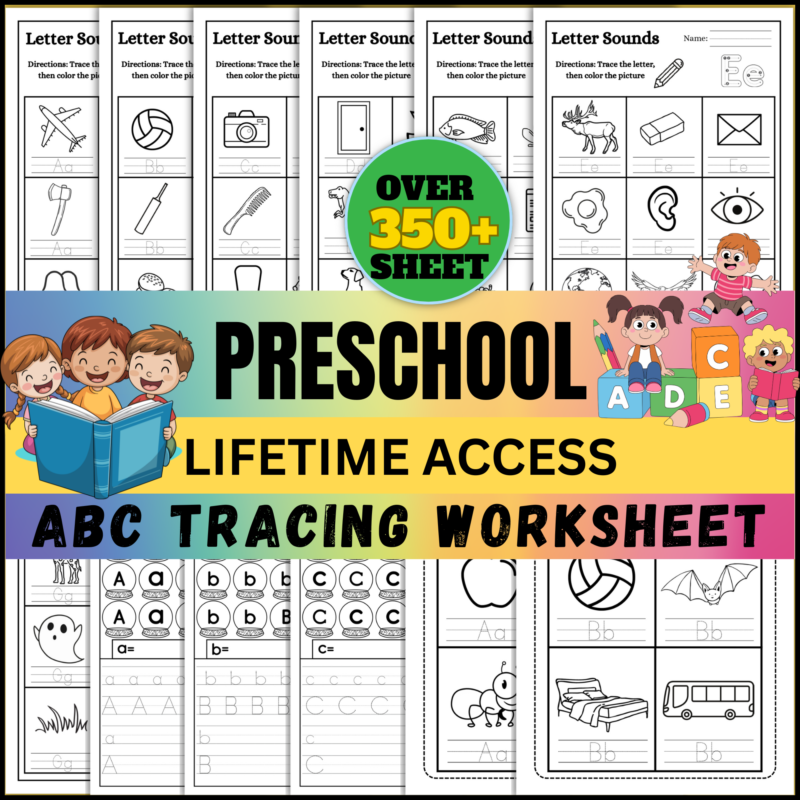
Beginning sound practice is one of the most useful kindergarten learning activities at home because it supports both reading and spelling. Simple picture-based worksheets work well here. A child sees a picture of a cat, says the word out loud, and identifies the starting sound. This kind of task feels manageable, but it builds an essential foundation.
Blending practice can come next. Once children know several letter sounds, they can start reading short consonant-vowel-consonant words like cat, dog, and sun. Keep expectations realistic. Some children are ready for this quickly, while others need much more time with sound recognition first.
Handwriting that stays age-appropriate
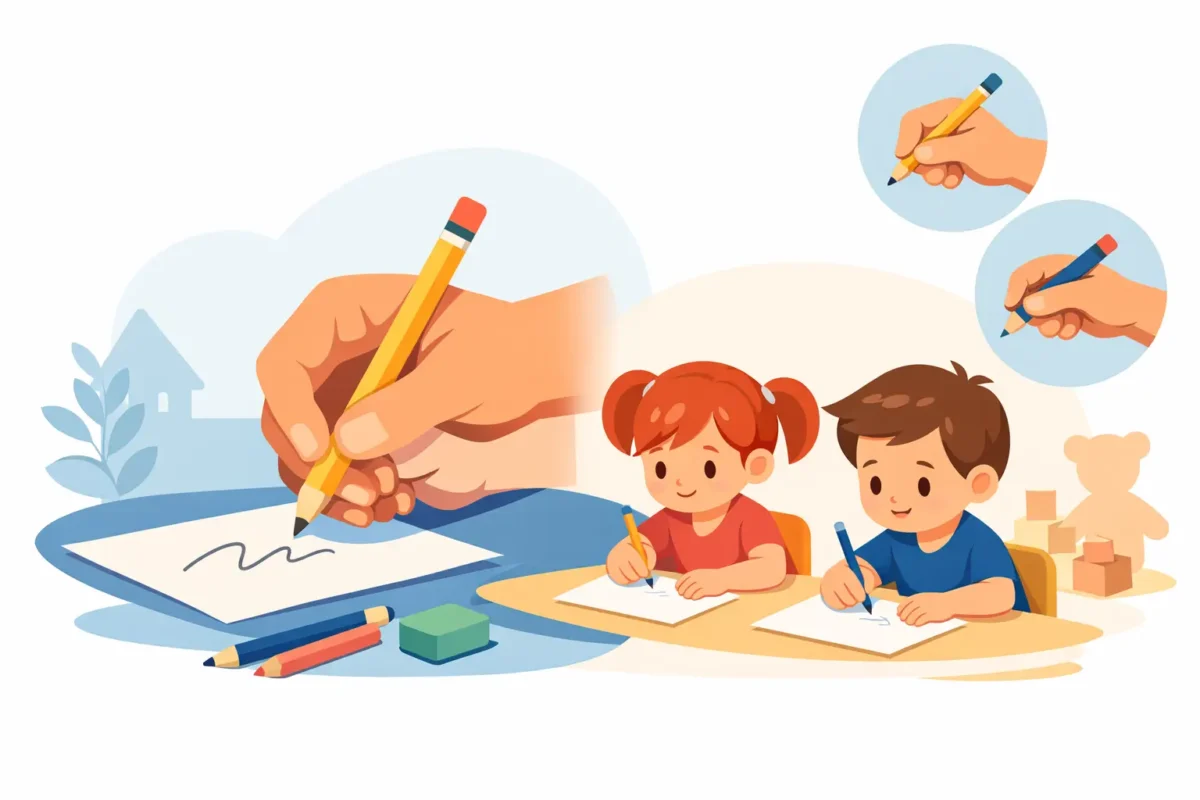
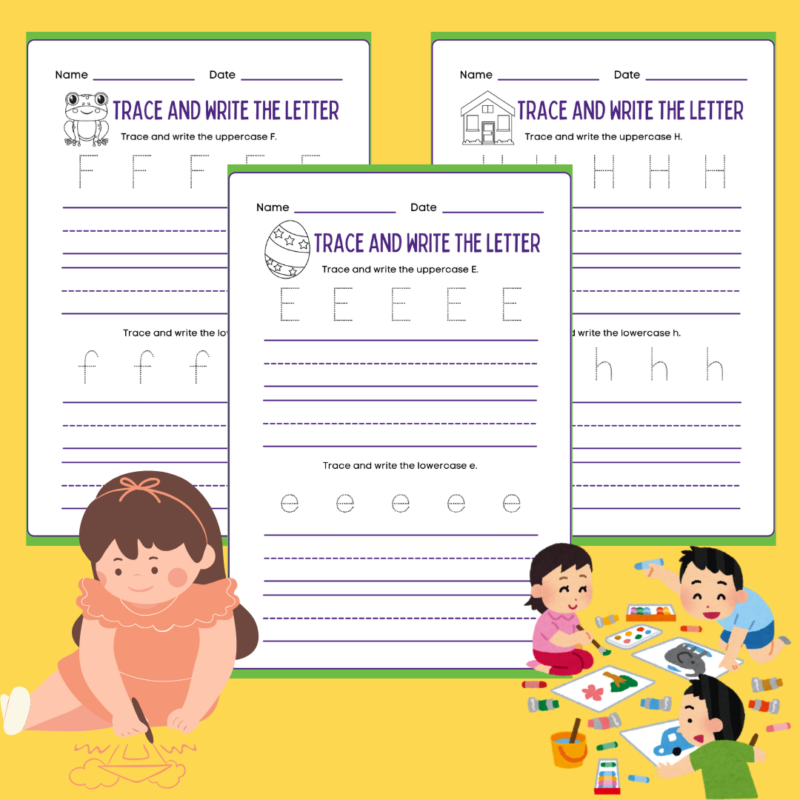
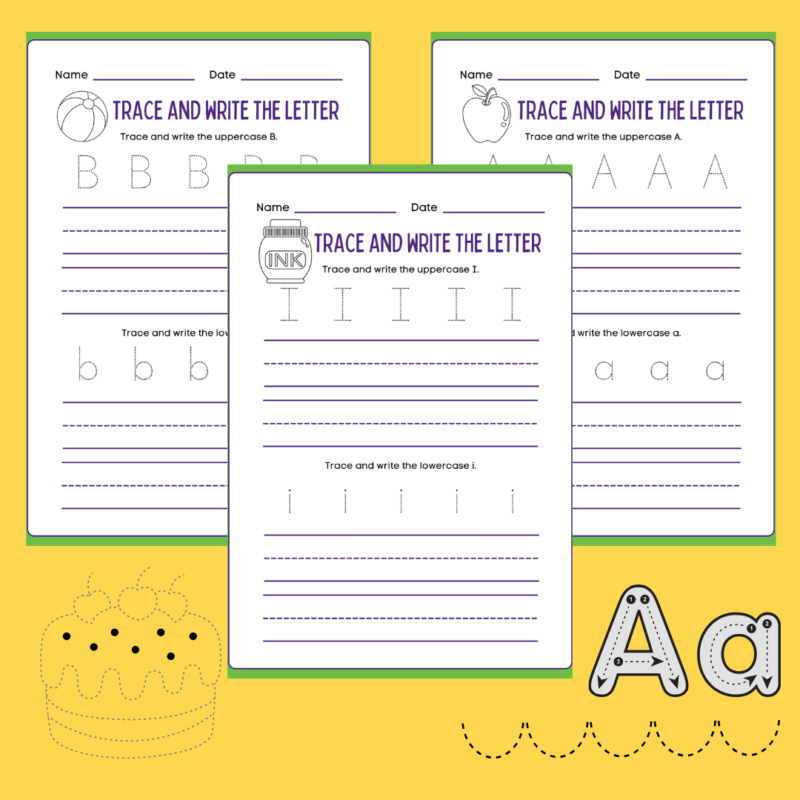
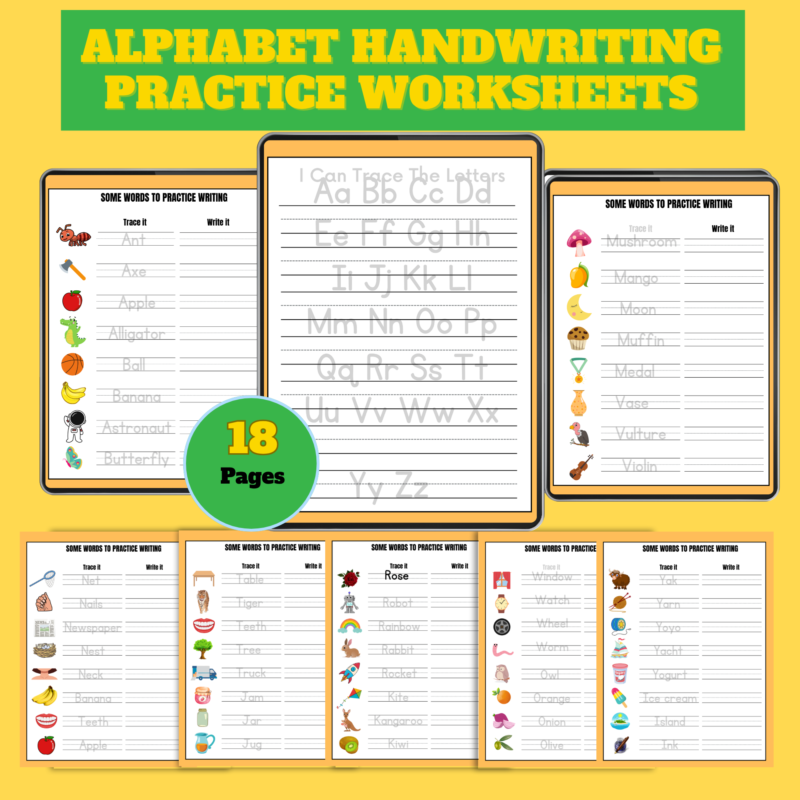
Handwriting practice should focus on correct letter formation, not long writing sessions. A kindergartener does not need pages of copying. They need short, clear opportunities to trace, write, and try again. Name practice, single-letter tracing, and simple sight word writing are all useful.
If writing leads to frustration, step back and look at fine motor skills. Sometimes the issue is not letter knowledge. It is hand strength, grip control, or plain tiredness.
Math activities that make sense to young learners
Kindergarten math is much more than saying numbers in order. Children are learning to count objects, recognize numerals, compare amounts, and begin very simple addition and subtraction.
Number recognition and counting
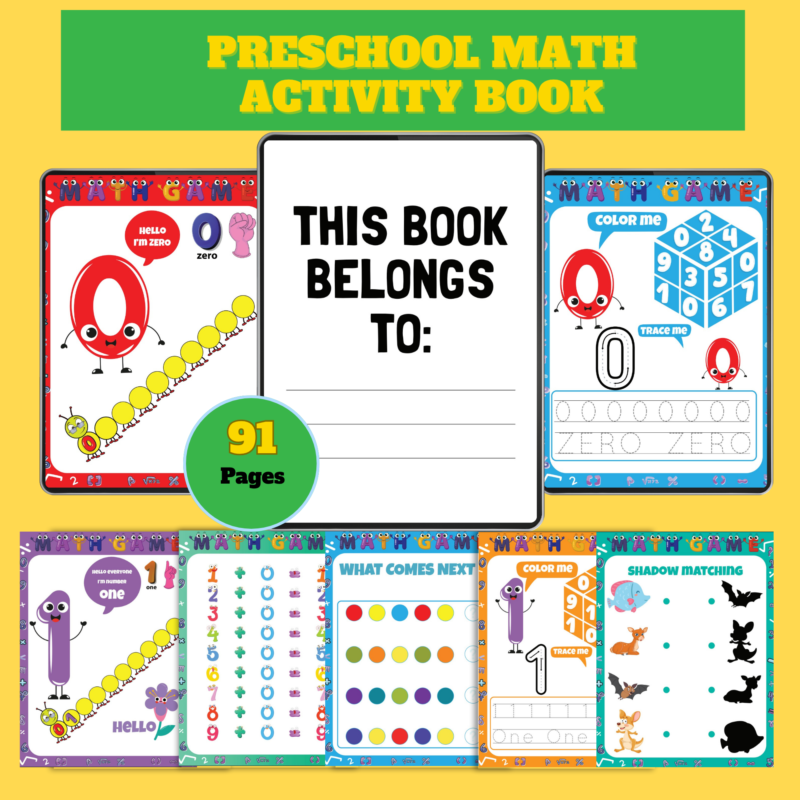
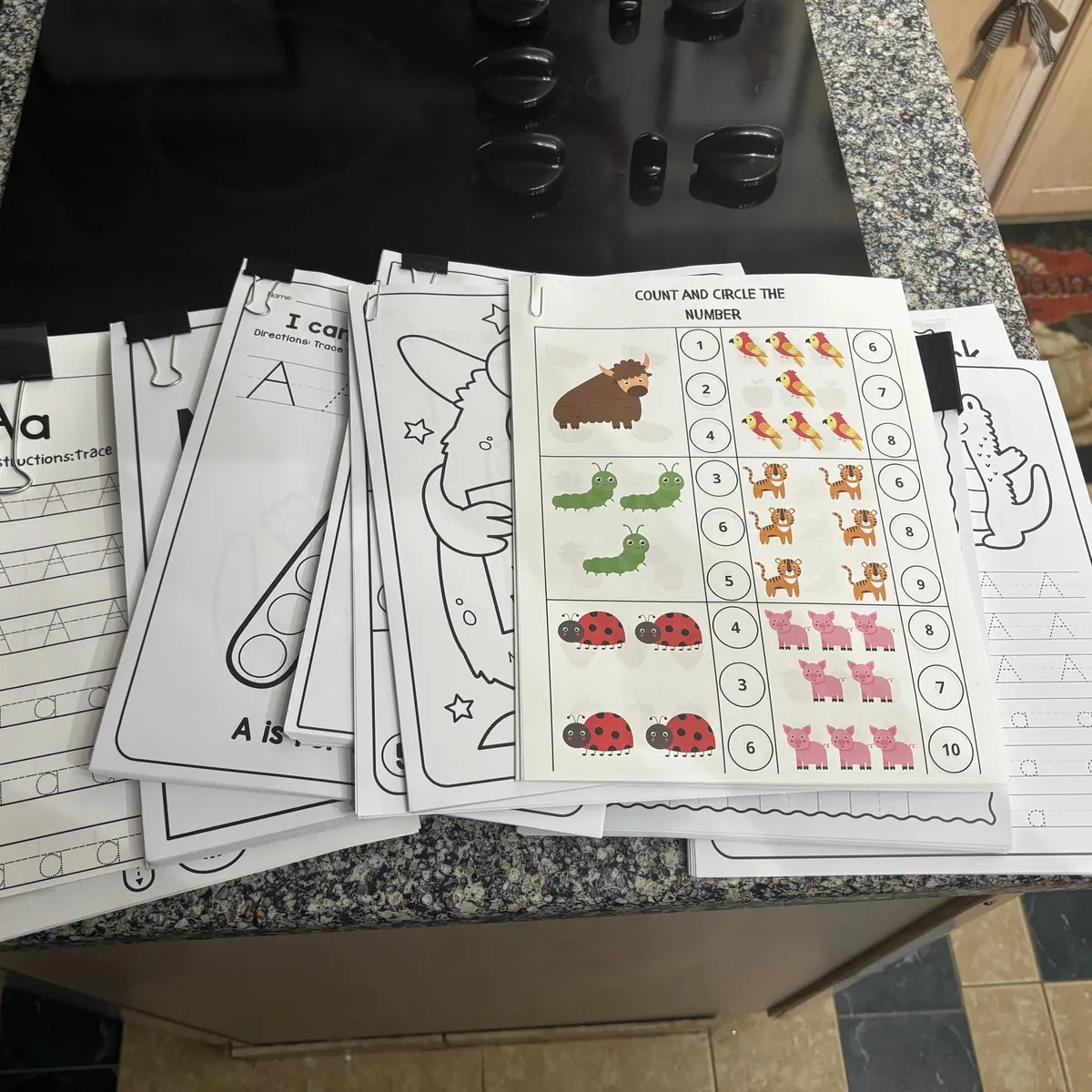
Counting worksheets with pictures, number tracing, and count-and-color pages are a practical choice for home use. These activities help children connect the spoken number to the written numeral and then to a real quantity. That connection is the heart of early math.
If your child can count aloud but struggles with one-to-one correspondence, slow down and use fewer objects. Counting five bears correctly is more valuable than racing through twenty with mistakes.
Beginning addition and subtraction
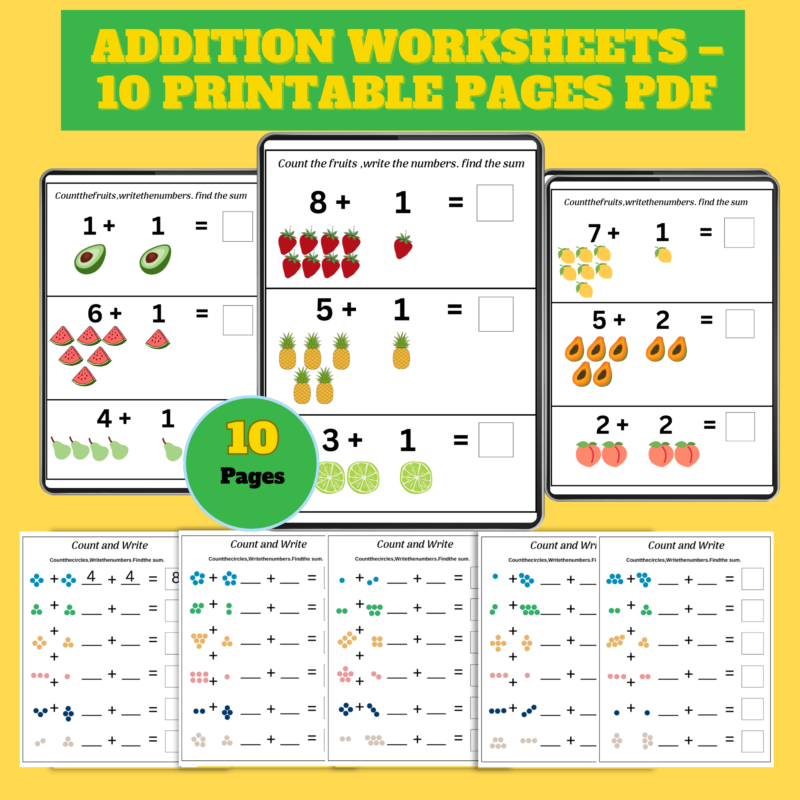
At this stage, addition and subtraction should stay concrete. Picture-based worksheets, simple number sentences, and cut-and-paste activities help children see what is happening. Two apples plus one apple feels much more understandable than a page full of abstract facts.
Some children love this right away. Others need lots of hands-on support first. It depends on their developmental readiness and how confident they already feel with counting.
Shapes, patterns, and sorting
These skills are easy to overlook, but they are part of strong kindergarten math practice. Shape recognition, pattern completion, and sorting by size or category all build logical thinking. They also break up number work nicely, which can help children who get bored with repetitive counting pages.
Fine motor activities support everything else
A child who struggles to control scissors, crayons, or pencils may also struggle to show what they know on paper. That is why fine motor practice belongs in your home routine too.
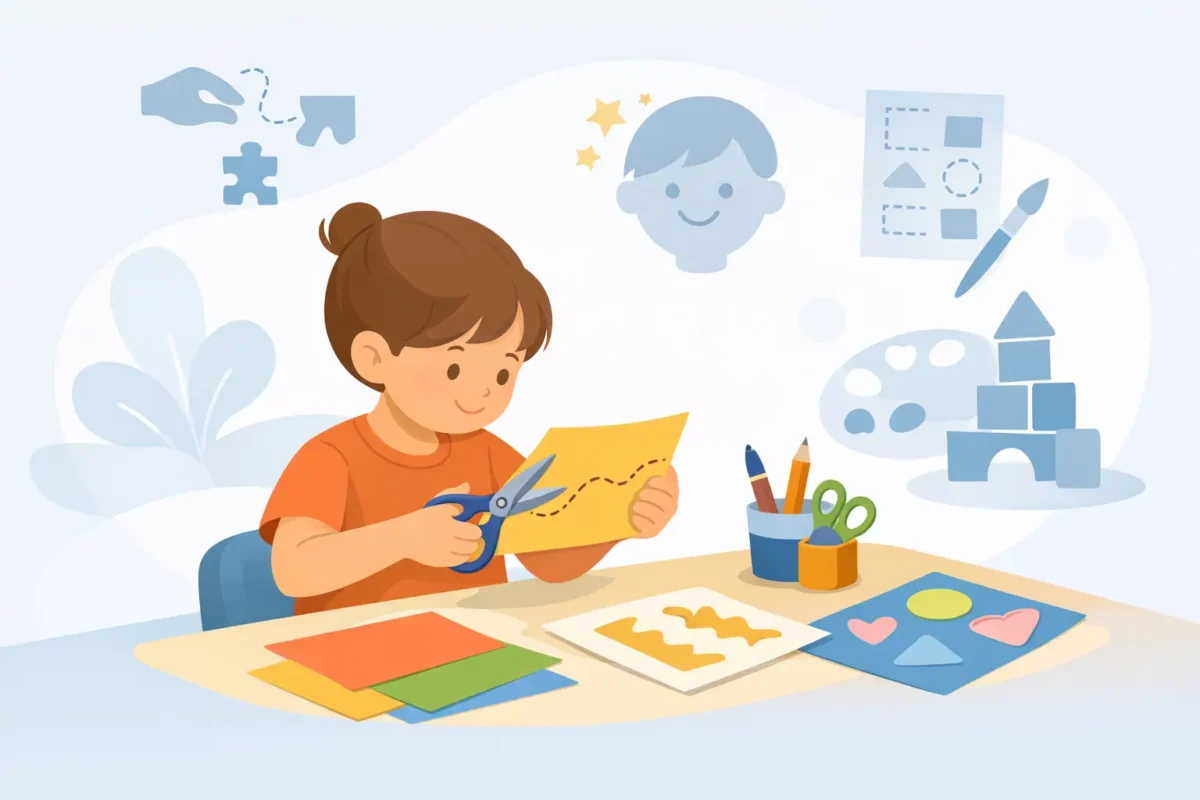
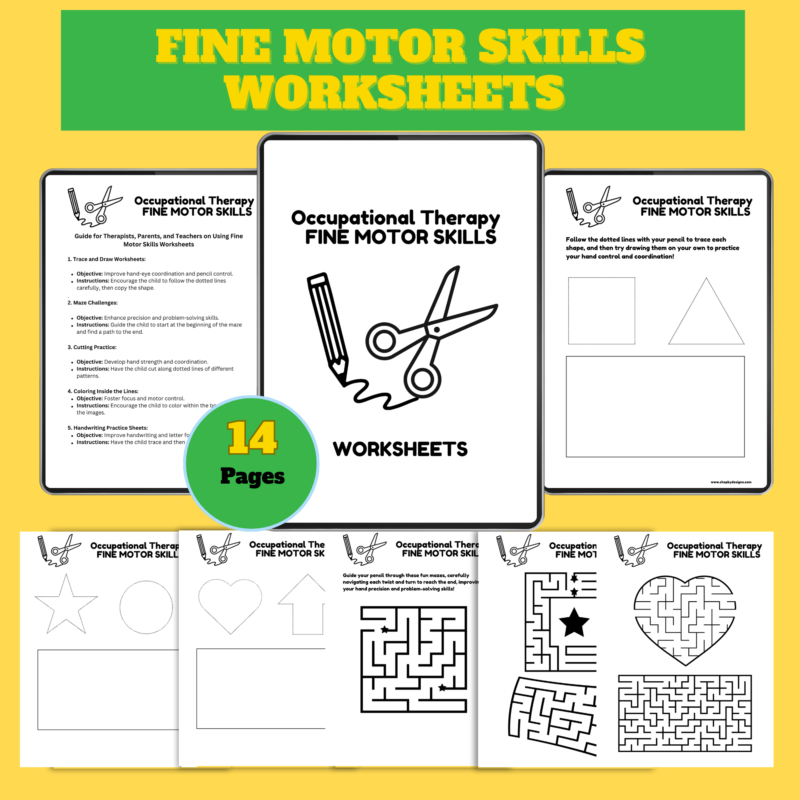
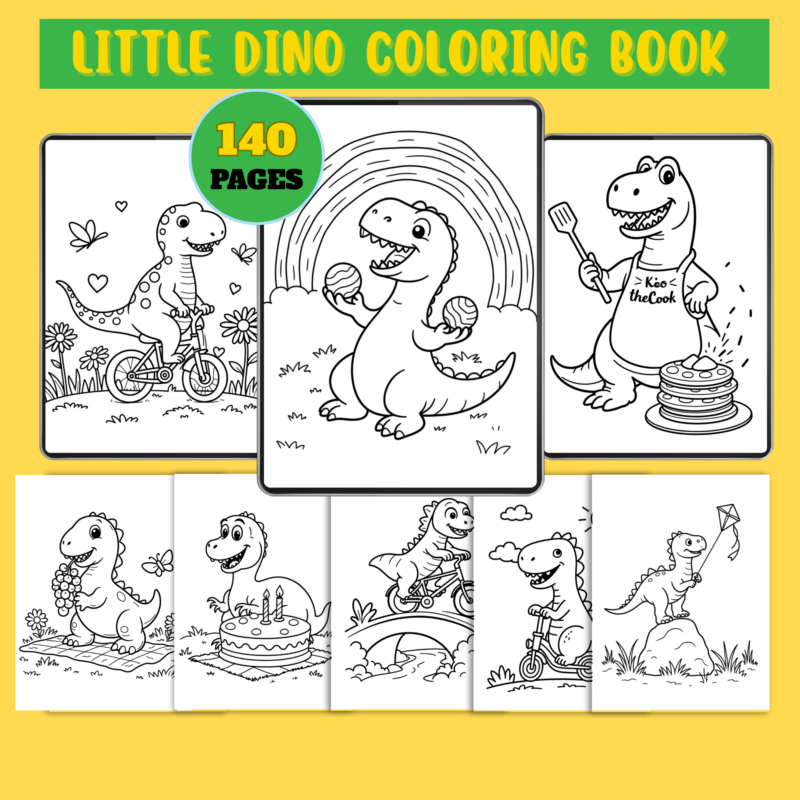
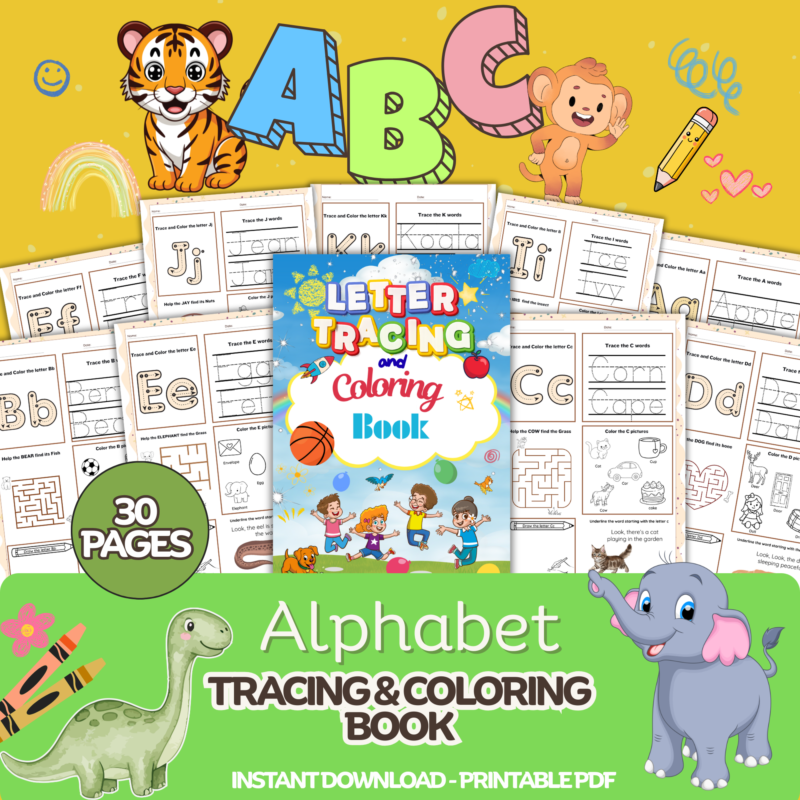
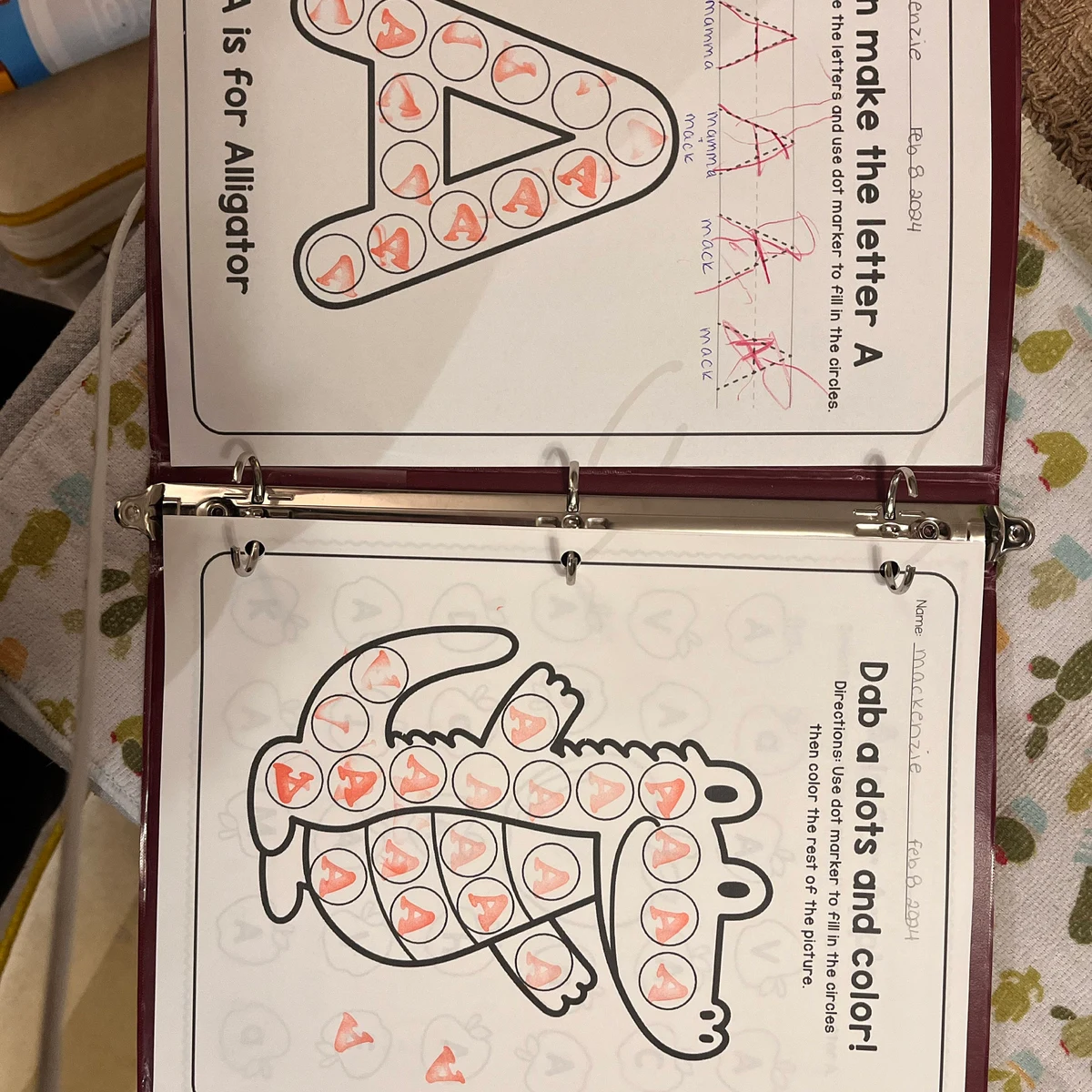
Tracing lines, coloring with control, cutting simple shapes, and completing dot-to-dot pages all strengthen the small hand muscles used for writing. These tasks may look basic, but they do important work behind the scenes. They also tend to feel less academic, which is helpful on days when your child resists more formal practice.
Printable fine motor activities are especially useful because they are structured without being overwhelming. A child can complete one page, feel successful, and stop there.
Keep activities fun without losing structure
Children learn best when they know what to expect, but they stay engaged when activities feel varied. That is the balance to aim for. You do not need a new idea every day. You just need enough variety to keep practice fresh.
One week might include alphabet tracing, counting pages, and simple coloring worksheets. The next week might shift toward beginning sounds, sight words, and addition practice. Repeating familiar formats with new letters, words, or numbers often works better than introducing entirely new types of tasks.
This is where ready-to-use printable resources can save a lot of time. Instead of searching for a last-minute activity or making your own pages, you can choose worksheets by skill and print what fits your child’s current needs. For busy families, that kind of flexibility makes home learning easier to sustain. Fun Clever Fox focuses on exactly this kind of low-prep, skill-based practice for early learners.
What to do when your child resists
Resistance does not always mean the activity is wrong. Sometimes your child is tired, hungry, overstimulated, or simply done for the day. Other times, resistance is a clue that the task is too hard or too easy.
If frustration shows up often, shorten the activity and narrow the goal. Instead of finishing a full worksheet, do half. Instead of practicing ten letters, practice three. Success builds momentum much faster than pressure does.
It also helps to let children see their progress. A completed stack of tracing pages, a growing collection of counted-and-colored worksheets, or a folder of finished phonics practice can be very motivating. Young children like feeling capable.
How to choose the right kindergarten learning activities at home
The best activities are the ones your child can do with some confidence and a little support. Look for materials that are visually clear, not cluttered, and focused on one skill at a time. Kindergarteners can get overwhelmed when a page asks them to do too many things at once.
It is also worth choosing resources you can reuse across the week. A printable worksheet set organized by topic – alphabet, phonics, numbers, handwriting, fine motor, beginning math – makes it easier to build a routine without reinventing it every day. That structure helps adults stay consistent, which helps children learn.
You do not need a picture-perfect homeschool room or a giant bin of supplies. A pencil, crayons, a few good worksheets, and ten calm minutes can go a long way. When home practice feels manageable for you and encouraging for your child, learning becomes something you can return to again and again with less stress and more confidence.
The small moments count more than most parents realize, and a simple activity done regularly can do a lot to help a kindergartener feel ready for what comes next.